10 Best Things to Do in Kintamani
Written 26 October 2026 · BaliTop10
Kintamani is a broad highland region shaped by the Batur caldera, with rim viewpoints, lakeside settlements and religious sites that require different travel plans. It is not synonymous with a compulsory sunrise summit hike. A visitor can explore geological interpretation, look across the lake and learn about local communities without attempting an exposed or strenuous route. Choose a rim-based or lakeside stay according to the experiences you want, because repeated descents and climbs add time. Check current volcanic and weather information before any mountain activity. Mist can hide the panorama, and an overnight stay offers more flexibility than a tightly timed sightseeing circuit from southern Bali.
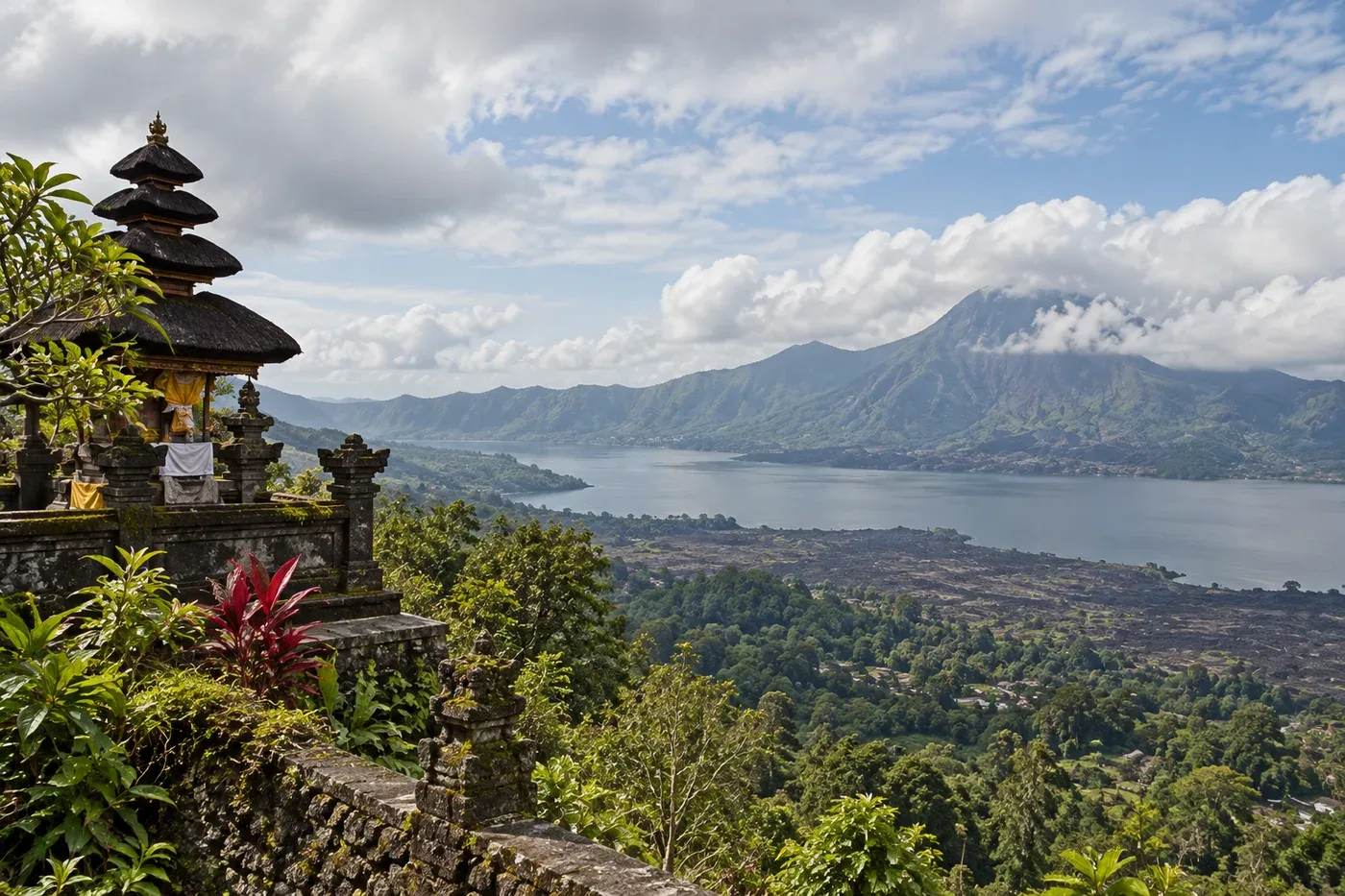
What can you do in Kintamani without hiking Mount Batur?
Start at Penelokan for a caldera view. Then choose one direction. Stay on the rim for geopark interpretation and a meal nearby, or descend toward Lake Batur for a shore stop and a booked hot-spring visit. You can spend the day in Kintamani without planning a summit ascent.
Choose the rim if you want fewer changes of elevation during the drive. Choose the lakeside if geothermal bathing is your main activity. Use the Bali volcano viewpoints guide to compare other non-summit options, and check UNESCO’s Batur Geopark overview for background.
Kintamani: quick answers
- Overview
- Kintamani is a broad highland region shaped by the Batur caldera, with rim viewpoints, lakeside settlements and religious sites that require different travel plans.
- Season
- The highlands can be cool, misty and wet even when coastal resorts are sunny.
- Getting around
- Choose your stay in Kintamani by its actual location and the activities you intend to use.
1. Penelokan caldera viewpoint
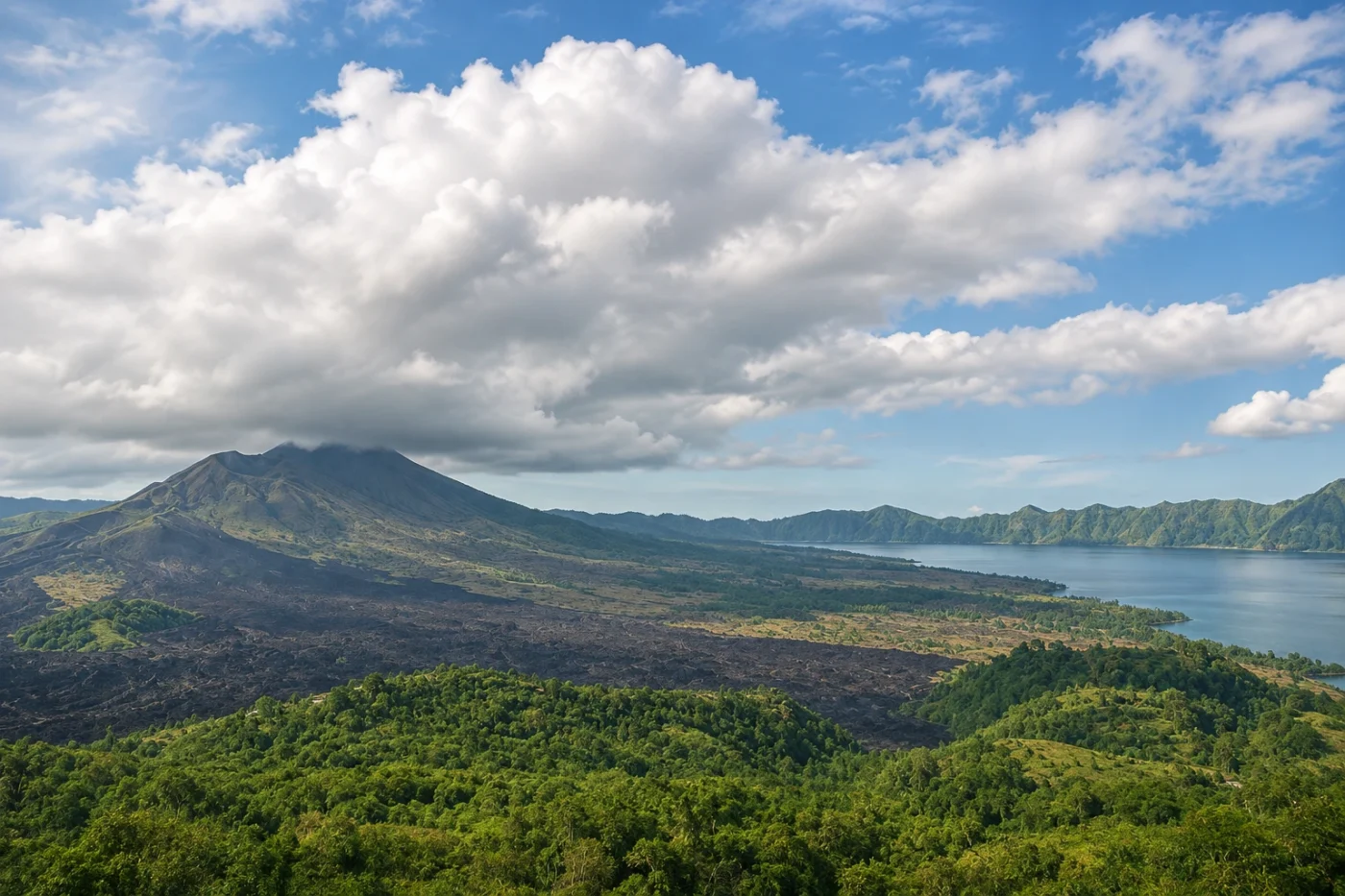
Penelokan offers an introduction to the relationship between the caldera, Mount Batur and the lake. Use a permitted viewing place and allow time to understand the landscape rather than simply ordering a drink for a photograph. Visibility can change quickly. A rim view is an experience in its own right, not evidence that the mountain below is suitable for hiking that day. Look for the relationship between older caldera walls and newer volcanic features, using available interpretation to understand what you see without assigning precise eruption histories from appearance alone or a photograph.
2. Batur geopark interpretation
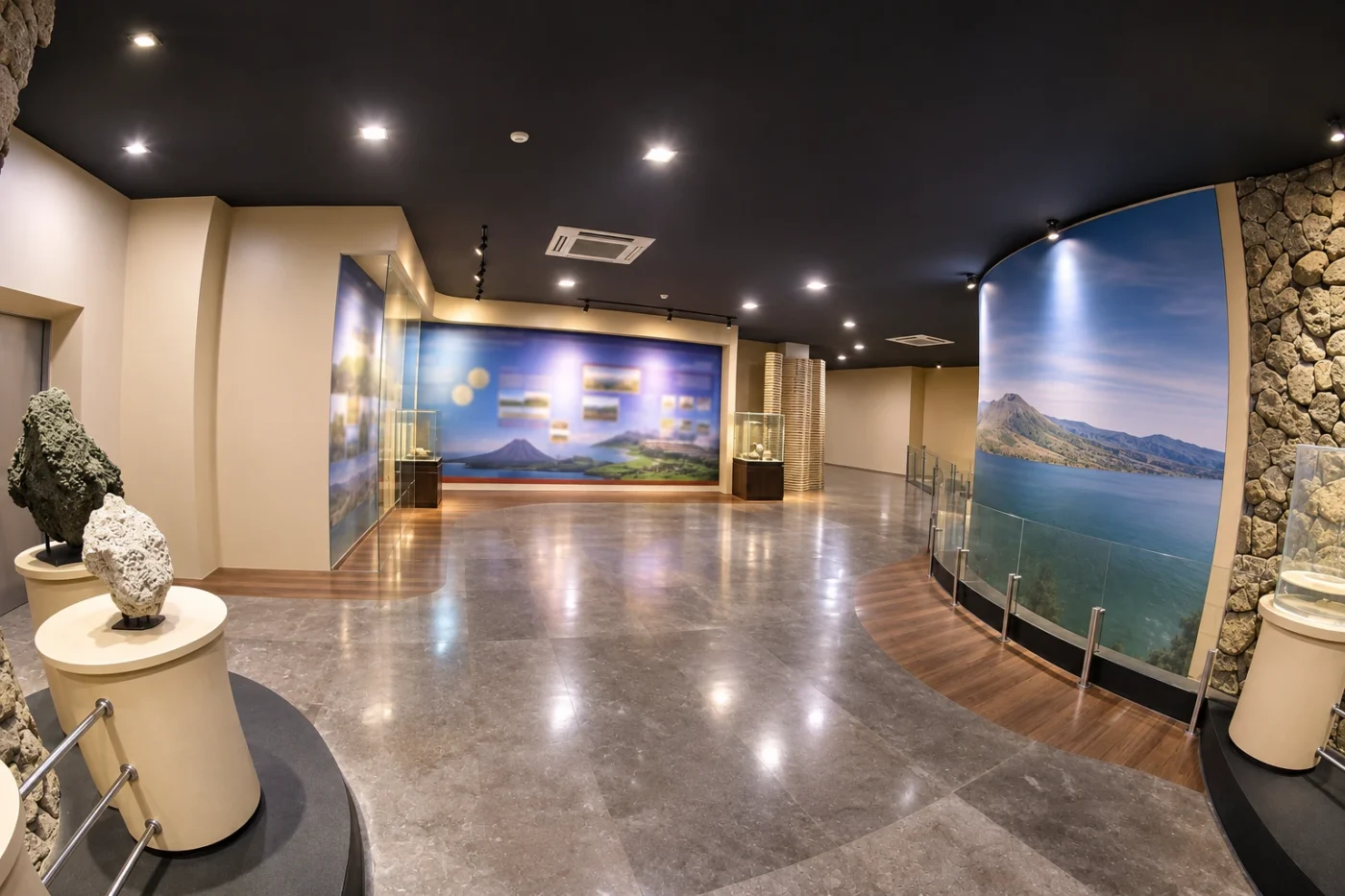
The Batur Geopark’s interpretation and museum opportunities help explain the volcanic landscape visible from the rim. Check which visitor facility is currently open and how it fits your route. An educational stop can make later viewpoints more meaningful, especially when cloud limits the panorama. Do not infer current volcanic safety from the fact that a tourism programme is advertised. Ask what information reflects current monitoring and what explains past events, keeping those different time scales clear when deciding which outdoor activity is appropriate for the rest of your stay.
3. Lake Batur village viewpoints
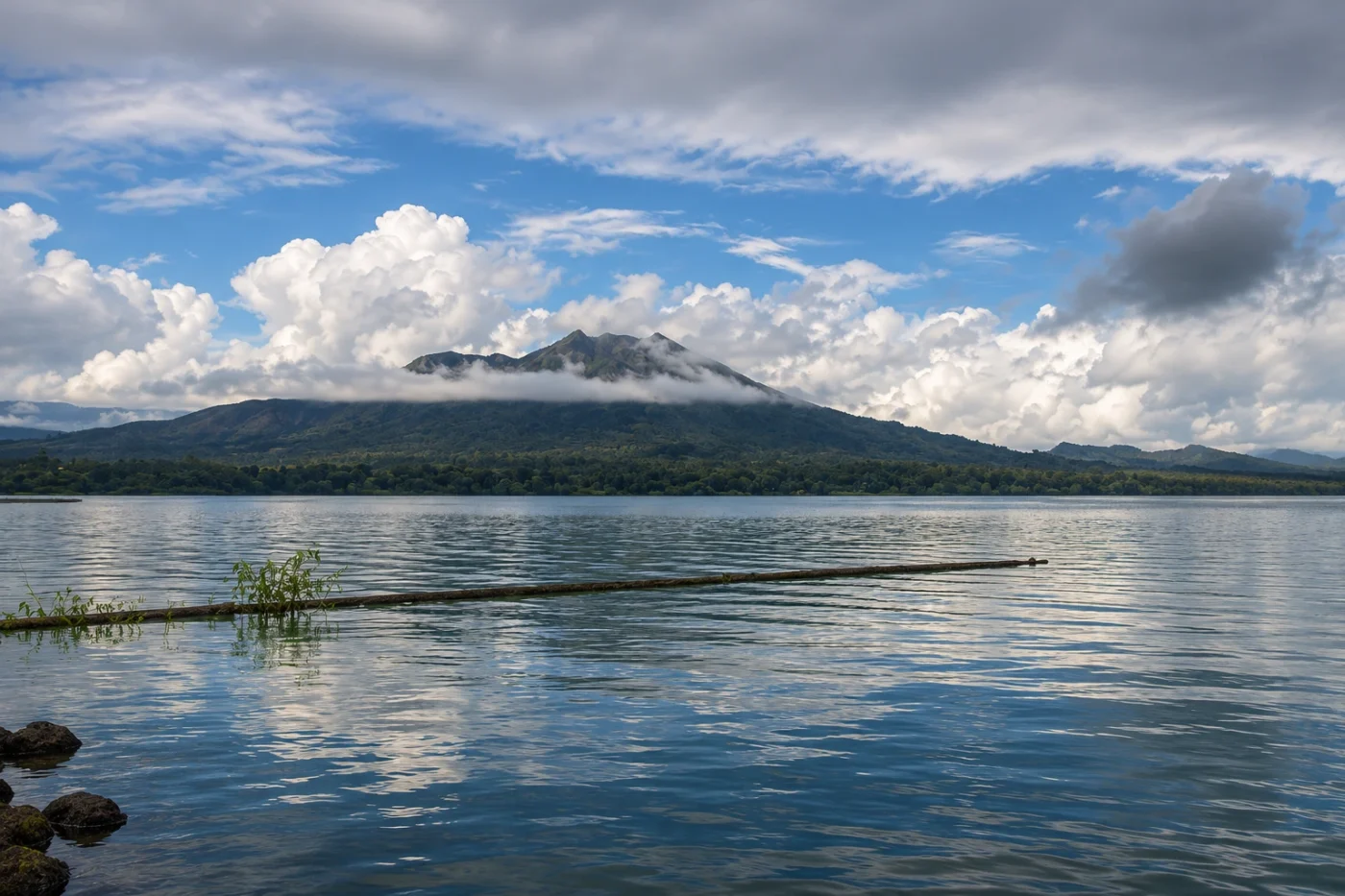
A lakeside drive offers a different perspective from the rim, with settlements and cultivated land between viewpoints. Choose a coherent section instead of circling the whole lake simply to collect stops. Roads and gradients add time, and access to a waterfront business may differ from public shore access. Keep local work, fishing equipment and religious spaces unobstructed. Confirm the intended route and meal stops with your driver, because returning repeatedly between the rim and shore can use more of the day than a simple map suggests.
4. Pura Ulun Danu Batur
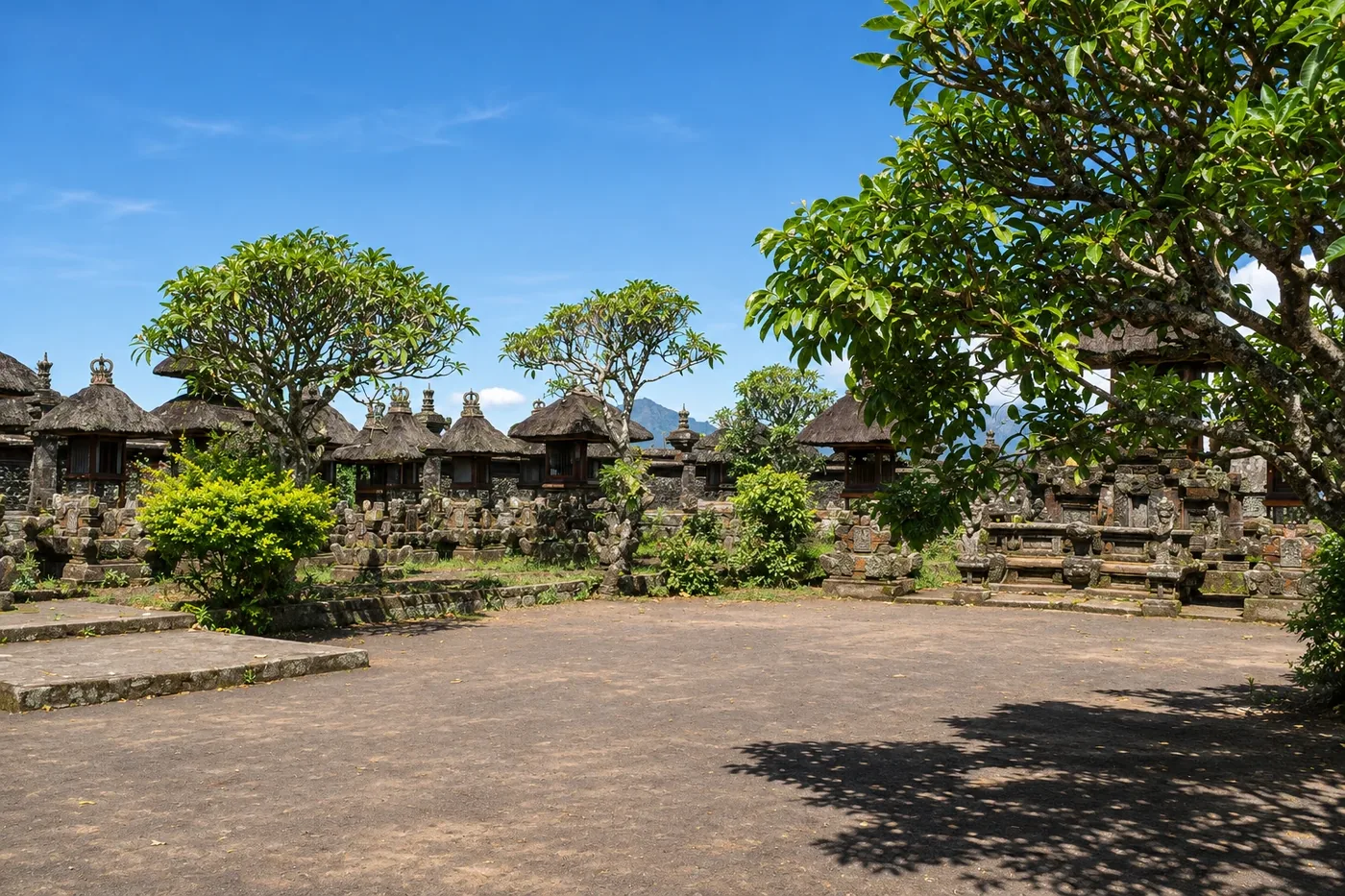
This major temple is distinct from Ulun Danu Beratan in Bedugul, despite the similar names. Make sure your driver and booking refer to the intended place. Follow current dress and visitor arrangements and give ceremonies priority. Local interpretation can explain its significance within Bali’s water-temple landscape without reducing it to a scenic photograph. Give the temple its own unhurried visit and avoid assuming a photograph taken from a visitor courtyard gives permission to enter spaces reserved for religious practice or a ceremony.
5. Batur lava landscapes
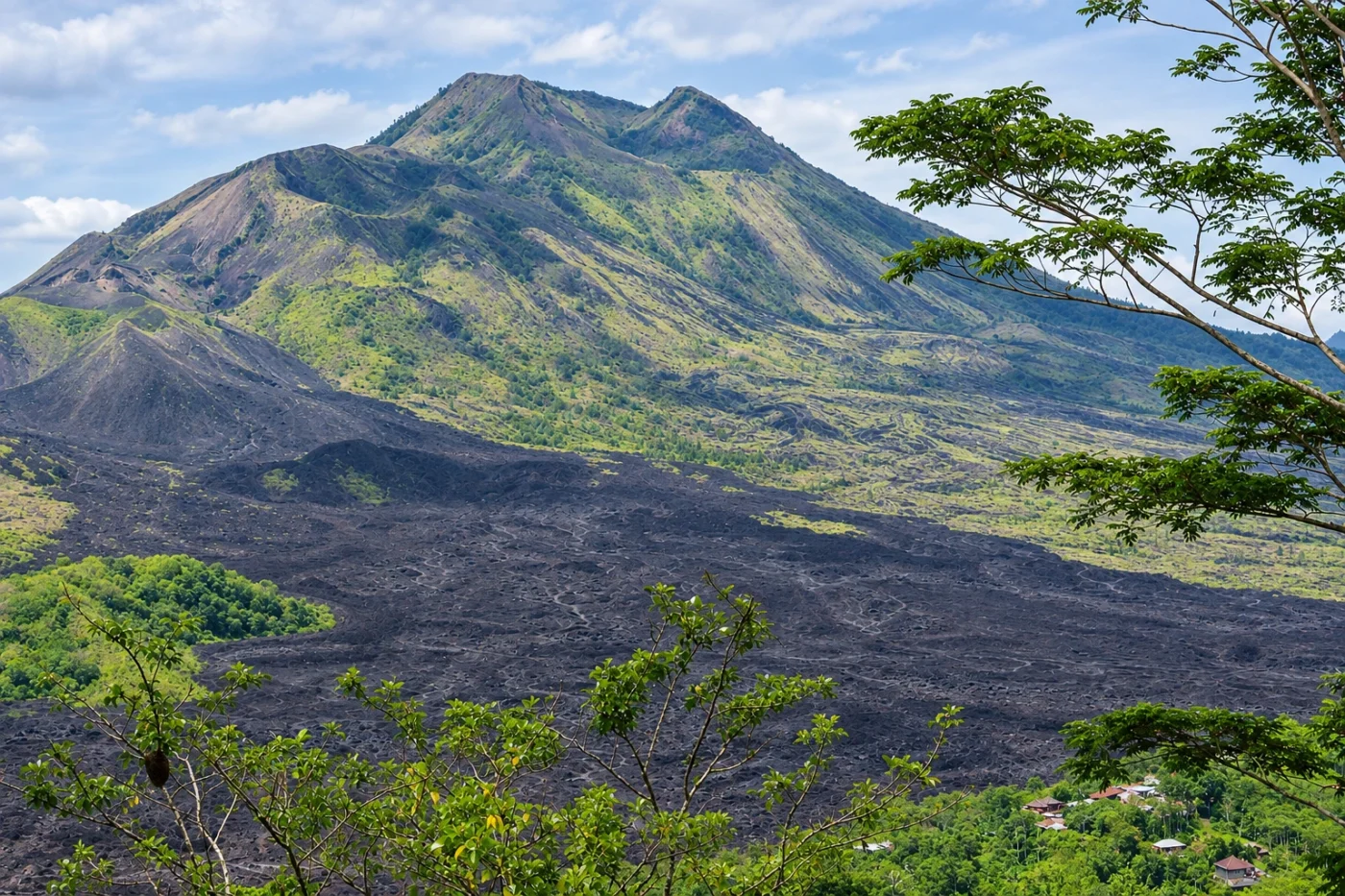
Older lava formations can be explored through an appropriately organised outing that explains their geological context. Walking, a vehicle tour and a mountain hike are different products. Ask which route and access permissions apply and how the provider checks conditions. Do not enter restricted ground or assume that dark hardened rock makes an active volcanic landscape uniformly safe. Ask whether the outing includes interpretation and a defined route rather than only a vehicle ride, and accept that access restrictions or unstable ground can require a different landscape stop.
6. A guided Mount Batur hike assessment
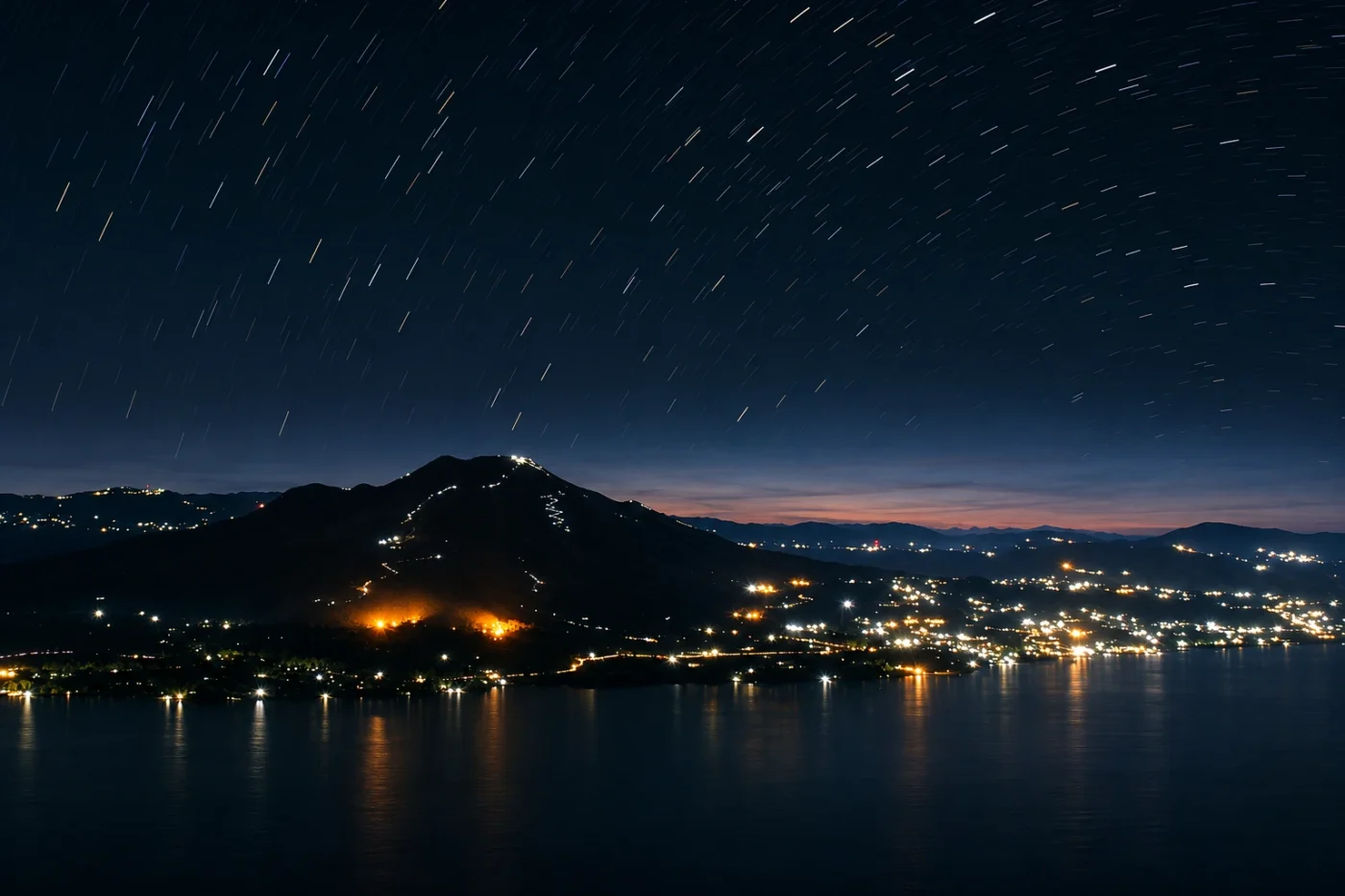
Consider a summit hike only after checking current official status, local access and the route’s suitability for your fitness and experience. Ask the guide about terrain, cold before dawn and the return. Sunrise is weather-dependent and not a reason to ignore a closure or rush a tired group. A rim viewpoint is a valid alternative. Choose a guide who is willing to cancel or change the plan, and arrange a non-summit alternative before departure so a sensible safety decision does not feel like a ruined holiday.
7. Pinggan viewpoint excursion
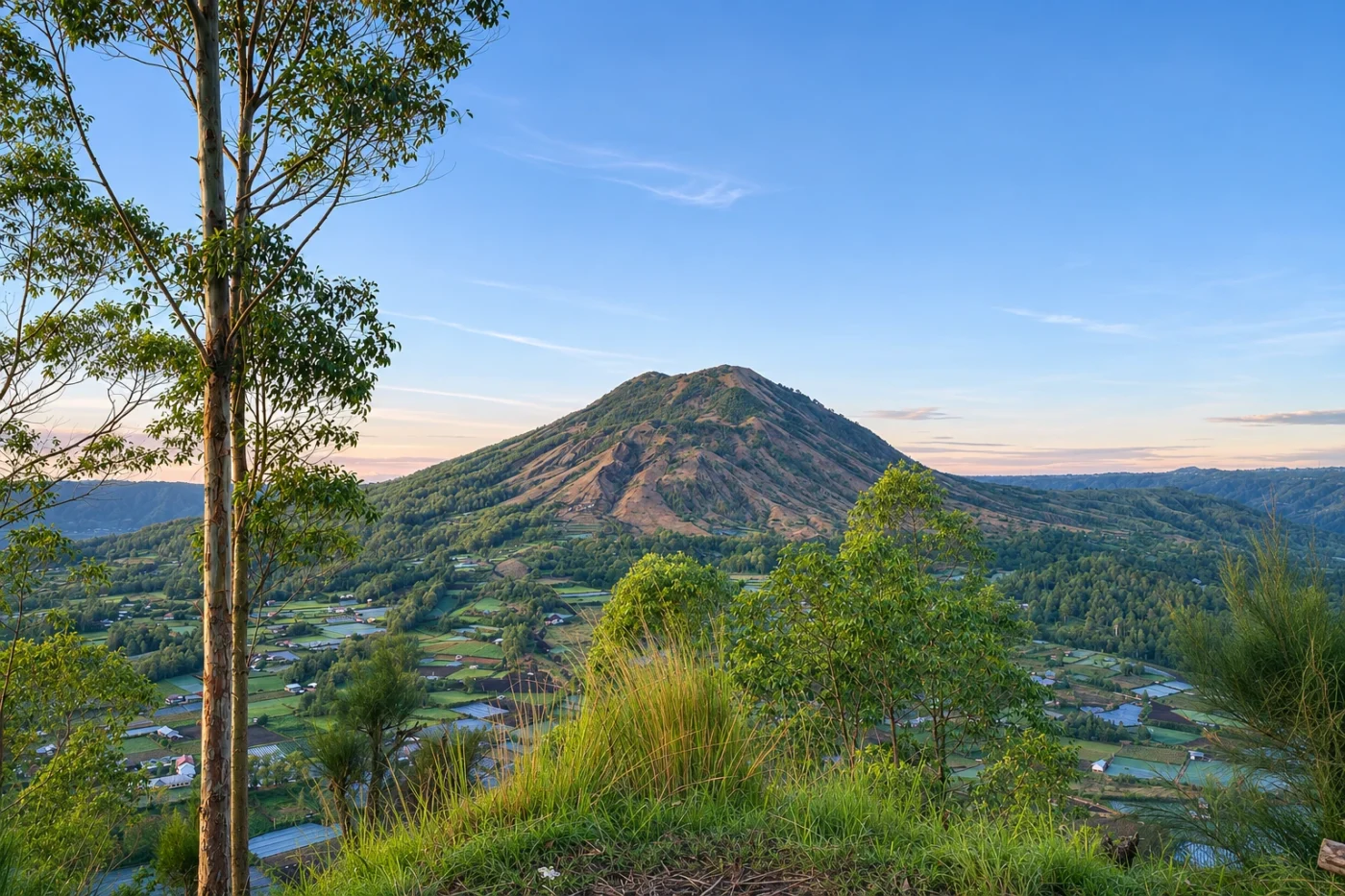
Pinggan offers a separate highland viewpoint option often associated with early light and valley mist. Agree the actual viewing place and vehicle access rather than following an unverified location marker before dawn. Warm layers and a safe stopping place matter. Cloud may hide the scene, so plan a visit you can enjoy without a guaranteed cloud-sea photograph. Pair the early visit with a nearby breakfast and a relaxed return, avoiding an itinerary that depends on several hours of night driving simply to arrive before a promised view.
8. Toya Bungkah hot-spring visit
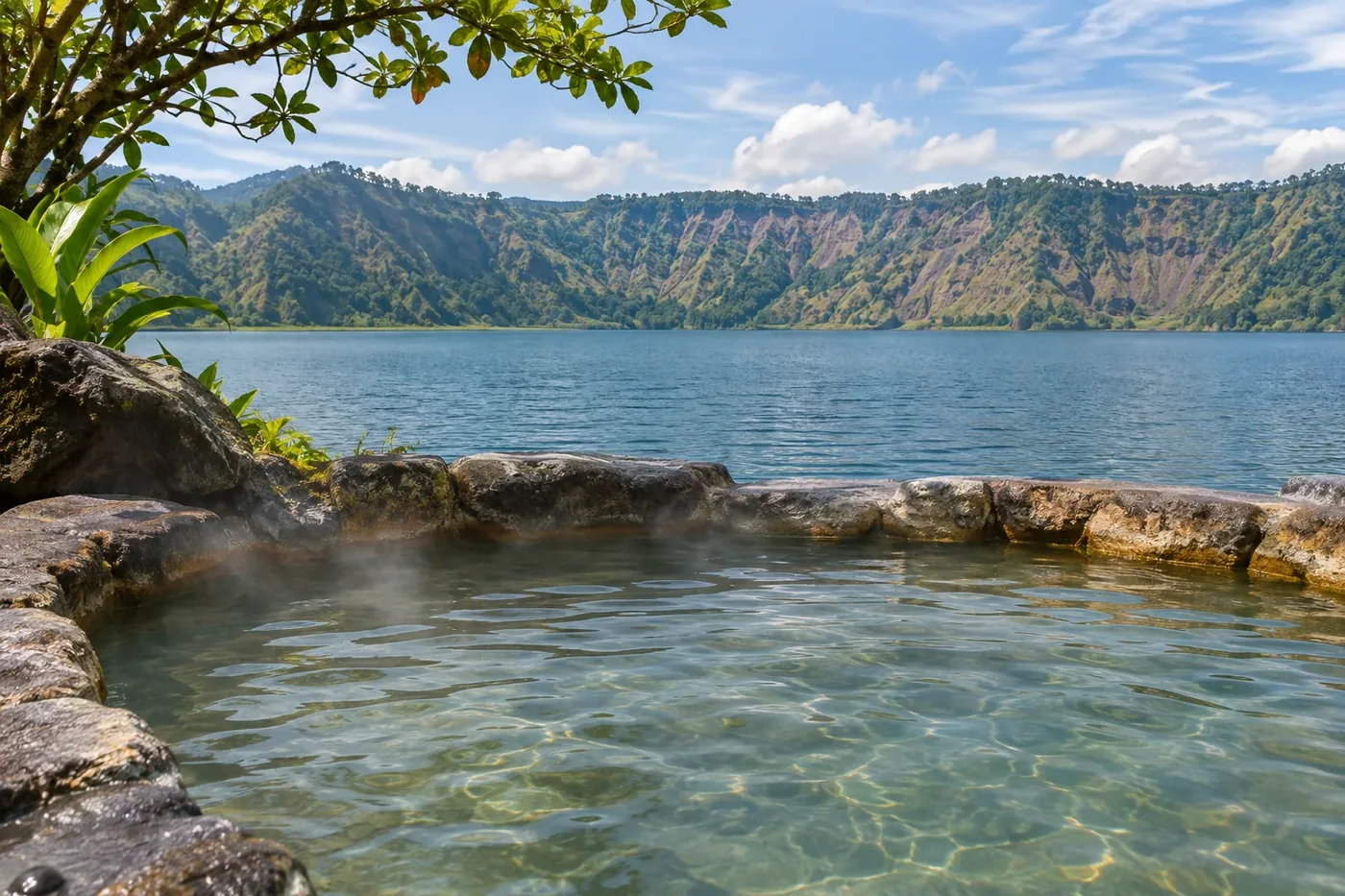
A managed lakeside hot-spring facility in the Toya Bungkah area can provide a quieter activity, with facilities and pool arrangements differing between operators. Check what your booking includes and choose according to comfort and access needs. A thermal-water visit should not be promoted as a medical treatment. Allow time for changing and a relaxed onward journey. Check changing rooms, towels and the route between the vehicle and pool, since a comfortable bathing experience depends on practical facilities as much as the surrounding volcanic landscape or lake view.
9. Sukawana village landscape
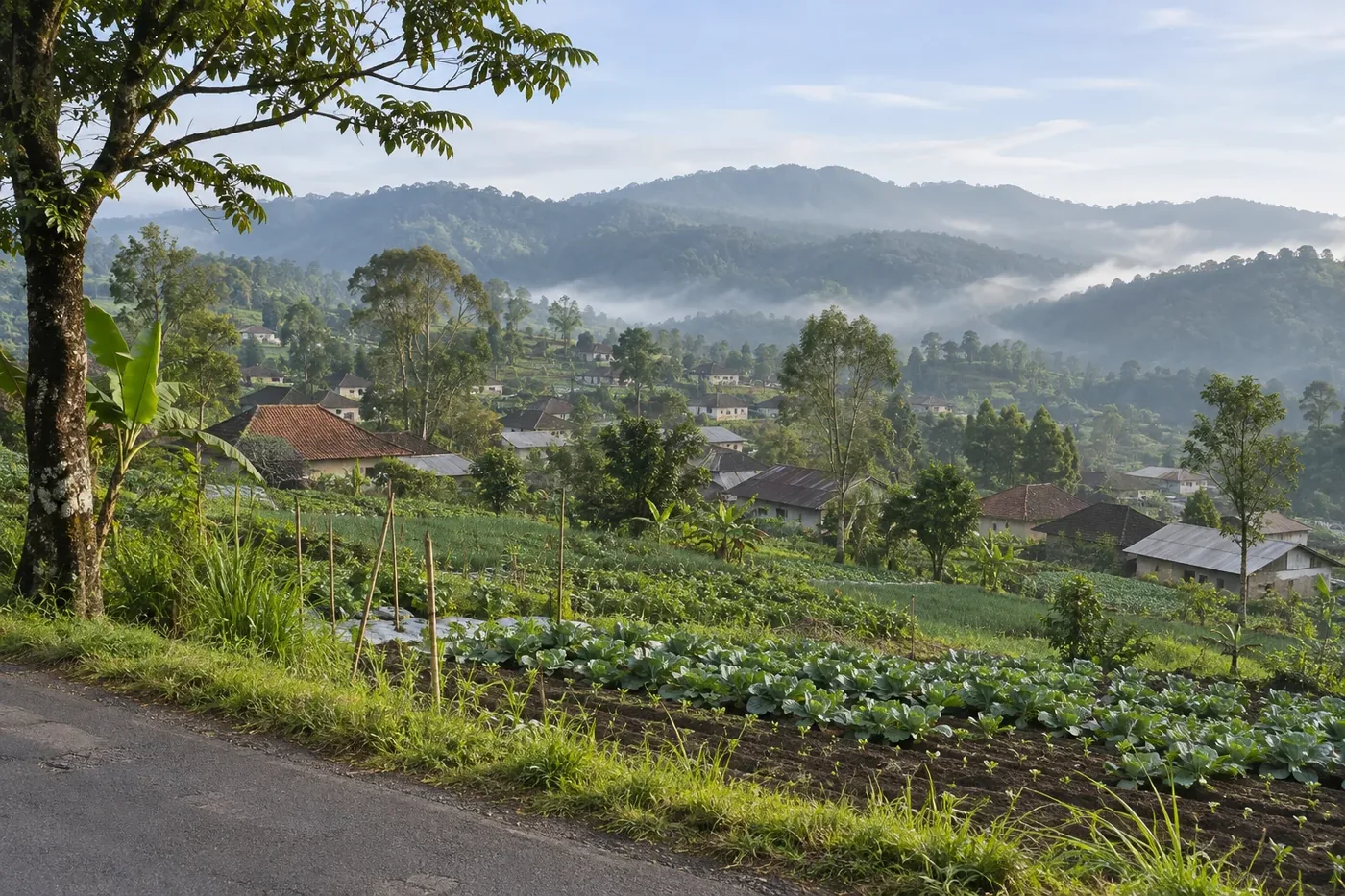
Sukawana offers another perspective on the wider Kintamani highlands beyond the main rim stopping points. Arrange a locally guided village or agricultural walk if available and ask which paths are suitable. Working land and sacred areas require permission and respect. This is an opportunity for slower observation rather than a requirement to photograph private households. Keep conversation and a genuine local explanation central to the outing, and ask before visiting a workshop or household rather than assuming that a tourism route opens every space to guests.
10. Trunyan cultural visit by arrangement
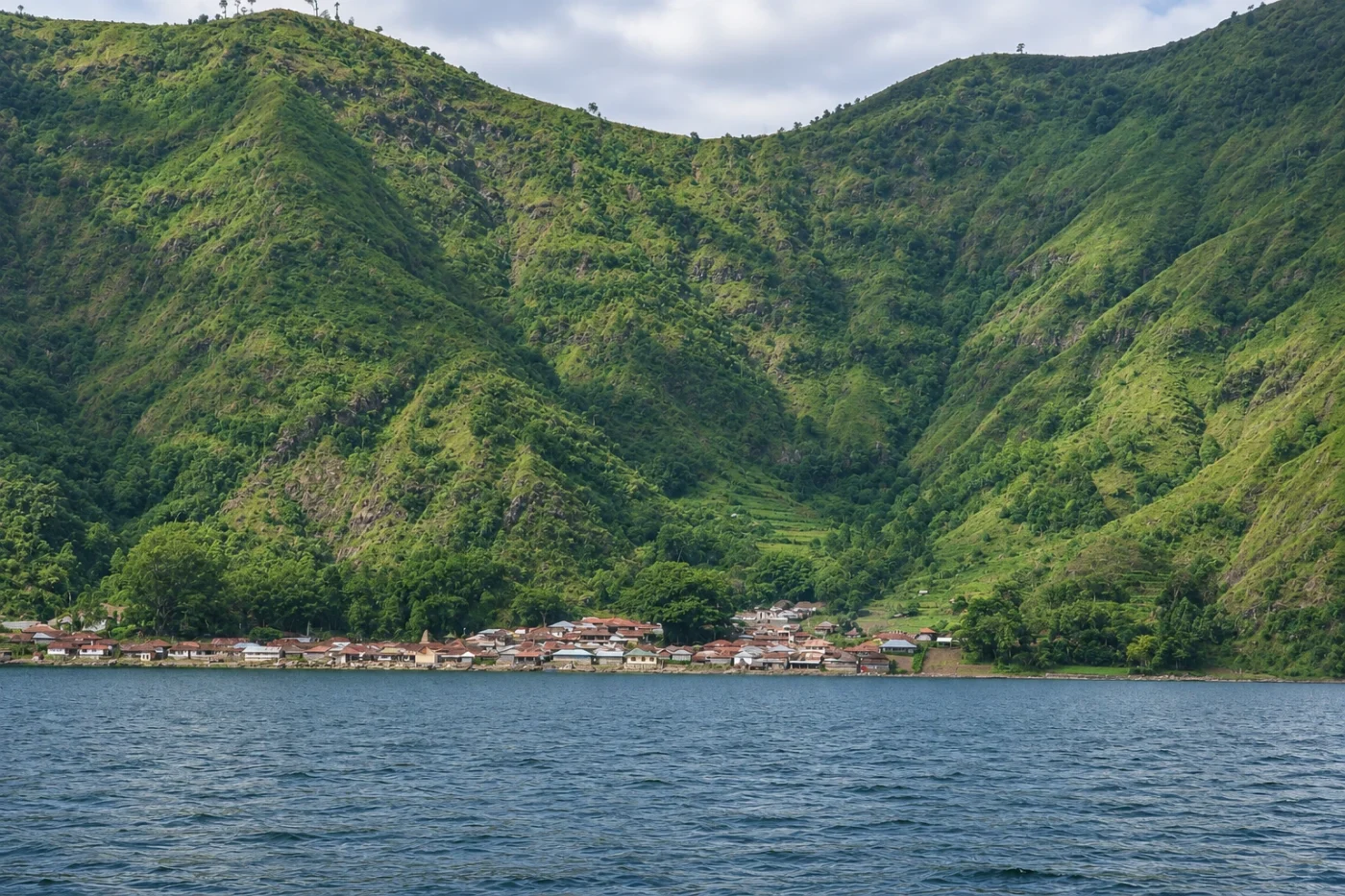
Trunyan requires particular care because its cultural and funerary practices are not entertainment. Choose a responsible local arrangement that explains what is appropriate and whether the proposed visit is currently welcomed. Ask permission before photographing people or sensitive places and accept restrictions. Boat travel also needs suitable weather, proper equipment and a clear return plan. An invitation or authorised visitor route does not remove the need for restraint around sensitive practices, and a host should be free to explain that photography or a particular approach is inappropriate.
Season and planning
The highlands can be cool, misty and wet even when coastal resorts are sunny. Bring a warm layer and rain protection, and give viewpoints more than one opportunity if the panorama matters to your trip. Any mountain or volcanic-ground activity needs current authorised access and a locally appropriate plan.
Choose your stay in Kintamani by its actual location and the activities you intend to use. A destination name can cover scattered accommodation and meeting points. Arrange longer road outings with a suitable driver or an included transfer, confirming pickup, waiting and the return. Traffic, roadworks, weather and ceremonies can affect timing. Do not assume ride-hailing availability, a comfortable pedestrian route or a quick connection merely because two places look close on a map.
Suggested pace
One day: choose a coherent introduction
Use the first part of the day for Penelokan caldera viewpoint, allowing the time and preparation that experience needs. Choose one suitable nearby stop from the list rather than treating all ten as a daily route. Leave a meal break and a comfortable return to your accommodation, with a quieter alternative if weather or access changes.
Two days: add a contrasting experience
Keep the first day focused on the local introduction. On the second, consider Batur geopark interpretation and one complementary cultural or landscape stop, using the actual route and current access to decide the order. If your chosen activity occupies much of the day, leave the evening relaxed instead of trying to recover missed checklist items.
Three days: leave room for conditions
Add a third day for Lake Batur village viewpoints, a longer activity discussed with a qualified provider, or one of the clearly identified regional excursions. Do not combine all three options. Keep a reserve block for weather and confirm your onward transport with a generous margin; traffic and winding roads can make a transfer less predictable than its map distance suggests.
More places to stay
Related Bali guides
Bangli and Penglipuran
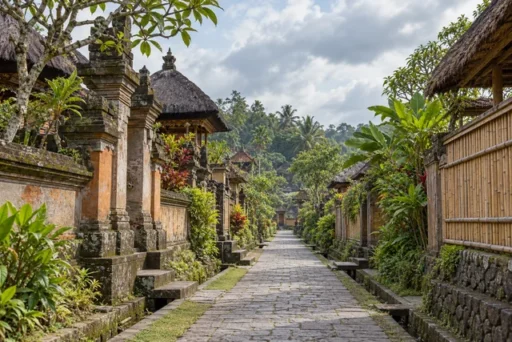
Explore Bangli and Penglipuran with ten practical experiences, seasonal advice, transport planning and realistic one-to-three-day itineraries.
Bedugul
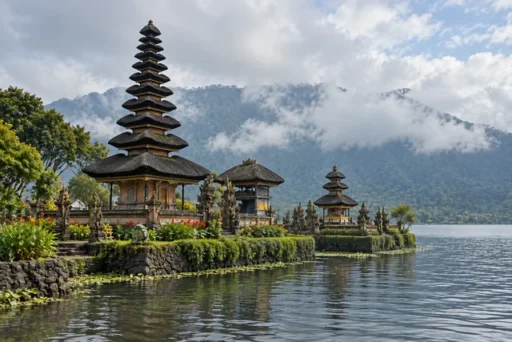
Explore Bedugul with ten practical choices, regional excursions, seasonal advice, transport notes and realistic one-to-three-day planning.
Sidemen
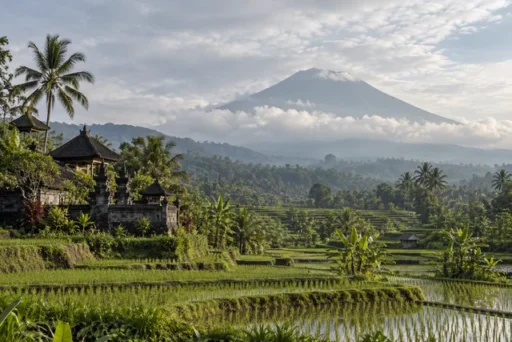
Explore Sidemen with ten practical choices, regional excursions, seasonal advice, transport notes and realistic one-to-three-day planning.
Questions and answers
How long should I stay in Kintamani?
Two or three nights give room for a local introduction, one more substantial outing and some flexibility. A short day visit can work, but should use a small selection rather than attempt all ten suggestions.
Do I need to ride a scooter?
No. Choose accommodation around the places you want to reach and arrange suitable transfers or a driver for farther outings. Confirm the actual route and pickup rather than assuming every attraction is walkable.
Are the ten ideas a one-day itinerary?
No. They are choices for different interests, abilities and conditions. Some are clearly identified regional excursions, while a marine activity or longer walk may occupy most of a day by itself.
Should I rely on a fixed price or opening time?
Check current visitor arrangements directly with the manager or provider before travelling. Access, religious activity, weather and operating programmes can change, so this guide does not promise an unverified price or schedule.
Sources and further reading
Use the responsible authority or provider for current access, availability and booking details.