10 Best Things to Do in Nusa Penida
Written 26 October 2026 · BaliTop10
Nusa Penida rewards a stay built around its scale rather than a rushed collection of famous photographs. The western viewpoints, eastern beaches, village areas and marine activities require different routes, with boat travel from Bali added at either end. Choose one coast for a short visit and consider two or three nights if you want a more varied experience. Roads, steep paths, waves and heat make the island more demanding than a map suggests. The ten choices below include viewpoints and cultural stops that do not require swimming or descending every cliff. Current visitor arrangements can change, so check the boat, local transport and regency tourism requirements together instead of assuming an old itinerary or price list still applies.
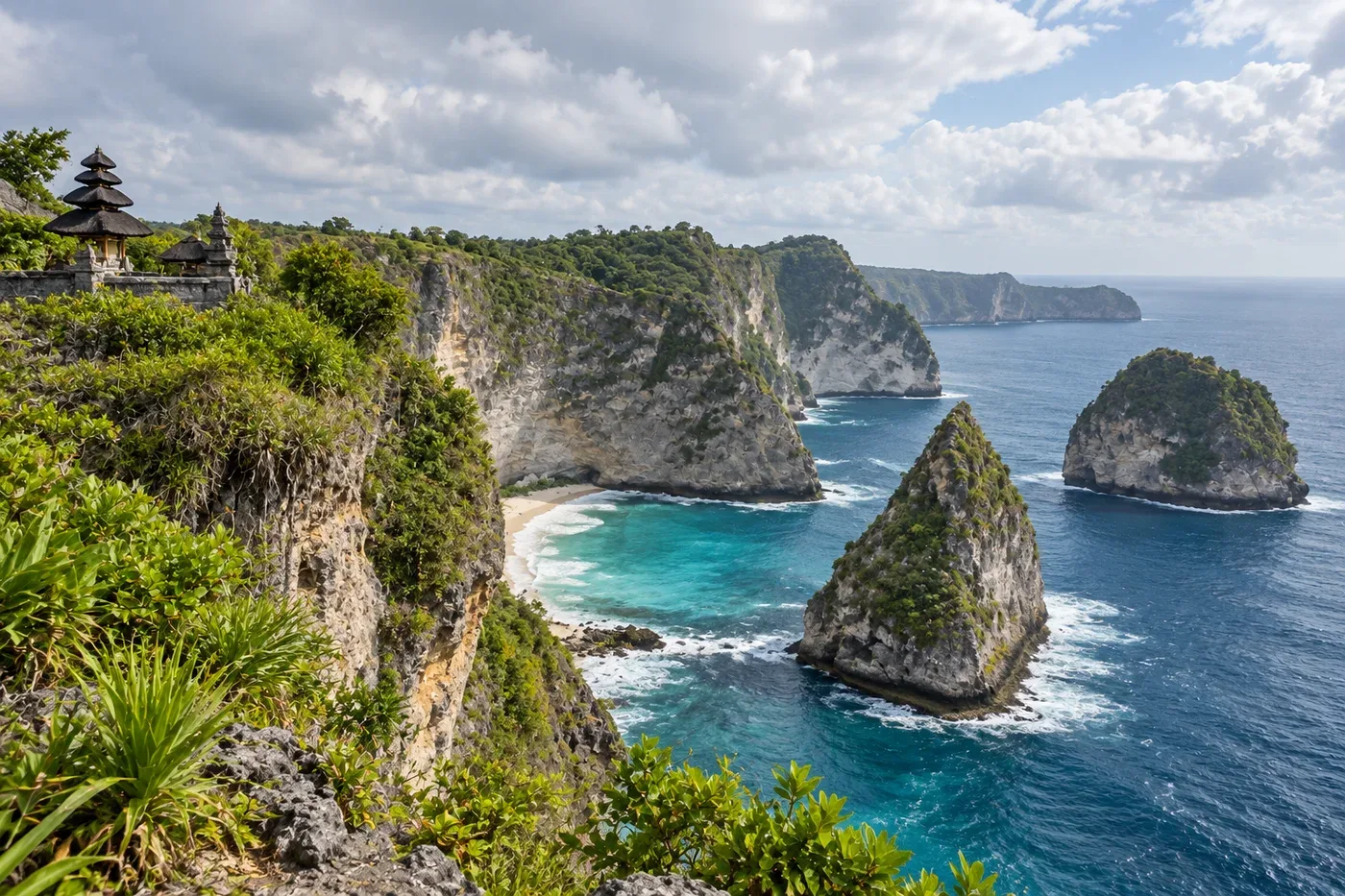
Nusa Penida: quick answers
- Overview
- Nusa Penida rewards a stay built around its scale rather than a rushed collection of famous photographs.
- Season
- The drier season often suits land sightseeing, but sea crossings and marine activities need their own condition assessment.
- Getting around
- Reach Nusa Penida by a booked sea crossing, then arrange island transport from the correct arrival port.
1. Kelingking’s designated upper viewpoints
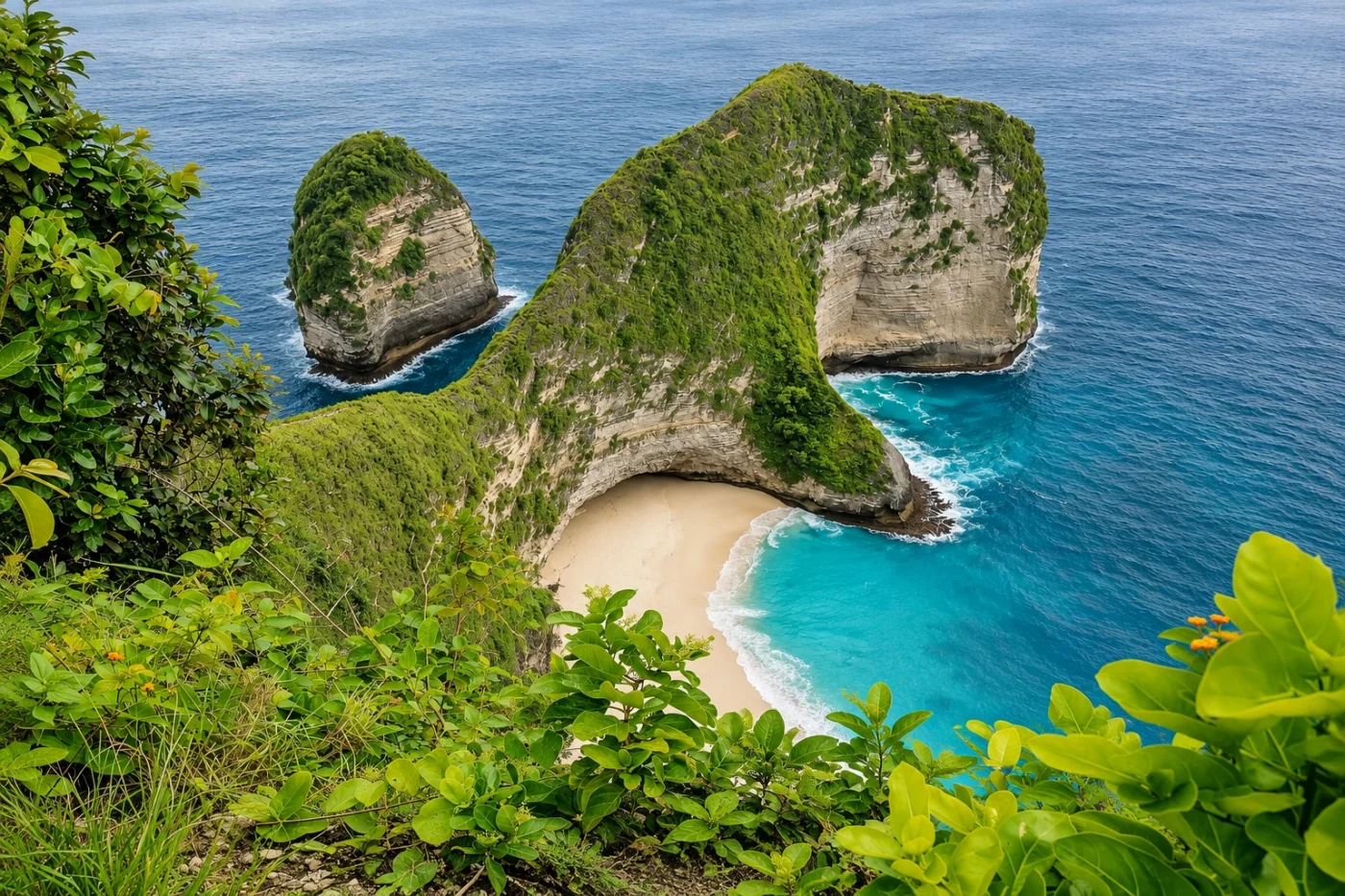
Kelingking’s famous headland can be appreciated from the approved upper visitor areas without making a beach descent. Stay on the current designated route and do not follow informal tracks towards a cliff edge. Barriers and staff instructions matter more than a photograph showing someone standing beyond them. Access and infrastructure have been changing, so do not treat an elevator, new development or advertised shortcut as an operational service without official confirmation. Give the viewpoint time, carry water and accept cloud or crowds rather than taking risks to recreate a particular image.
2. Broken Beach’s coastal arch
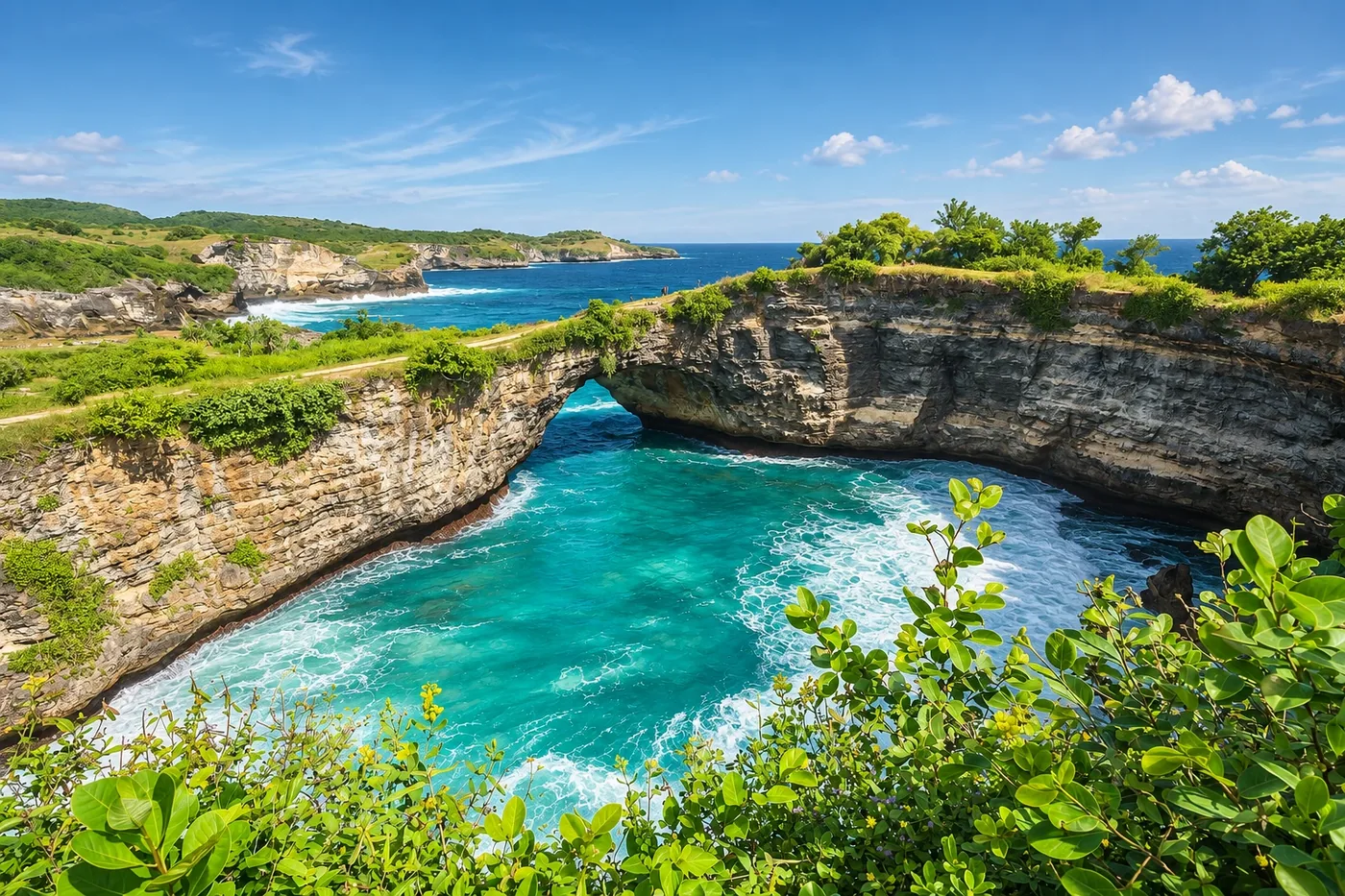
Broken Beach offers a view of a natural coastal arch and the sea enclosed by the surrounding landform. The useful experience is a walk around permitted upper viewpoints, not an attempt to reach the water below. Keep away from undercut edges and choose shoes suited to uneven rock. It can be combined geographically with nearby western-coast stops, but this does not remove the time needed on the road. A quieter pause at one safe position is preferable to repeatedly approaching the brink while looking for a more dramatic camera angle.
3. Angel’s Billabong from the safe viewing area
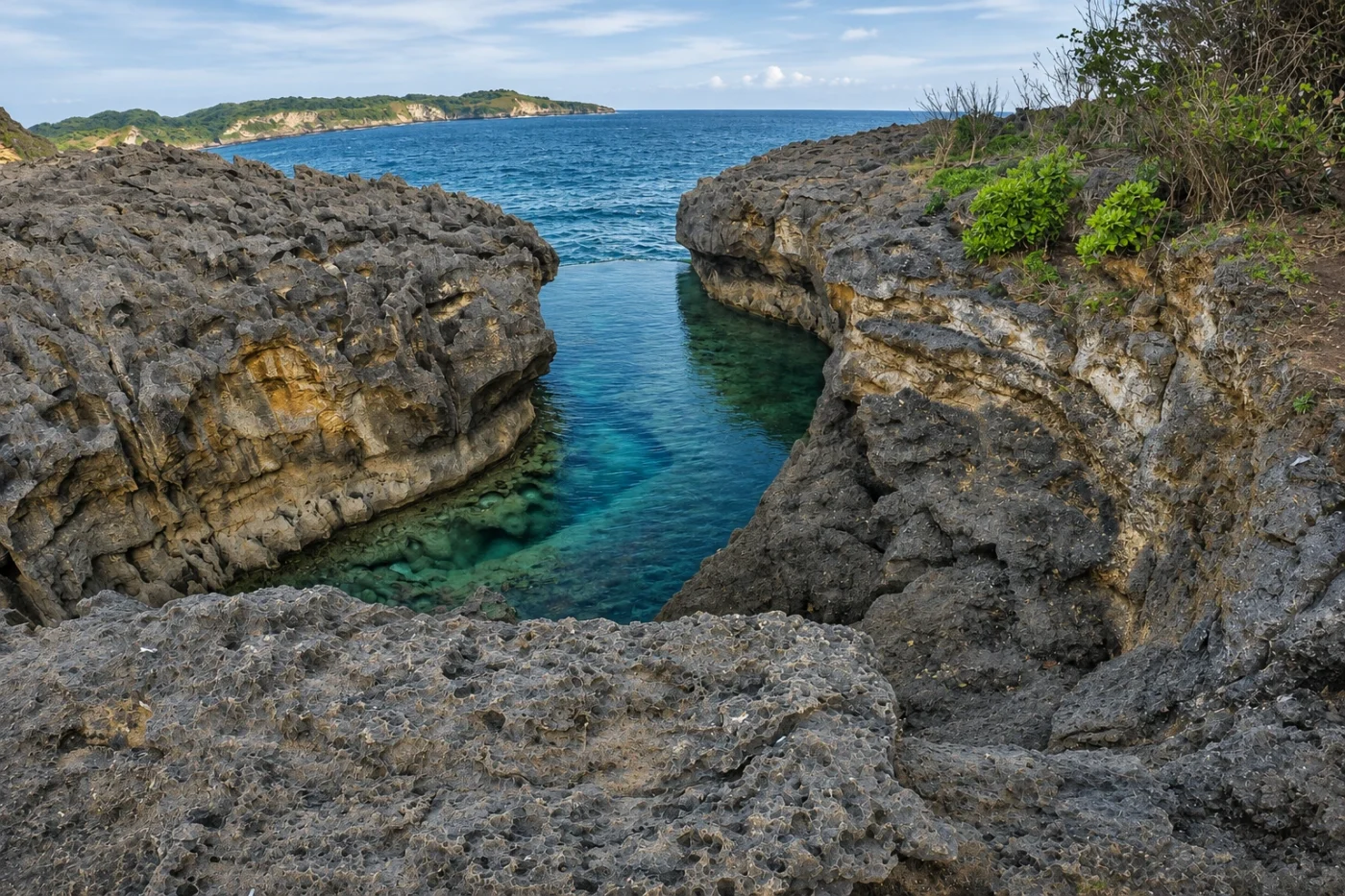
Angel’s Billabong should be treated as a coastal viewing stop, not a guaranteed natural swimming pool. Ocean swell can reach apparently sheltered rock and change rapidly. Follow current barriers and local directions, remain well clear of the seaward edge and do not enter because other people are doing so. The rock shapes and moving water are visible without taking a risk at the pool’s lip. Keep children close, face the sea when moving through the visitor area and abandon the stop if conditions or access instructions make it unsuitable.
4. Crystal Bay as a relaxed coastal stop

Crystal Bay can provide a less rushed pause after a western sightseeing route, with time for the shore setting and a meal where available. A sheltered-looking bay is not automatically safe for independent swimming or snorkeling; currents, waves and boat movement still require assessment. Book a suitable local operator if entering the water is the main purpose of the visit. The drive and return arrangements deserve attention, especially if you hope to remain for late light. Do not make a boat departure depend on an optimistic last-minute transfer from the beach.
5. Atuh’s eastern coastal landscape
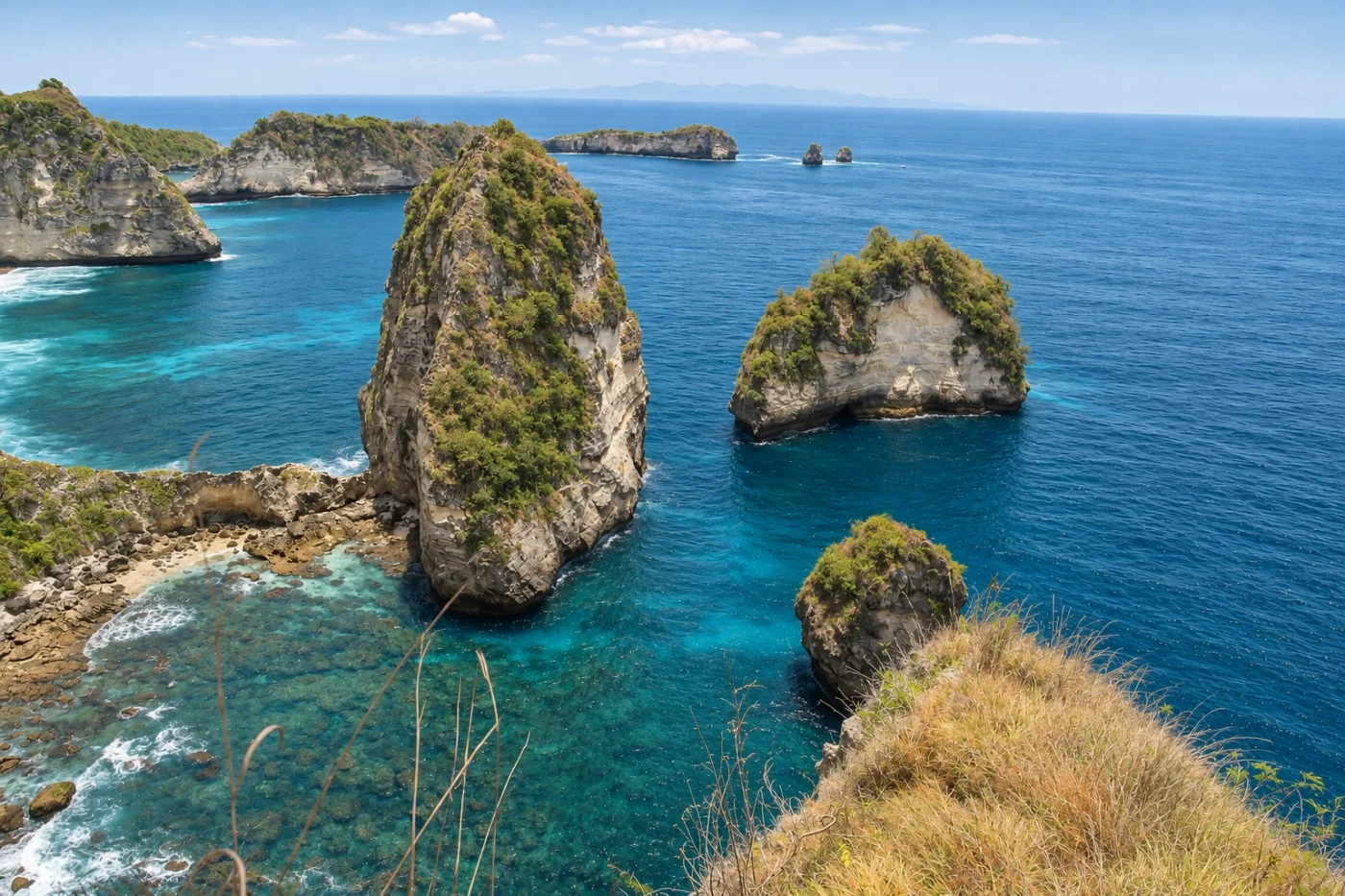
Atuh offers a contrasting eastern view of sea, cliffs and offshore rock formations. Decide whether the upper view or a descent suits your group, and ask about the current route and return climb before committing. Heat, steps and uneven ground can make the visit more demanding than its short distance suggests. Swimming should never be assumed from a photograph of an empty sandy cove. Give the eastern coast its own time block rather than adding it after a full western circuit, and keep the return journey comfortably within your transport plan.
6. Diamond Beach viewpoints and approved access
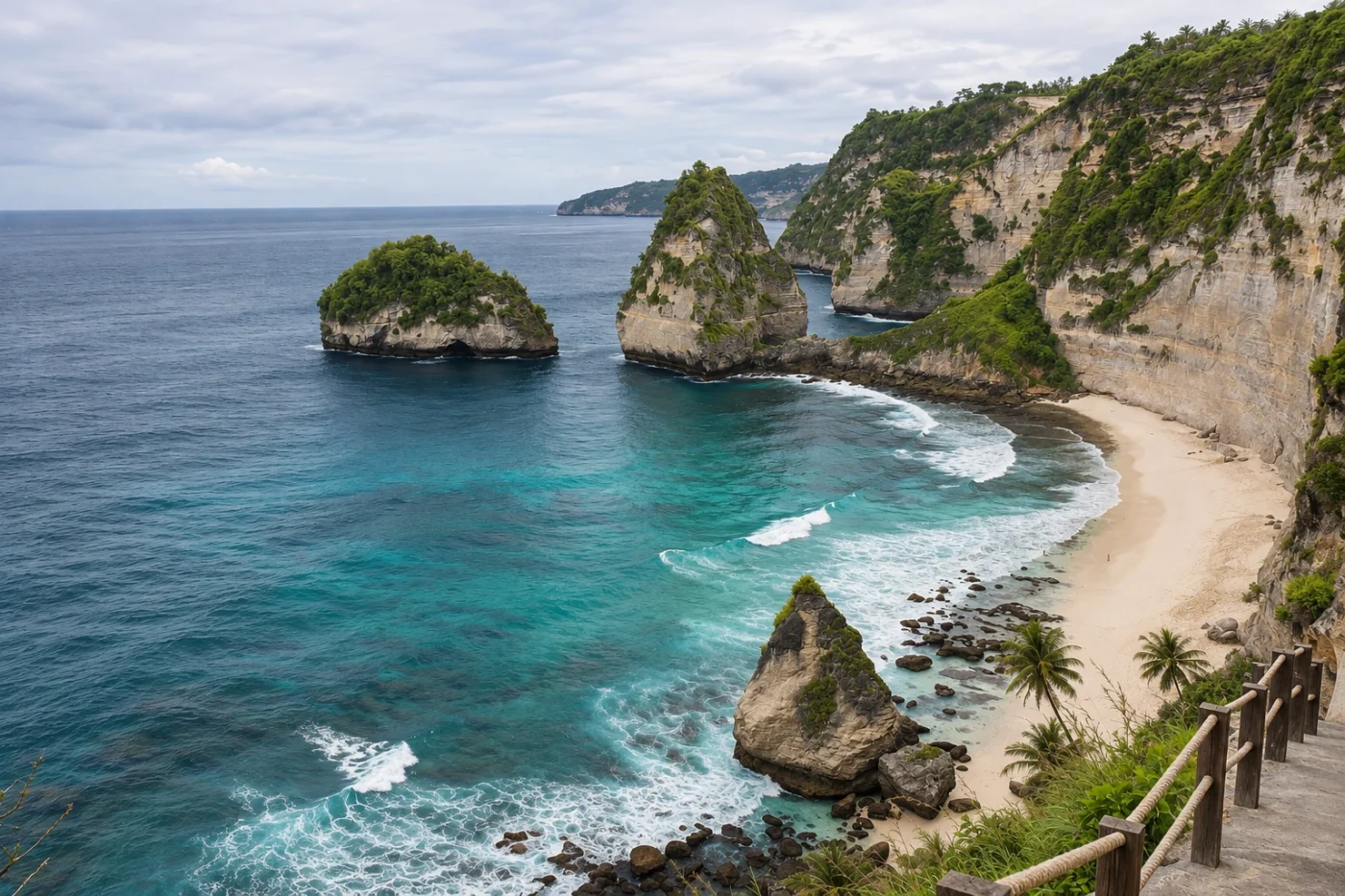
Diamond Beach is another eastern-coast highlight where the view from above can be enough. Use only the currently approved access and do not assume a staircase shown in an old video remains unchanged or suitable for everyone. A descent adds a climb back in the heat and does not guarantee appropriate conditions for entering the sea. Keep away from exposed edges during photography, and choose a viewpoint visit if anyone is uncomfortable with the route. Combine nearby eastern stops selectively instead of measuring the day by how many beach names appear on the itinerary.
7. Goa Giri Putri temple

Goa Giri Putri offers a sacred cave-temple setting different from the island’s coastal viewpoints. Check visitor access, required clothing and current entry arrangements before arriving. The entrance involves a confined passage, so discuss the experience with your guide if enclosed spaces or mobility limitations are a concern. This remains an active place of worship, with restricted areas and ritual priorities. Move quietly, follow local instructions and ask before photographing people. A cultural visit need not include participating in religious practices, and the cave should not be treated as an adventure playground.
8. The rolling hills known as Bukit Teletubbies

The inland hills provide a change of perspective from cliffs and beaches. Their appearance changes with rainfall and vegetation, so do not expect the same bright-green slopes in every season. Ask your local driver for a legal stopping place and a suitable permitted viewpoint rather than walking across private land. A short visit can work within an eastern route if the road schedule allows it. The appeal is in the broader landscape and a slower pause, not in trying to climb every visible ridge or obtain an identical social-media composition.
9. A responsible marine-life excursion
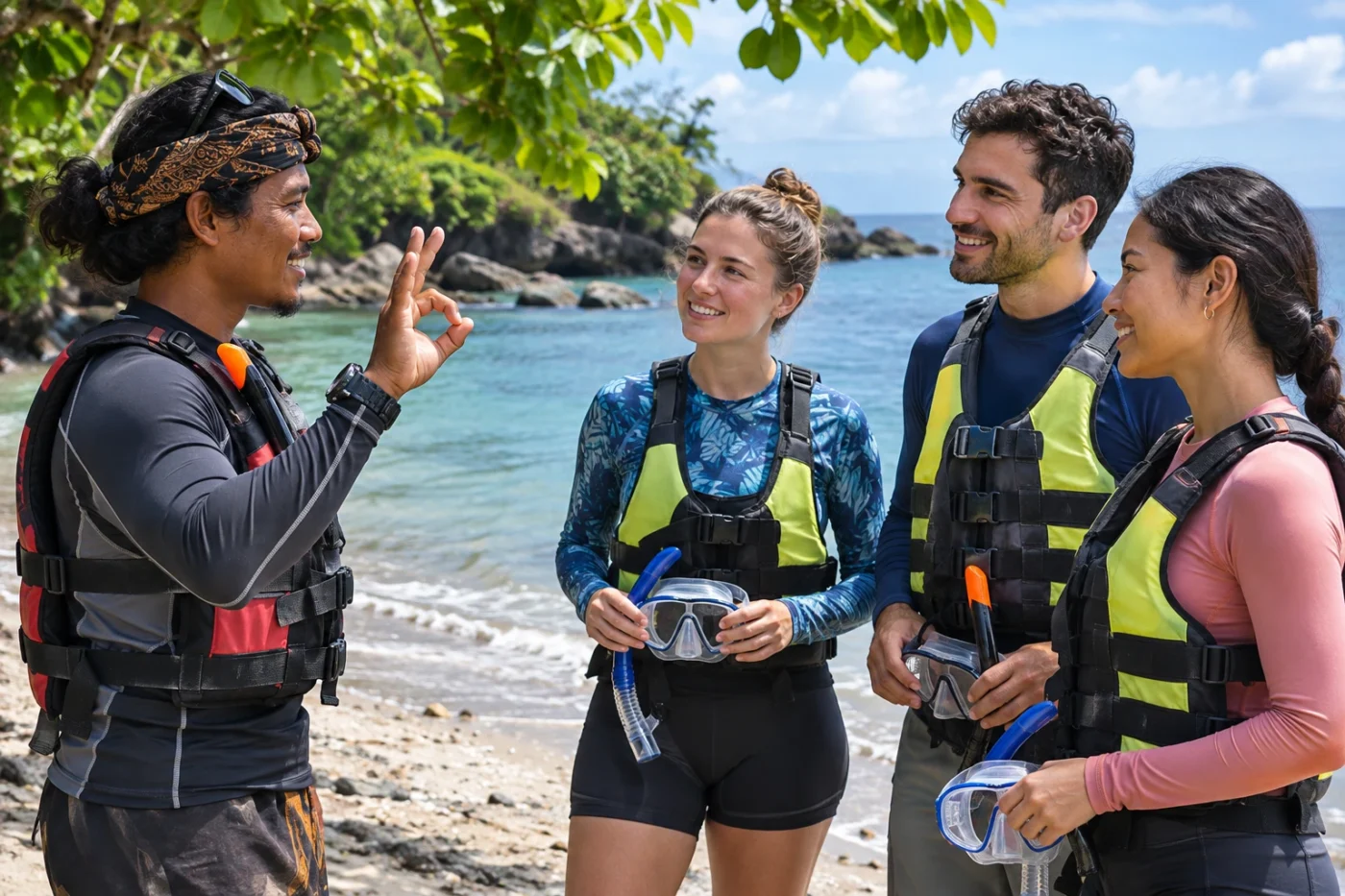
A qualified local provider can assess a suitable snorkeling or diving programme around the island’s protected waters. Ask about the specific sites, current and swell, participant requirements and what happens when conditions change. Manta rays and other marine life are not guaranteed, and animals should never be chased, touched or crowded. Boat travel and time on the water make this a separate substantial activity, not a quick addition to both coasts in one day. Non-swimmers and travelling companions need an explicitly suitable alternative rather than an assumption that every boat welcomes everyone.
10. Sampalan and the lived-in north coast
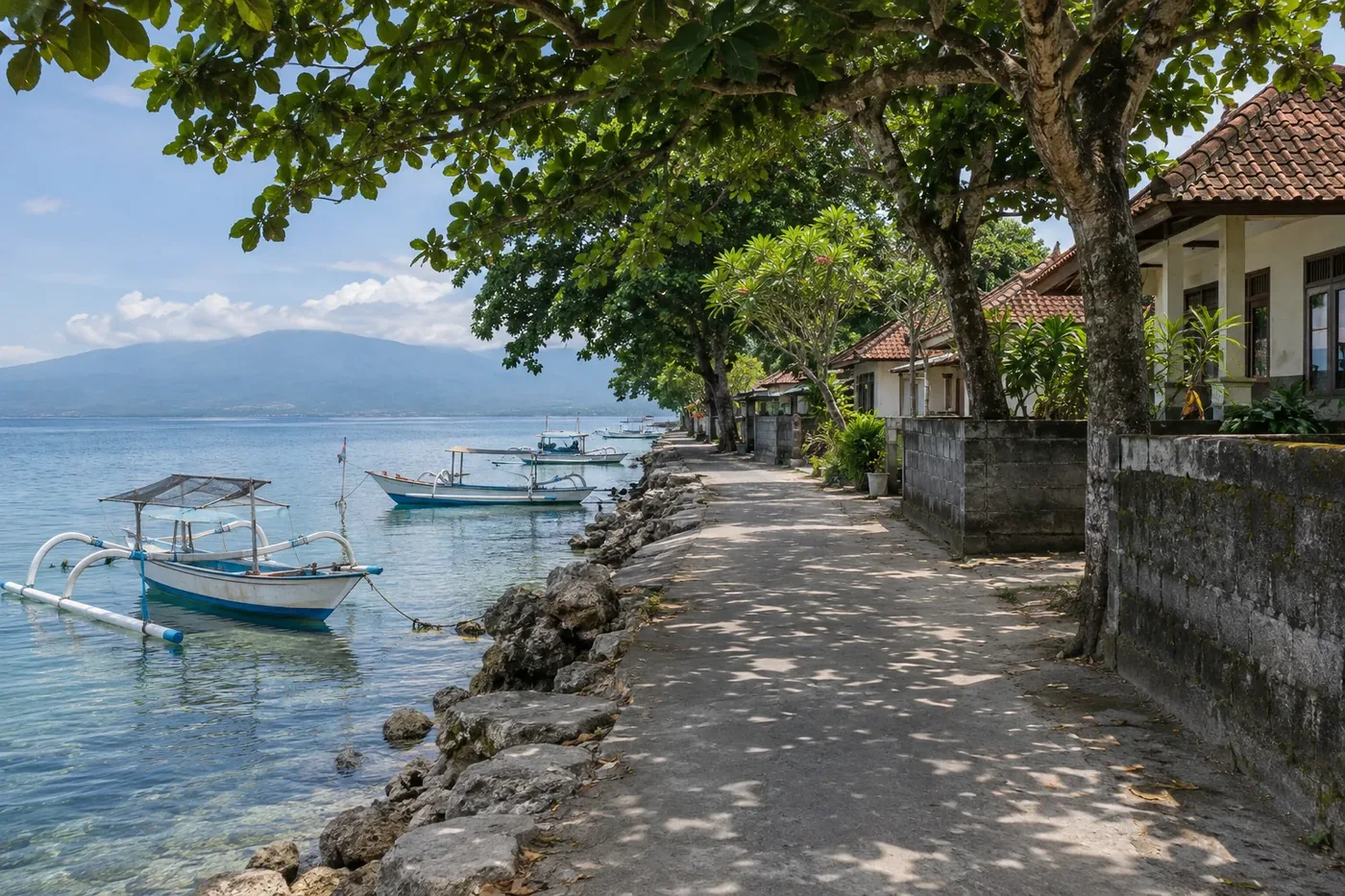
The north-coast settlements around Sampalan provide an opportunity to see a working island beyond the main viewpoint circuit. Choose a modest local walk and meal, keeping clear of active harbour operations and road traffic. Ask before entering religious spaces or photographing residents closely. The shoreline and village setting can be a useful arrival-day introduction when a long sightseeing drive would feel rushed. Confirm where your actual boat arrives, because Penida has more than one landing area and a transfer described only as port pickup may not identify the correct place.
Season and planning
The drier season often suits land sightseeing, but sea crossings and marine activities need their own condition assessment. Rain can affect roads and paths, while cloud changes viewpoints in any season. Check local forecasts, operator decisions and current regency visitor or electronic-ticket requirements before travelling; availability and procedures can change.
Reach Nusa Penida by a booked sea crossing, then arrange island transport from the correct arrival port. A driver can reduce the demands of unfamiliar steep roads, but journeys still take time. Separate west and east where possible, allow boarding margins and avoid a tight flight connection after the return boat.
Suggested pace
One day: a focused introduction
Choose a limited western or eastern land route, allowing for boat check-in and a comfortable return. Do not add snorkeling and both coasts to a standard day-trip schedule.
Two days: add a contrasting experience
Stay overnight and give the west and east separate sightseeing blocks, with a relaxed meal and rest between major stops. Keep the order flexible around weather and road conditions.
Three days: explore at an easier pace
Add a suitable marine activity or a cultural and village day. Keep the final transfer light and leave a margin before the boat instead of filling departure morning with distant viewpoints.
Where to stay in Nusa Penida
Related Bali guides
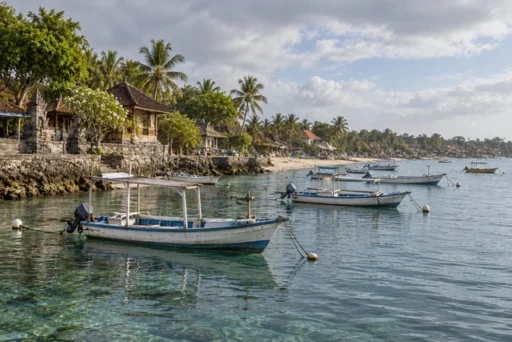
Nusa Lembongan
Explore Nusa Lembongan with ten practical experiences, seasonal advice, transport planning and realistic one-to-three-day itineraries.
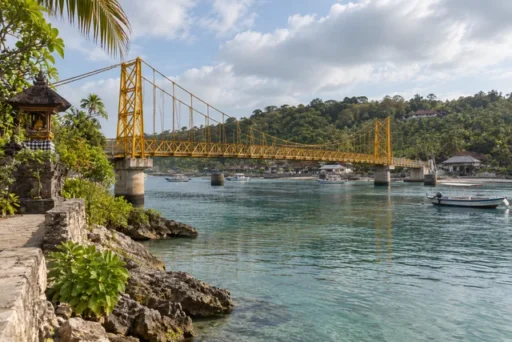
Nusa Ceningan
Explore Nusa Ceningan with ten practical experiences, seasonal advice, transport planning and realistic one-to-three-day itineraries.

Sanur
Explore Sanur with ten local experiences, realistic itineraries, transport advice and seasonal planning for a Bali stay.
Questions and answers
Can I see both coasts in one day?
A very long circuit is possible in some products, but it leaves little time and flexibility. Choose one coast or stay longer.
Is Kelingking’s elevator an available attraction?
Do not assume so. Use current official information and approved visitor paths; this guide recommends the upper viewpoints rather than an unverified access service.
Can I swim at Angel’s Billabong?
Do not treat it as a guaranteed swimming pool. Swell can make the rock shelf dangerous; follow current restrictions and use safe viewing areas.
Are manta sightings guaranteed?
No. Choose responsible wildlife observation and a provider that changes or cancels sites when conditions are unsuitable.
Sources and further reading
Use the responsible authority or provider for current access, availability and booking details.