10 Best Things to Do in Ubud: A Practical Bali Guide
Written 26 October 2026 · BaliTop10
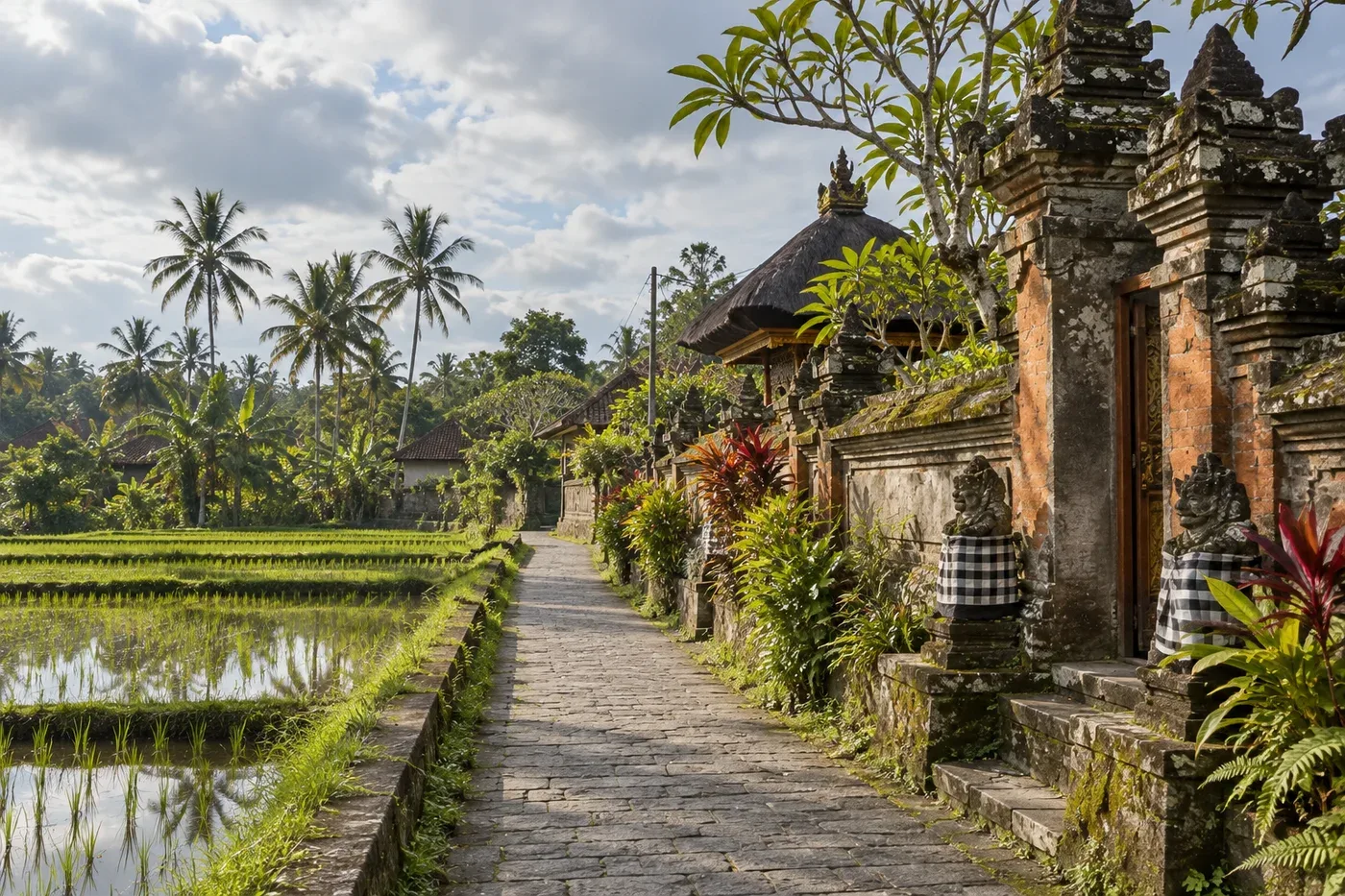
Ubud works best as a base for art, village life and short countryside outings rather than a checklist of distant island landmarks. Its centre brings the palace, market and museums together, while the southern streets lead towards Padangtegal and the Sacred Monkey Forest. Rice-field paths and temple visits add another dimension, but many famous attractions advertised as “Ubud” require a drive outside town. Stay two or three nights if you want to combine culture with time outdoors. The ten choices below distinguish central visits from nearby excursions and explain where a booking, local guidance or a quieter time of day can improve the experience.
Compare the top 10 luxury hotels in Ubud.
Ubud: quick answers
- Best for
- Art museums, central cultural sights and rice-field walks.
- Time needed
- Two or three nights for central sights, a walk and one countryside activity.
- Getting around
- Walk where practical in the centre; arrange a driver or transfers for outlying sights.
- Plan separately
- Tegallalang and other countryside excursions require their own travel time.
1. Ubud Palace and a scheduled dance performance
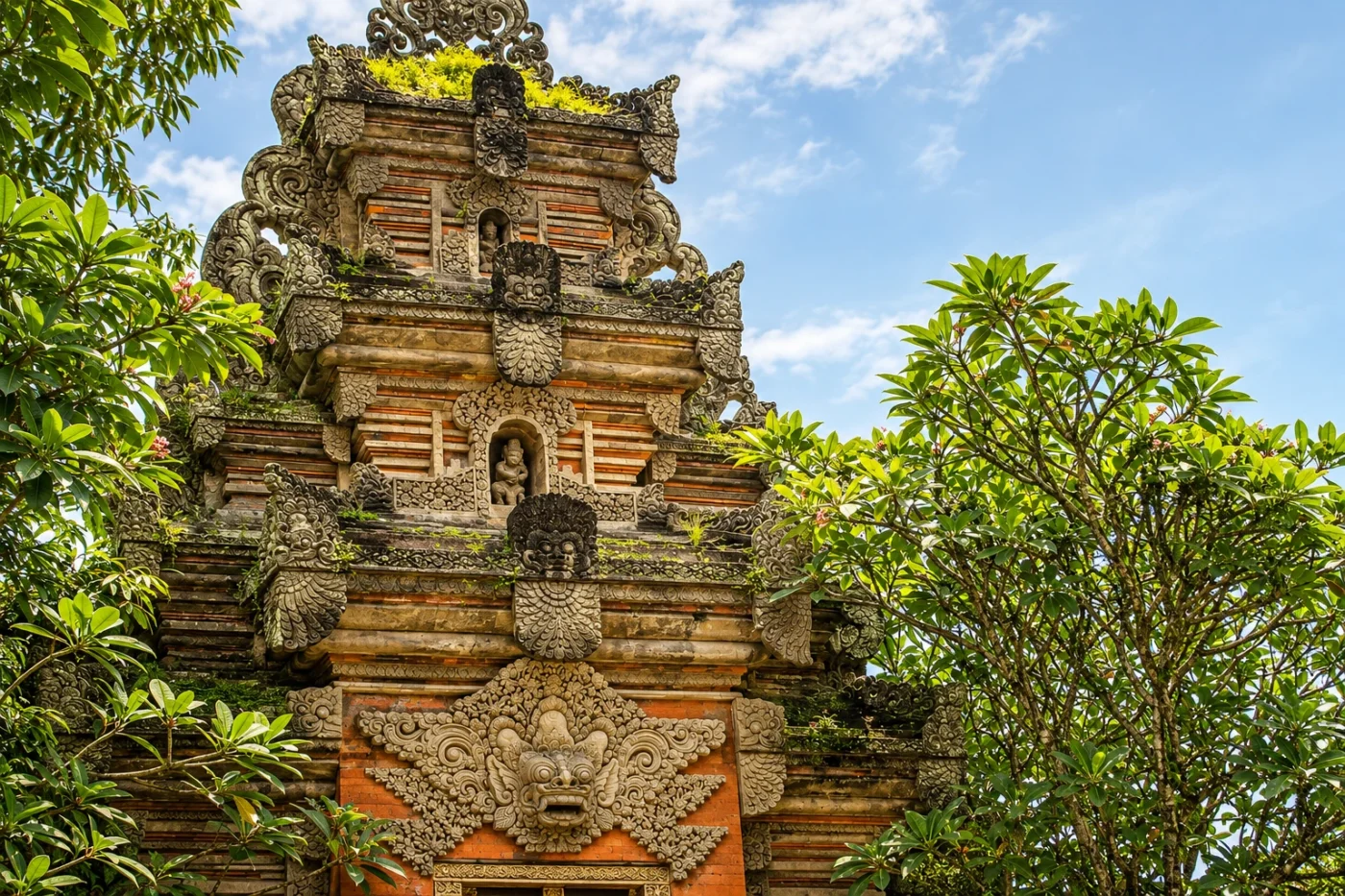
Puri Saren Agung sits at Ubud’s central crossroads and provides a useful first introduction to the town’s royal and artistic setting. Visit the public areas that are open, rather than assuming the entire compound is accessible. A scheduled evening performance is a separate experience: ask about the dance, programme, seating and ticket arrangements for your date. Arrive early enough to settle in without blocking other visitors’ view. Keep the surrounding streets in mind when planning transport afterwards; a short map distance can still become a slow drive around the busy centre.
2. Museum Puri Lukisan
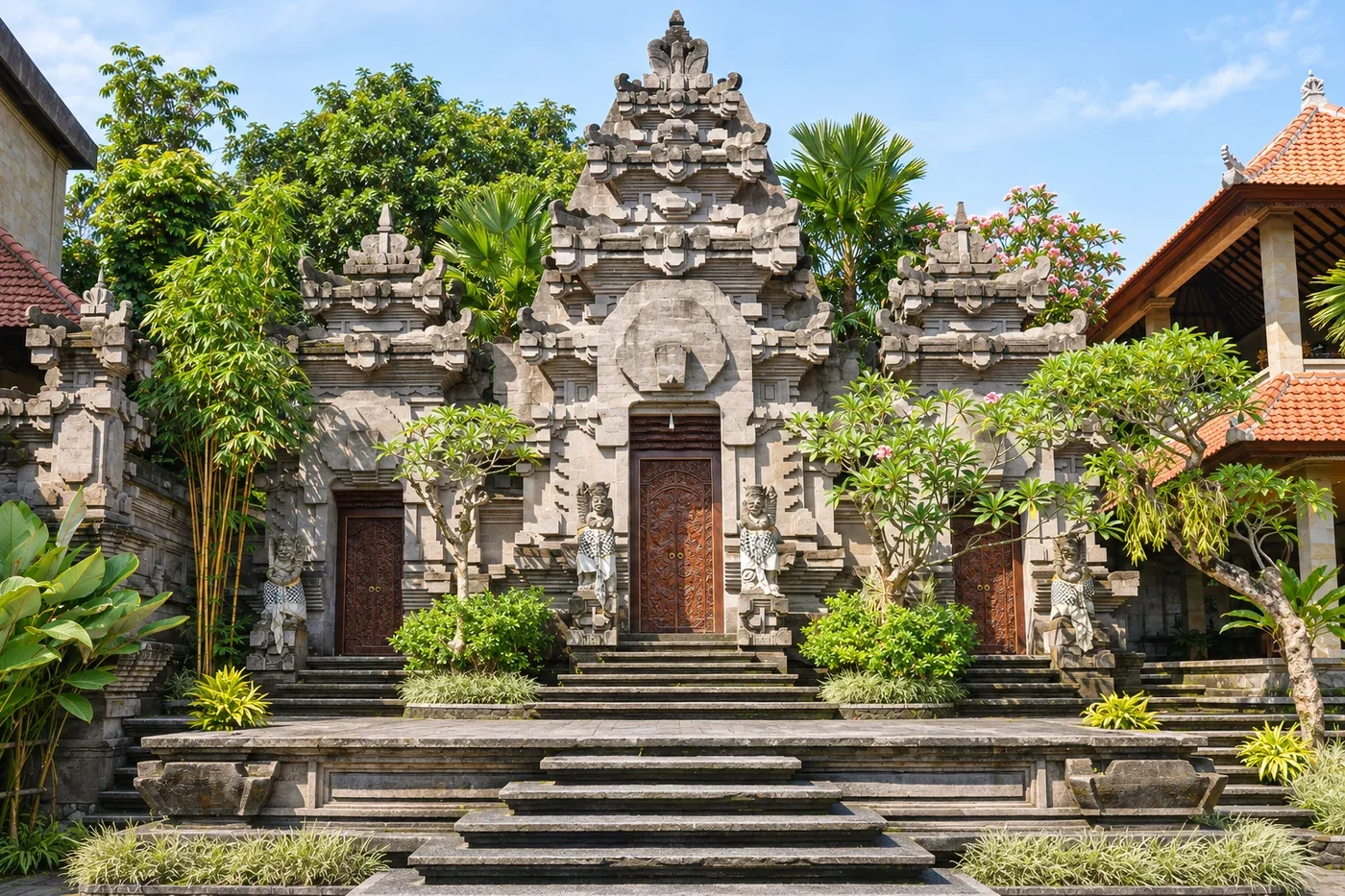
Museum Puri Lukisan gives a central Ubud day some depth beyond shopping and palace photographs. Its collections introduce Balinese painting and woodcarving in a setting that rewards unhurried looking. Read the labels and compare styles rather than searching only for the most colourful canvas. The garden can provide a welcome pause, although outdoor comfort still depends on heat and rain. Check the current exhibitions and any guided interpretation before visiting. Combine the museum with nearby central sights on foot, leaving more distant museums for a separate afternoon instead of repeatedly crossing town by car.
3. Agung Rai Museum of Art
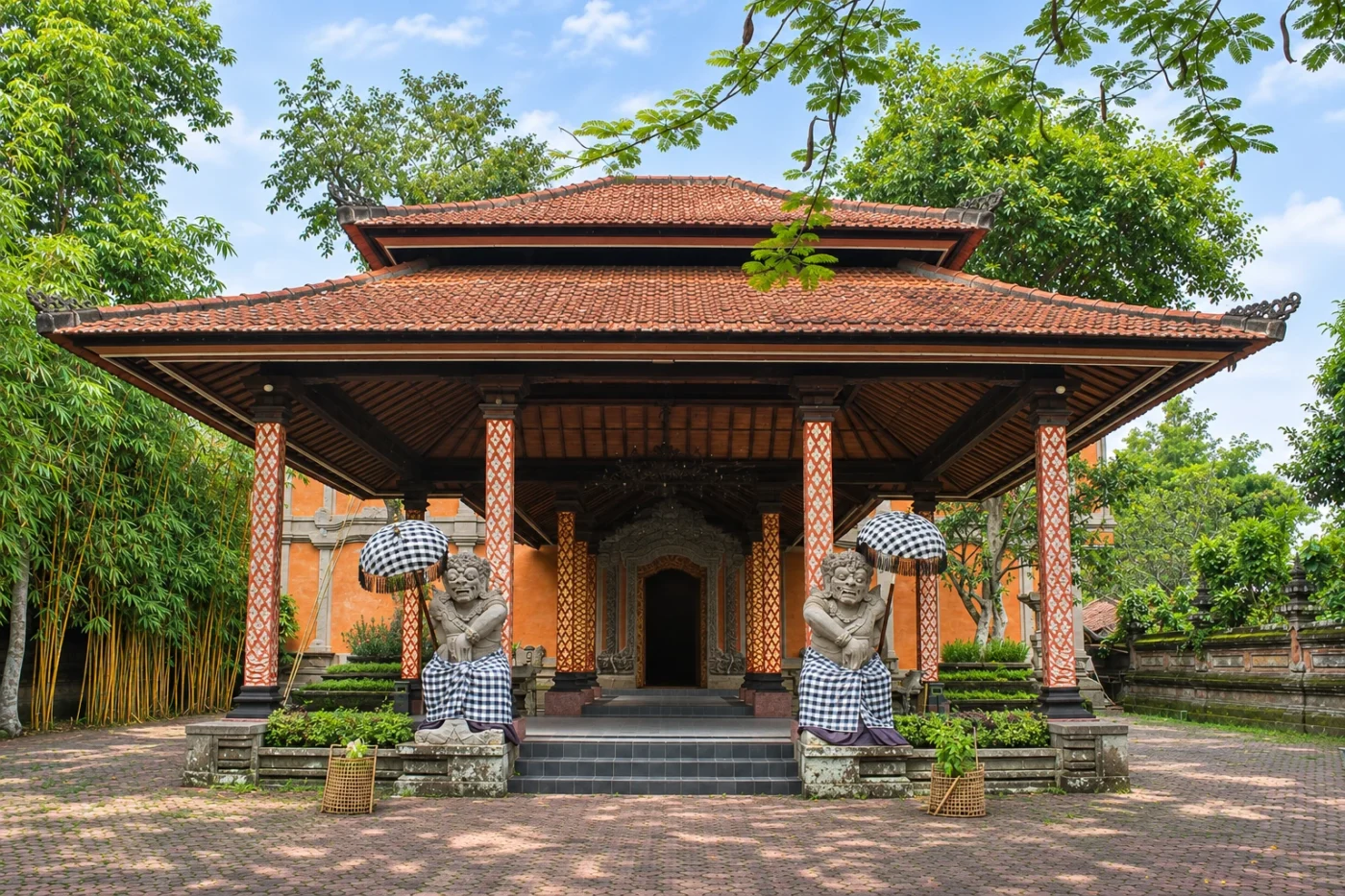
ARMA combines a painting collection with a wider cultural setting south of Ubud’s busiest central junction. Its buildings and gardens make this a different visit from a compact gallery stop. Focus first on the permanent collection, then investigate any temporary exhibition or cultural programme that matches your interests. Workshops and performances have their own calendars and should not be assumed to accompany ordinary admission. Give the museum a substantial time block, especially if you like reading interpretation. It pairs naturally with a south-Ubud day rather than a rushed detour between several distant waterfalls.
4. Sacred Monkey Forest Sanctuary

Padangtegal’s Sacred Monkey Forest is a wooded temple landscape shared with long-tailed macaques. Follow the sanctuary’s current visitor instructions and keep food and loose items secured. Watching animals from space is more appropriate than trying to touch, feed or pose with them. Stay on authorised visitor routes and respect worship areas and any restricted entrances. The forest is still an outdoor visit: paths can be wet and the animals are not predictable pets. Choose a time when you can walk attentively rather than squeezing the sanctuary into the last few minutes before another booking.
5. Campuhan Ridge Walk
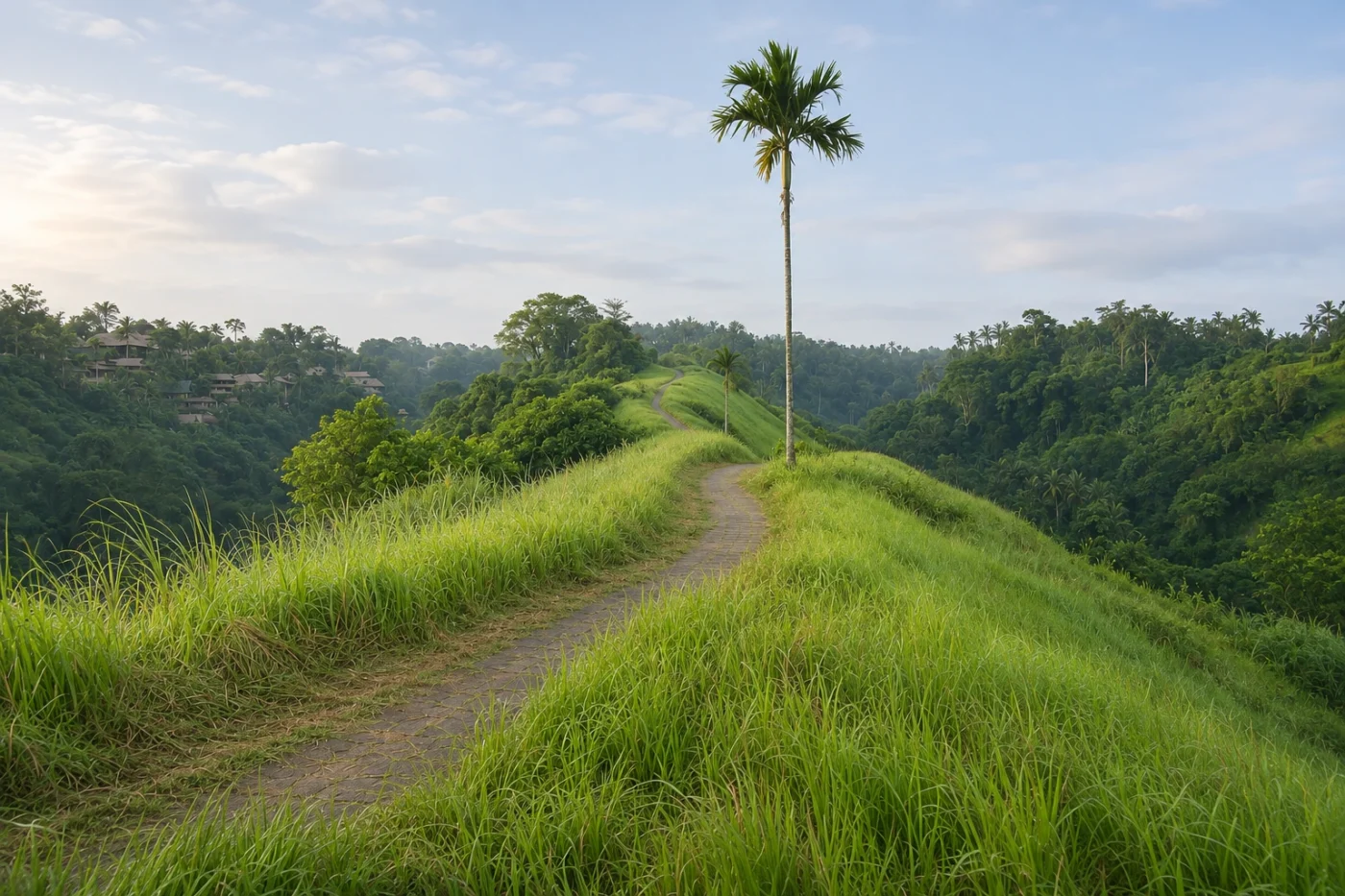
The Campuhan ridge offers a change from central streets, with an established walking route above the meeting of river valleys. It is a walk through an inhabited landscape rather than an isolated mountain expedition. Start during a cooler part of the day, carry water and turn around at a sensible point instead of chasing an arbitrary distance. Paths farther beyond the familiar ridge can lead towards villages and businesses, so check your return route. Wet surfaces and heat affect the effort. Leave the central road safely and avoid treating narrow roadside sections as a comfortable pedestrian promenade.
6. Kajeng and nearby rice-field paths
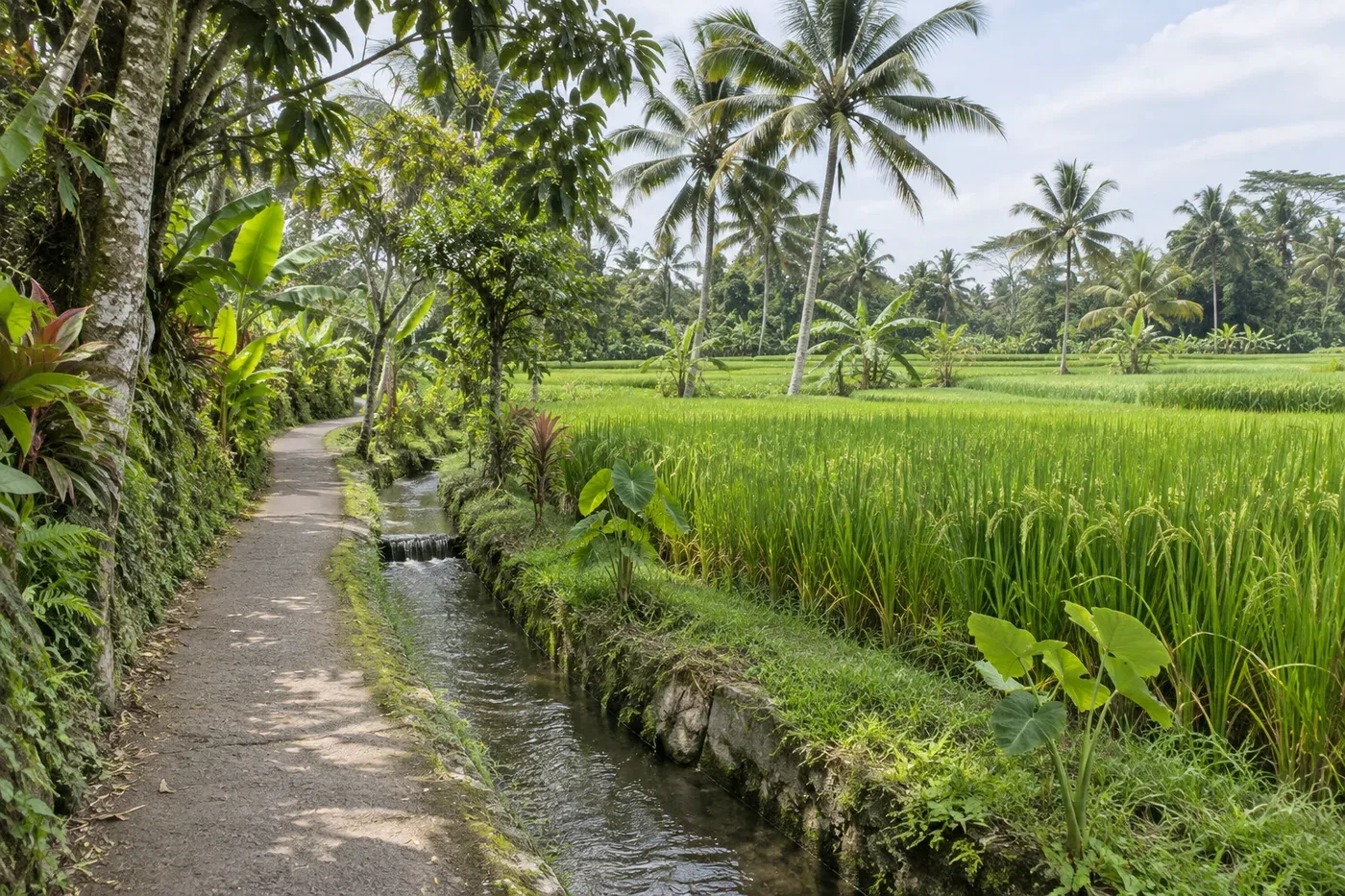
The lanes north of the centre around Kajeng can lead into a different rhythm of small accommodation, fields and local footpaths. Use an established public or permissive route and ask locally when a path is unclear. Rice terraces are working land: keep off planted sections, irrigation walls and private compounds. This outing is most rewarding when taken slowly, noticing water channels and everyday activity without intruding on people’s work. Choose footwear that can handle mud and return before darkness if the route is unfamiliar. A short loop is often preferable to improvising a longer traverse.
7. Ubud Art Market and its surrounding streets

The central market is a useful place to compare craft, clothing and souvenirs, but it deserves the same thoughtful shopping habits as anywhere else. Look closely at materials, finishing and the maker’s story; an item sold in Ubud is not automatically handmade locally. Ask prices clearly and keep bargaining friendly when appropriate. Combine the market with a walk along nearby shopping streets rather than buying everything at the first stall. Carry purchases securely in crowded areas and keep walkways free while stopping. A morning visit can fit before museums, with an indoor lunch when the day becomes hotter.
8. Saraswati temple’s permitted visitor areas
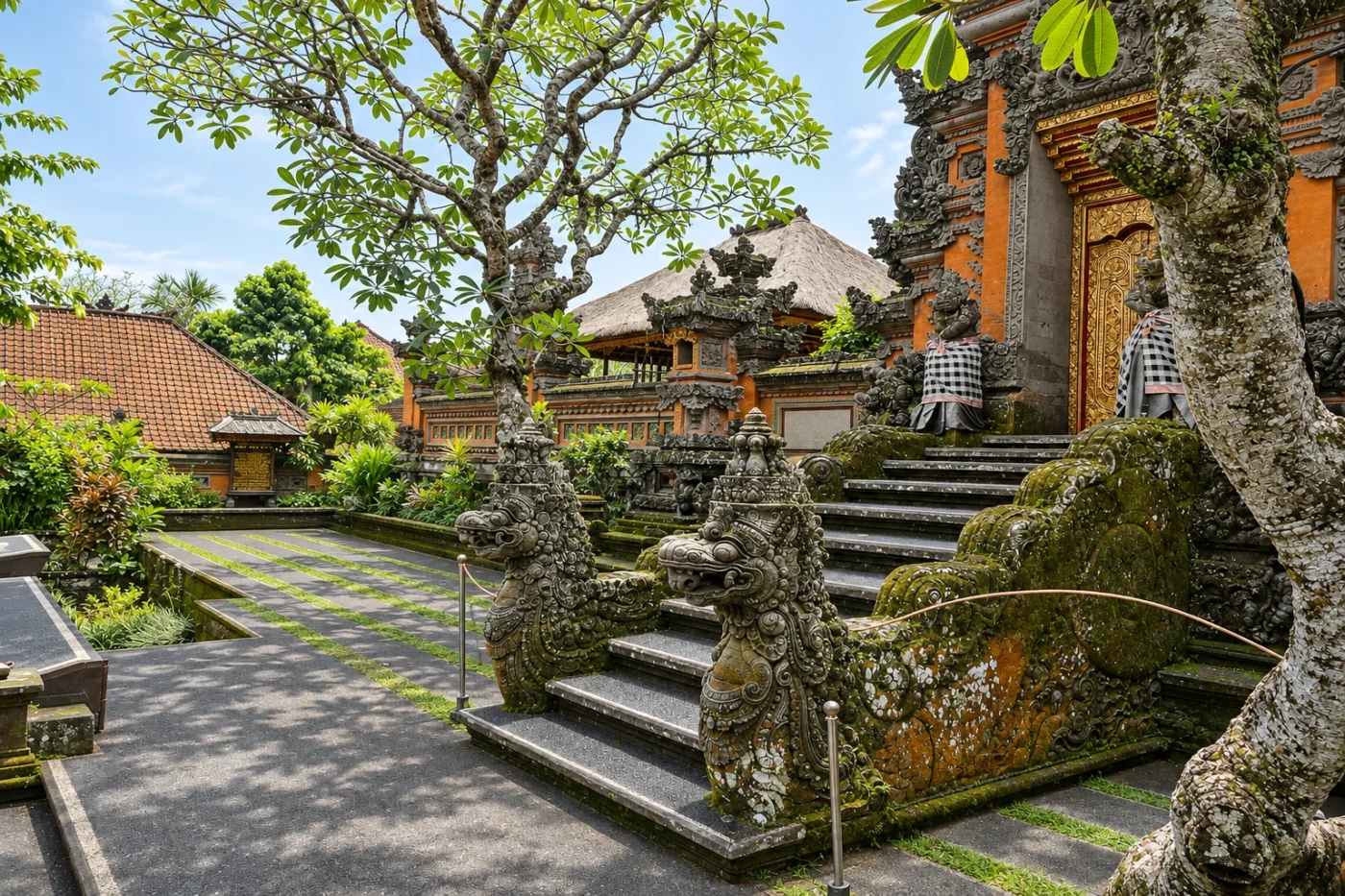
The lotus-pond setting associated with Pura Taman Saraswati is close to Ubud’s central cultural sights. Check the current entrance arrangements and which parts are open to visitors, as temple access and adjacent commercial spaces are not necessarily the same thing. Dress respectfully and let worship and ceremonies take priority over photography. The appeal is in the relationship between water, planting and Balinese architecture, not simply a posed picture. Avoid promising a particular flower display or performance every day. Pair this short visit with a museum or palace-area walk so it does not require another vehicle journey.
9. A small-group Balinese cooking class
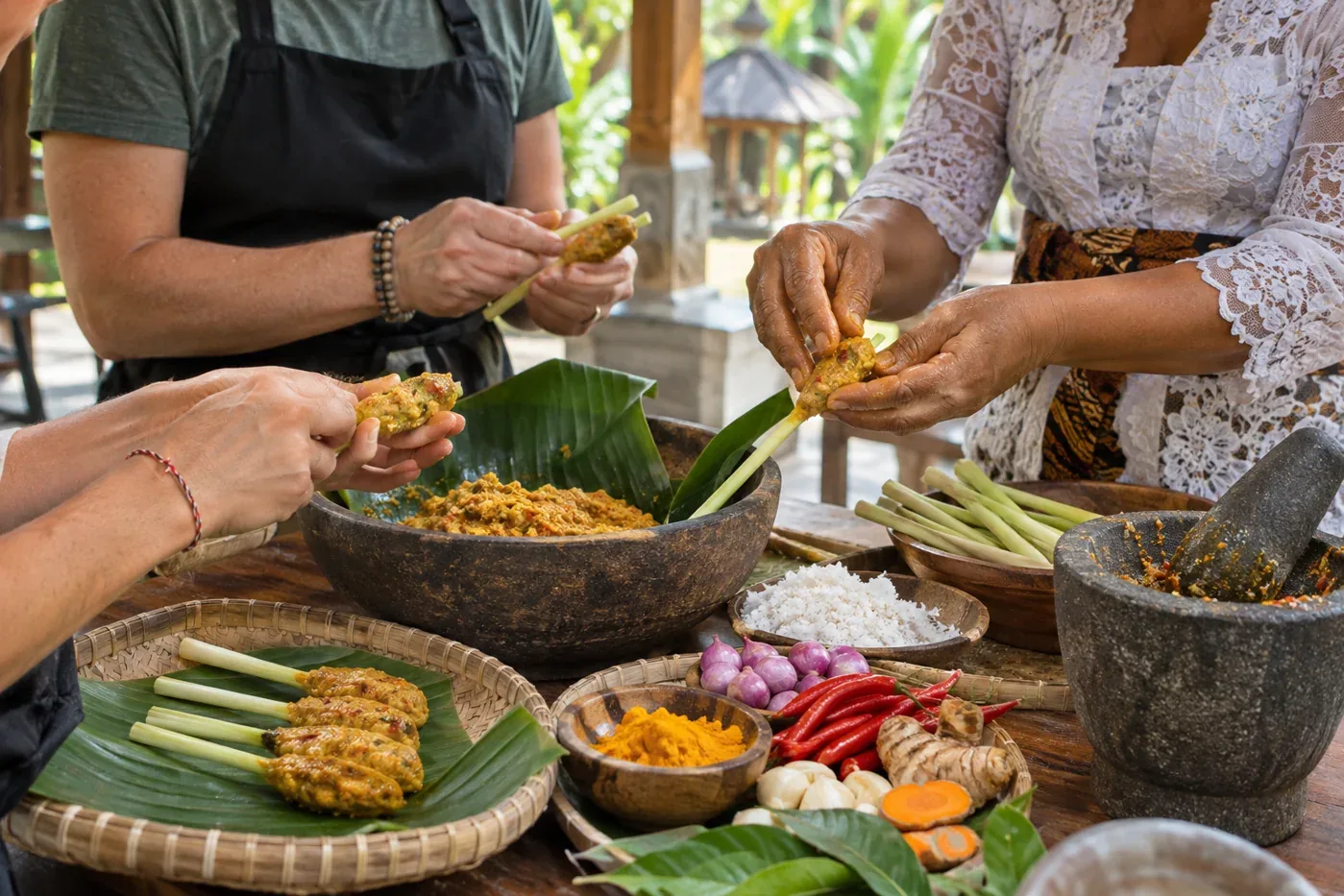
A cooking class can make an Ubud stay more memorable when it explains ingredients and methods rather than racing through a standard menu. Compare the location, group size and actual dishes before booking. Market visits may be offered only with selected sessions, and dietary requirements need discussion in advance. Ask whether transport is included and how much of the class involves your own preparation. A rural venue can add atmosphere but also a meaningful transfer. Choose a programme that fits the day’s pace, leaving enough time to enjoy the meal instead of rushing straight to an evening performance.
10. A separately planned Tegallalang excursion
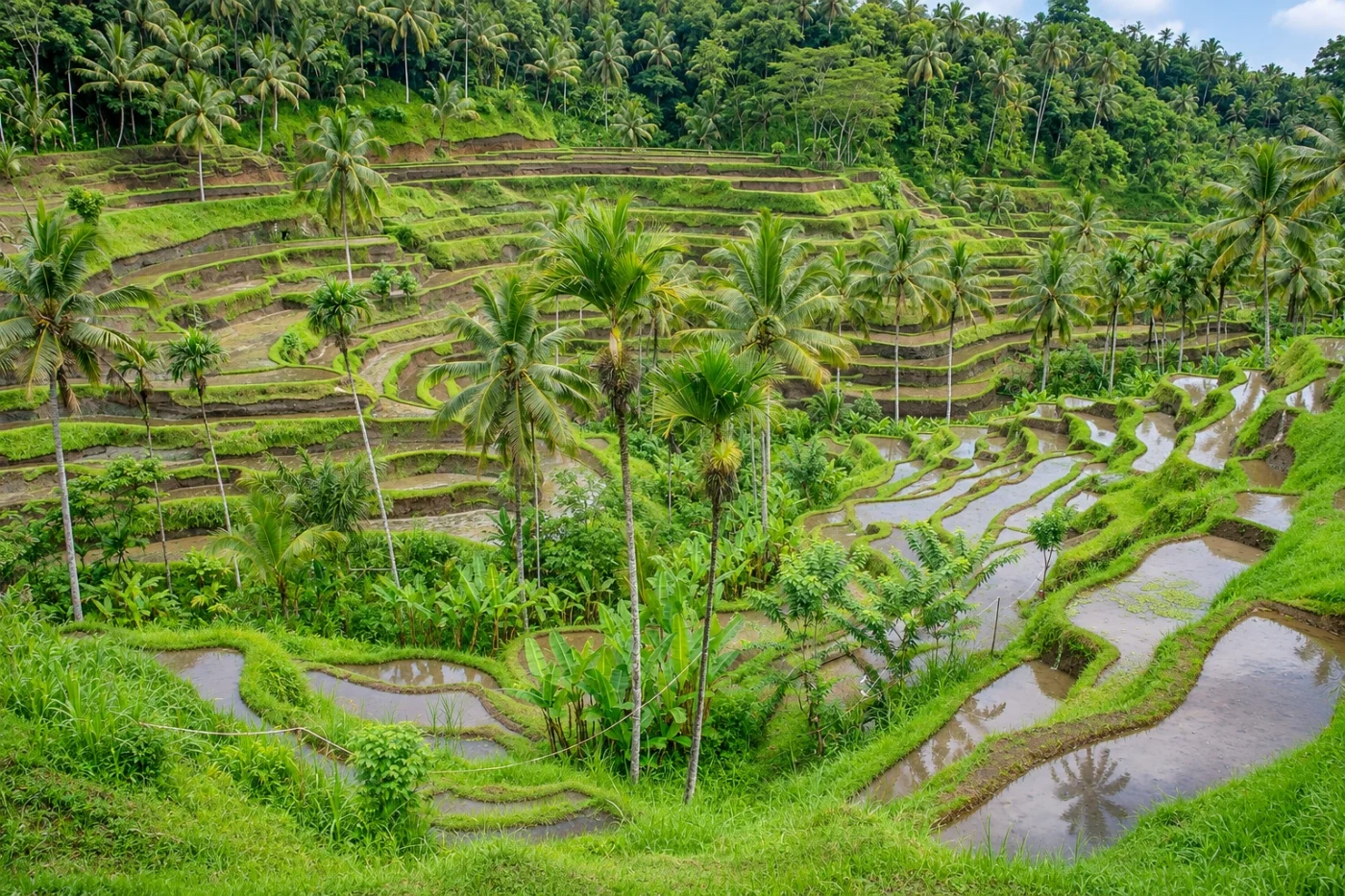
The rice terraces around Tegallalang are outside central Ubud and should be treated as an excursion with its own travel time. Choose an established entrance and a route suited to your group, with attention to stairs, wet ground and heat. Terraces are agricultural landscapes with visitor businesses around them; access fees, photo attractions and activities can be separate purchases. Focus on the fields and water-management setting rather than trying to add every paid backdrop. Return with a generous traffic margin. If your day already includes several museums and a performance, save this countryside outing for another morning.
Season and planning
Ubud’s outdoor walks are more comfortable during cooler hours, while rain can quickly change the condition of field paths. Museums offer useful alternatives when showers interrupt a day. Drier months can still be hot and busy, and seasonal planting means rice landscapes do not always look like a green promotional photograph. Check the local forecast and keep countryside plans flexible.
Central Ubud can be explored partly on foot, but pavement quality, crossings and traffic require attention. Use a local driver or arranged transport for dispersed countryside sights, and confirm the full route rather than assuming every attraction labelled Ubud is nearby. A scooter is not necessary for this itinerary. Allow extra time for town traffic and agree pickup locations that do not obstruct narrow streets.
Suggested pace
1 day in Ubud
Explore the palace area, Museum Puri Lukisan and the market on foot where practical. Choose one afternoon museum or the Monkey Forest, then attend a scheduled dance performance if the programme interests you. Avoid adding a distant waterfall or rice-terrace excursion to the same day.
2 days in Ubud
Use the first day for central art and cultural sights. On the second, walk Campuhan early if conditions suit, enjoy a relaxed lunch and visit ARMA. Keep time for the Monkey Forest on a separate block rather than treating all three as fast photo stops.
3 days in Ubud
Add a cooking class or a countryside morning in Tegallalang to the two-day plan. Choose one substantial excursion rather than several remote stops. Leave the final evening free for a meal and prepare an unrushed transfer to your next base.
Where to stay in Ubud
More places to stay
Related Bali guides
Tegallalang
Explore Tegallalang with ten practical experiences, seasonal advice, transport planning and realistic one-to-three-day itineraries.

Sidemen
Explore Sidemen with ten practical choices, regional excursions, seasonal advice, transport notes and realistic one-to-three-day planning.

Sanur
Explore Sanur with ten local experiences, realistic itineraries, transport advice and seasonal planning for a Bali stay.
Questions and answers
How many nights are useful in Ubud?
Two or three nights allow central culture, a walk and one countryside activity without repeatedly rushing through traffic.
Can I visit without riding a scooter?
Yes. Combine central walking with a driver or booked transfers for outlying sights. Check actual meeting points and pedestrian access.
Should I feed monkeys for a photograph?
No. Follow the sanctuary’s rules and observe without feeding, touching or encouraging animals to approach.
Are all attractions marketed as Ubud in the centre?
No. Rice terraces, waterfalls and rural activity venues can be well outside town, so check the exact location.
Sources and further reading
Use the responsible authority or provider for current access, availability and booking details.