10 Temples in Bali to Visit Respectfully
Written 26 October 2026 · BaliTop10
Bali’s temples are places of worship and community life before they are sightseeing stops. A visit is most rewarding when you understand what is open to visitors, follow local dress and behaviour requirements, and leave room for a ceremony to change the plan. Sea temples, highland complexes and village sanctuaries have different settings and meanings. The ten options here are intended to help you choose a coherent regional route, not to encourage a hurried island-wide temple checklist. Ask a knowledgeable local guide to explain architecture and context, avoid entering restricted courtyards, and never treat a gate or bathing ritual as a prop that overrides the people using the site.
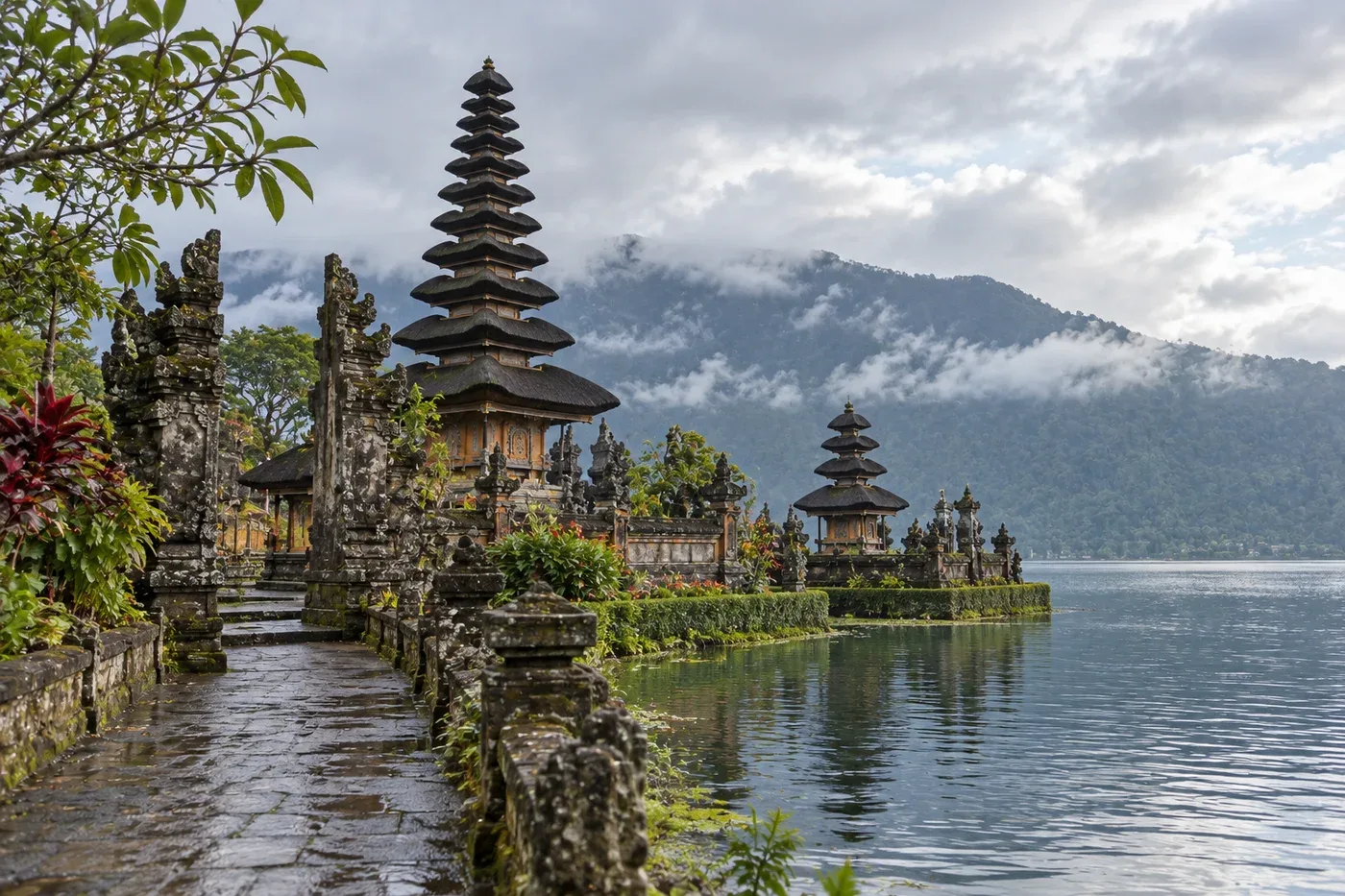
1. Pura Tanah Lot
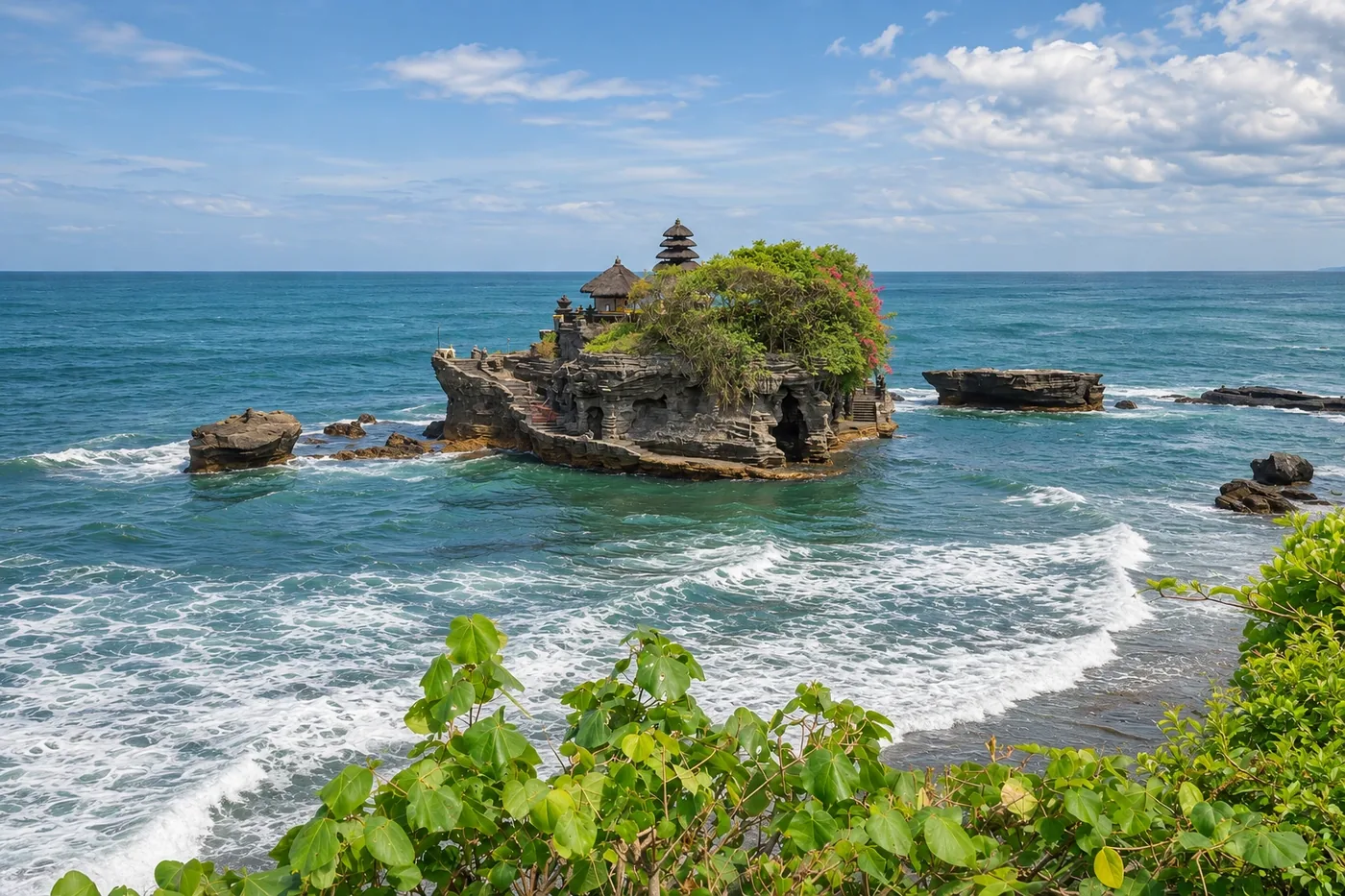
Tanah Lot’s offshore-rock setting makes it a familiar image of Bali’s west coast. Most visitors experience the coastal grounds and views towards the temple rather than unrestricted entry to its sacred interior. Tide, waves and visitor numbers change the atmosphere substantially, and the sunset period can be busy. Combine the visit with nearby Tabanan scenery instead of crossing the island solely for a photograph. Remain behind barriers, do not follow others onto wave-exposed rocks, and ask which areas are actually open on the day.
2. Pura Luhur Uluwatu
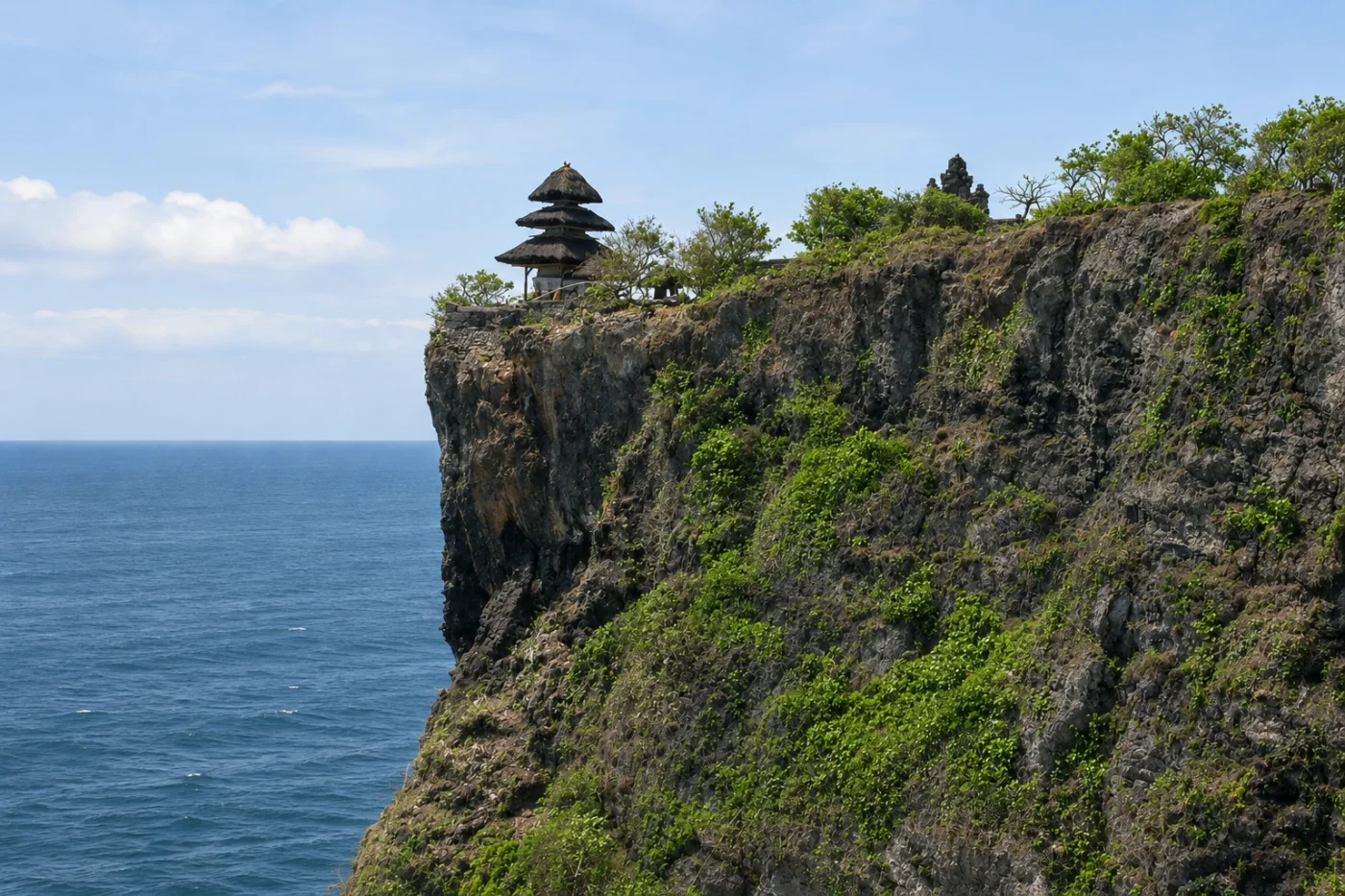
Uluwatu occupies a cliff-top setting above the Indian Ocean on the Bukit Peninsula. The temple grounds, coastal paths and nearby performance arrangements require time rather than a brief stop between beaches. Monkeys are a practical consideration, and cliff edges deserve a proper margin even when other visitors are taking photographs nearby. Secure glasses and loose items, follow the site’s dress instructions and distinguish temple admission from any separately ticketed Kecak performance. Book or confirm the show independently if that is central to your evening, and leave a transport buffer afterwards.
3. Pura Besakih
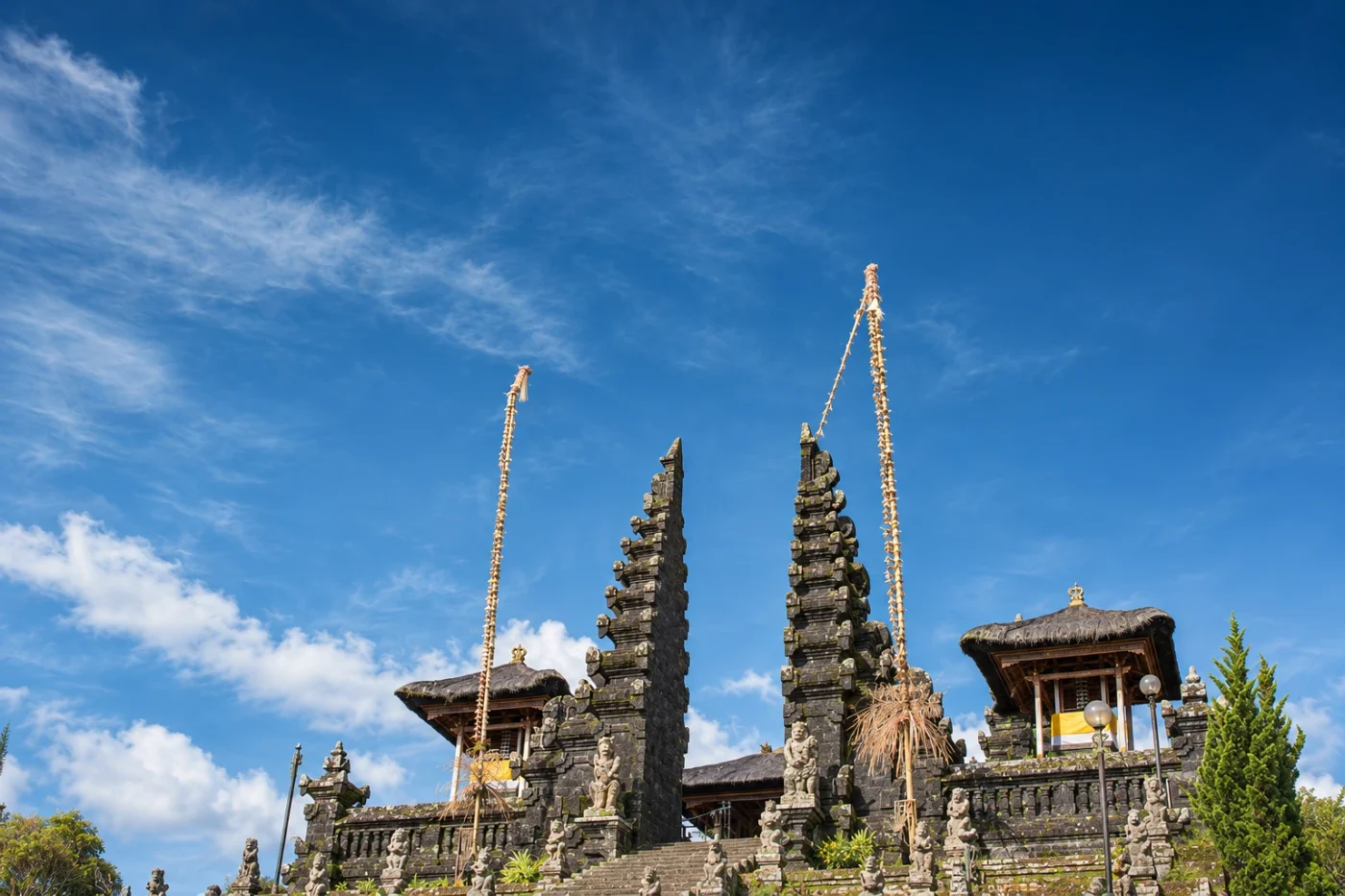
Besakih is a major temple complex on the slopes of Mount Agung and is important to Balinese Hindu religious life. Its scale, topography and ceremonial role make a guided visit especially useful. Understand that the visitor route does not imply access to every shrine or courtyard, particularly during worship or special events. Choose this as the main cultural focus of an east- or central-Bali day. Clarify admission and guide arrangements at the official visitor point, dress appropriately, and avoid making mountain visibility or a clear photograph the sole measure of a worthwhile visit.
4. Pura Ulun Danu Beratan
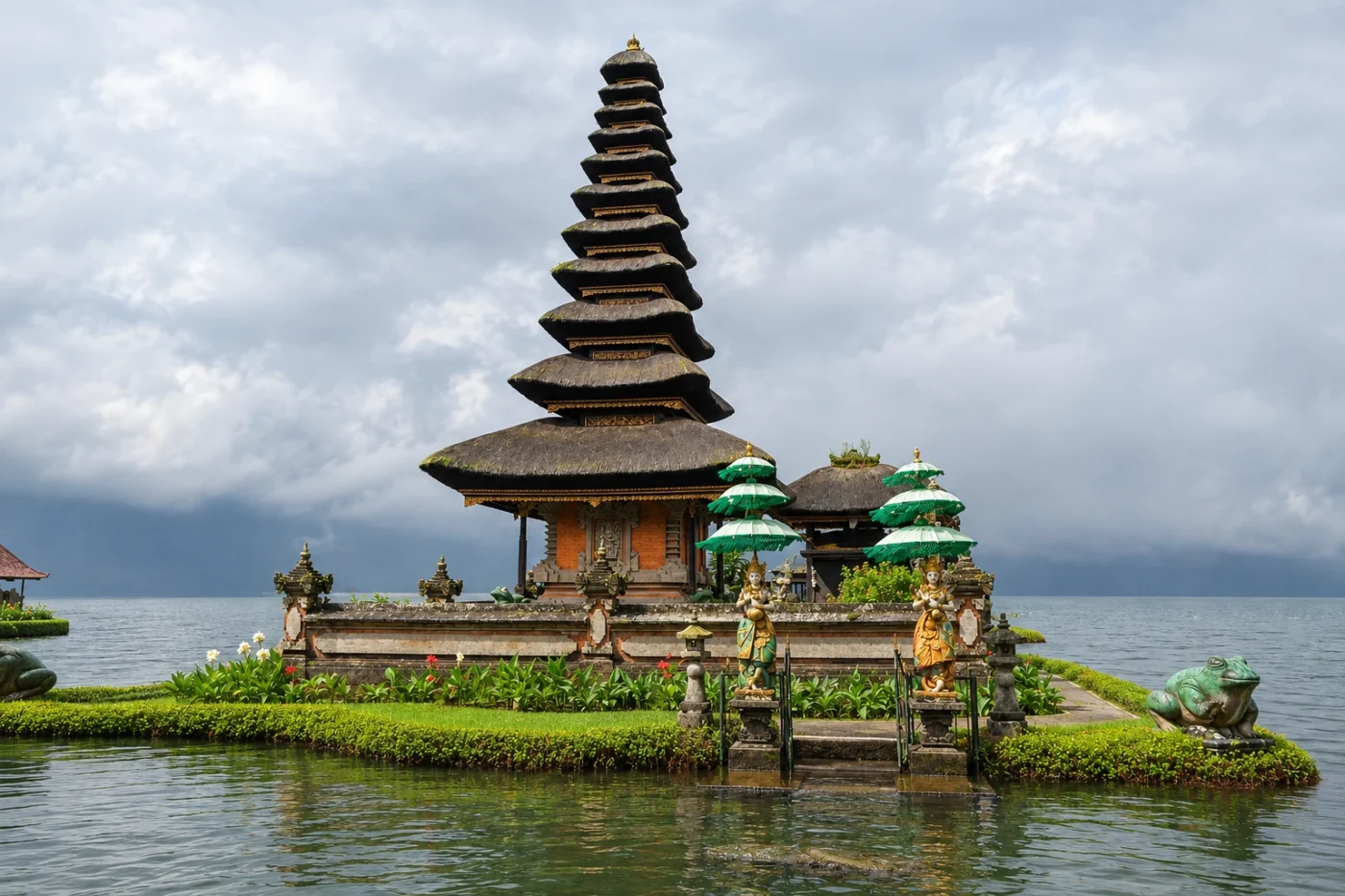
Ulun Danu Beratan stands by Lake Beratan in the Bedugul highlands, where water, gardens and mountain weather shape the visit. The familiar lakeside view changes with water level, clouds and the angle of observation. The wider public gardens and temple setting can reward a gentle visit even without the exact reflection seen in promotional images. Bring a layer for cooler air and rain protection, and keep temple behaviour distinct from recreational lake activities. Pair the site with a nearby highland stop rather than expecting stable sunshine or adding a distant northern coast excursion to the same short day.
5. Pura Tirta Empul
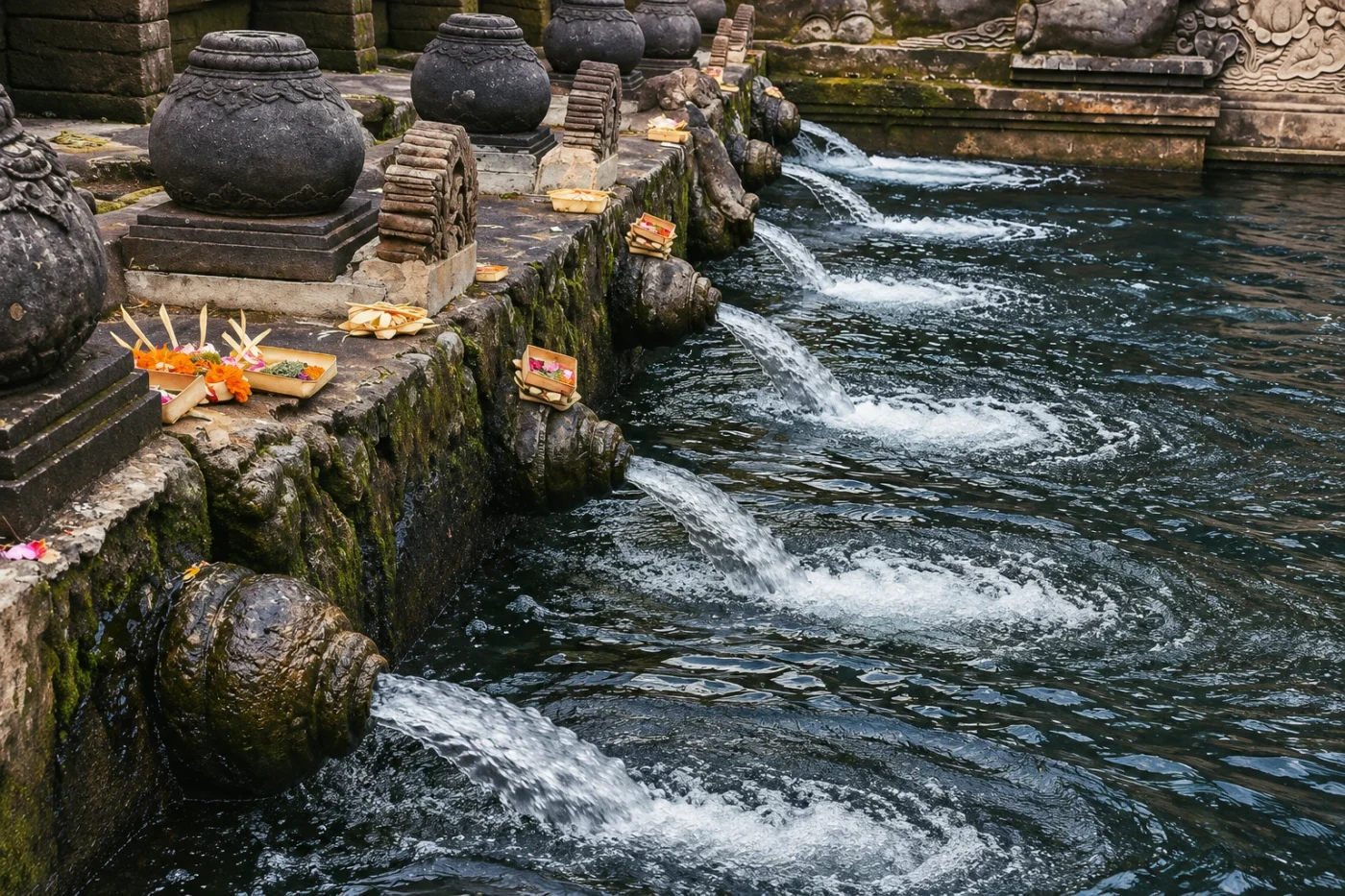
Tirta Empul in Tampaksiring is known for sacred spring water and purification traditions. Watching respectfully and joining a hosted ritual with appropriate guidance are different experiences. A ceremony is not simply an attraction to complete, and practical instructions on clothing, sequence and restricted areas should come from the people responsible for the site. Explain whether you wish to observe or participate before arranging the visit. Follow current temple requirements, ask permission before photographing worshippers, and do not assume entering ritual water is compulsory or suitable for every visitor.
6. Pura Taman Ayun
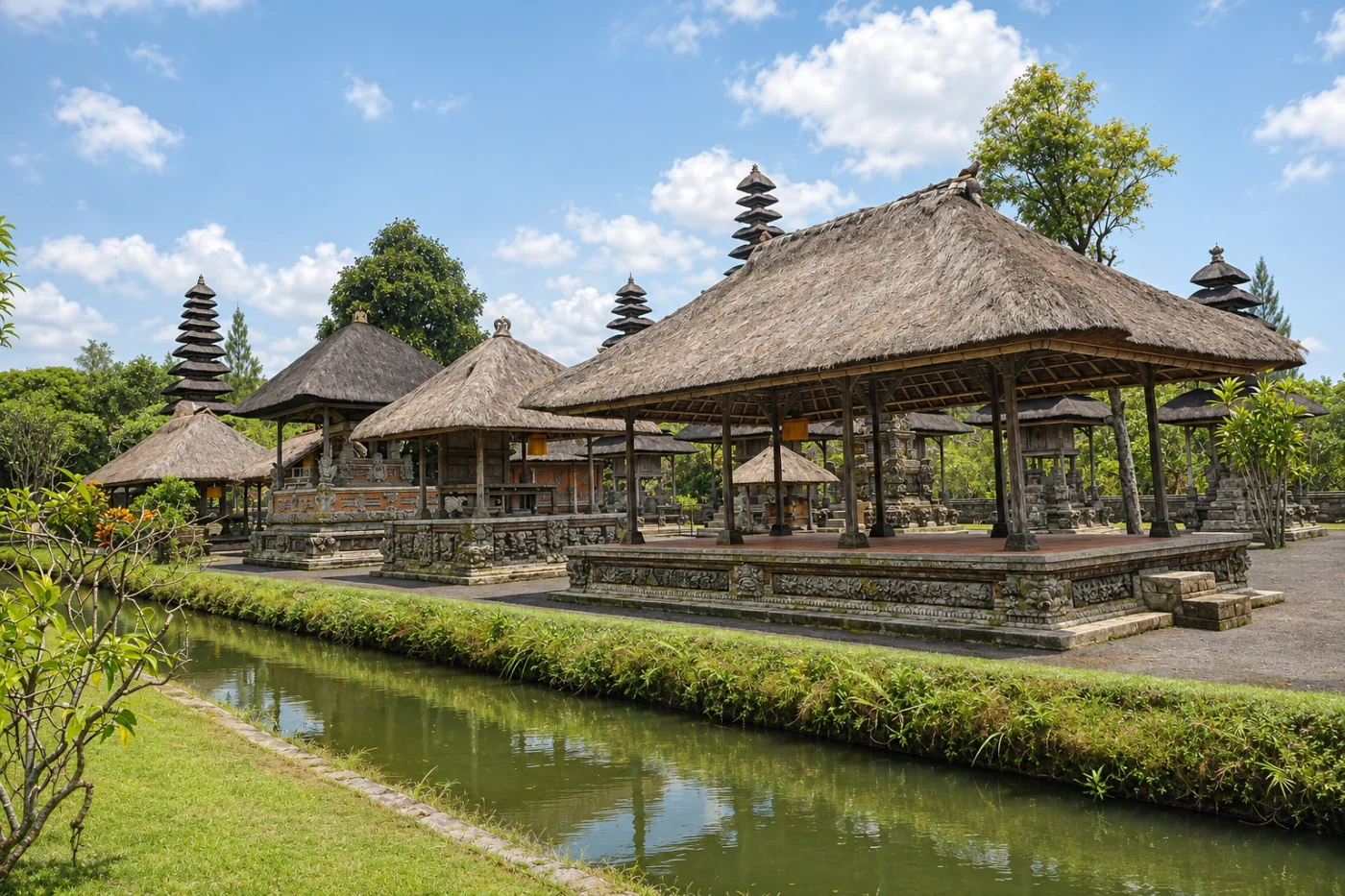
Taman Ayun at Mengwi offers a landscaped setting with temple architecture and water features connected to Bali’s royal and irrigation history. It forms part of the UNESCO-listed cultural landscape associated with subak. The visitor experience is particularly useful for understanding the relationship between temples, agricultural water and community organisation beyond a single scenic gateway. Use the public viewing route rather than entering worship spaces. A guide can help identify architectural features and explain the wider landscape. It fits a Tabanan or Mengwi route more naturally than an itinerary already committed to the far east of Bali.
7. Pura Lempuyang
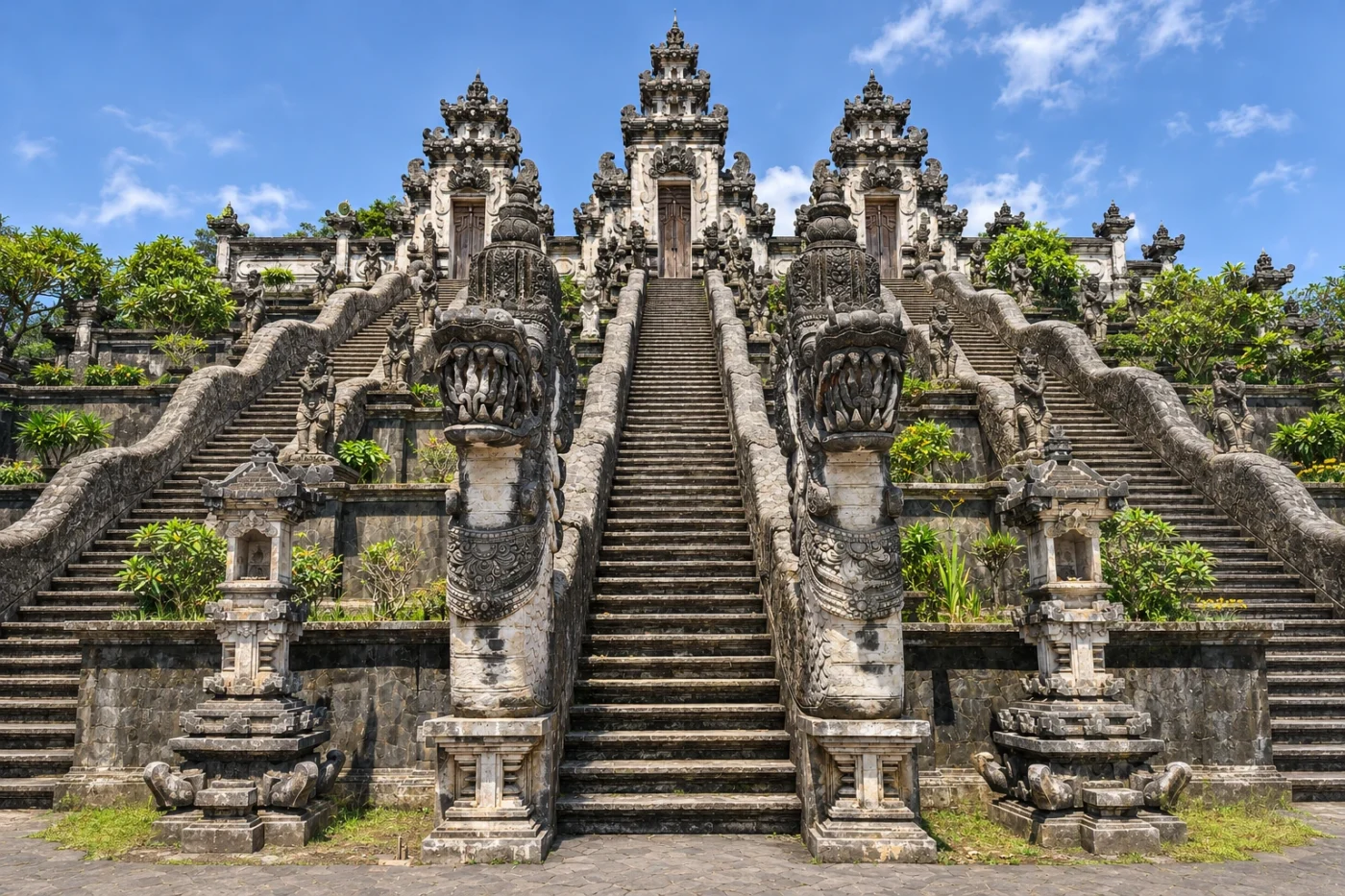
Lempuyang is a sacred mountain temple complex in eastern Bali, with visitor attention often concentrated on its well-known gateway. The broader religious landscape is more significant than the photograph. Access rules, queueing systems and ceremonies can affect a visit, and a mountain appearing through the gate is weather-dependent. Check the current visitor procedure and distinguish a managed photo stop from a longer pilgrimage or walking route. Do not expect an existing reflective pond beneath the gateway; staged reflection effects used in some photographs do not describe a natural pool.
8. Goa Gajah
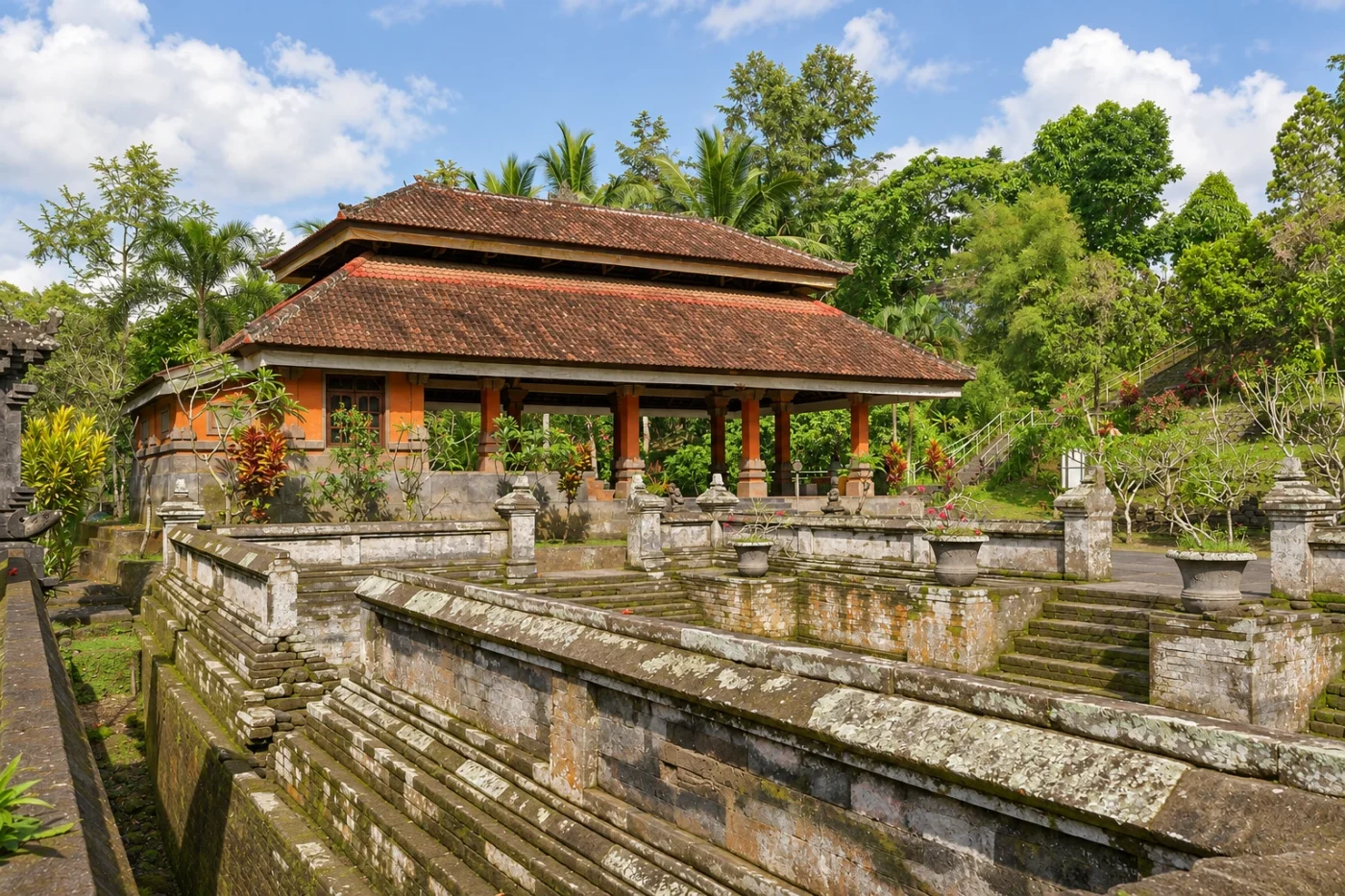
Goa Gajah near Ubud combines a carved cave entrance with bathing structures and a wider archaeological and religious setting. The cave is only one part of the visit, so allow time to look at the surrounding area and interpretation. Steps and uneven surfaces can affect access, especially after rain. Visit from an Ubud-area base and choose a quieter pace instead of rushing between several sacred sites. Follow sarong and dress requirements, avoid touching carvings and ask a guide to separate documented history from stories presented as certain fact.
9. Pura Gunung Kawi Tampaksiring
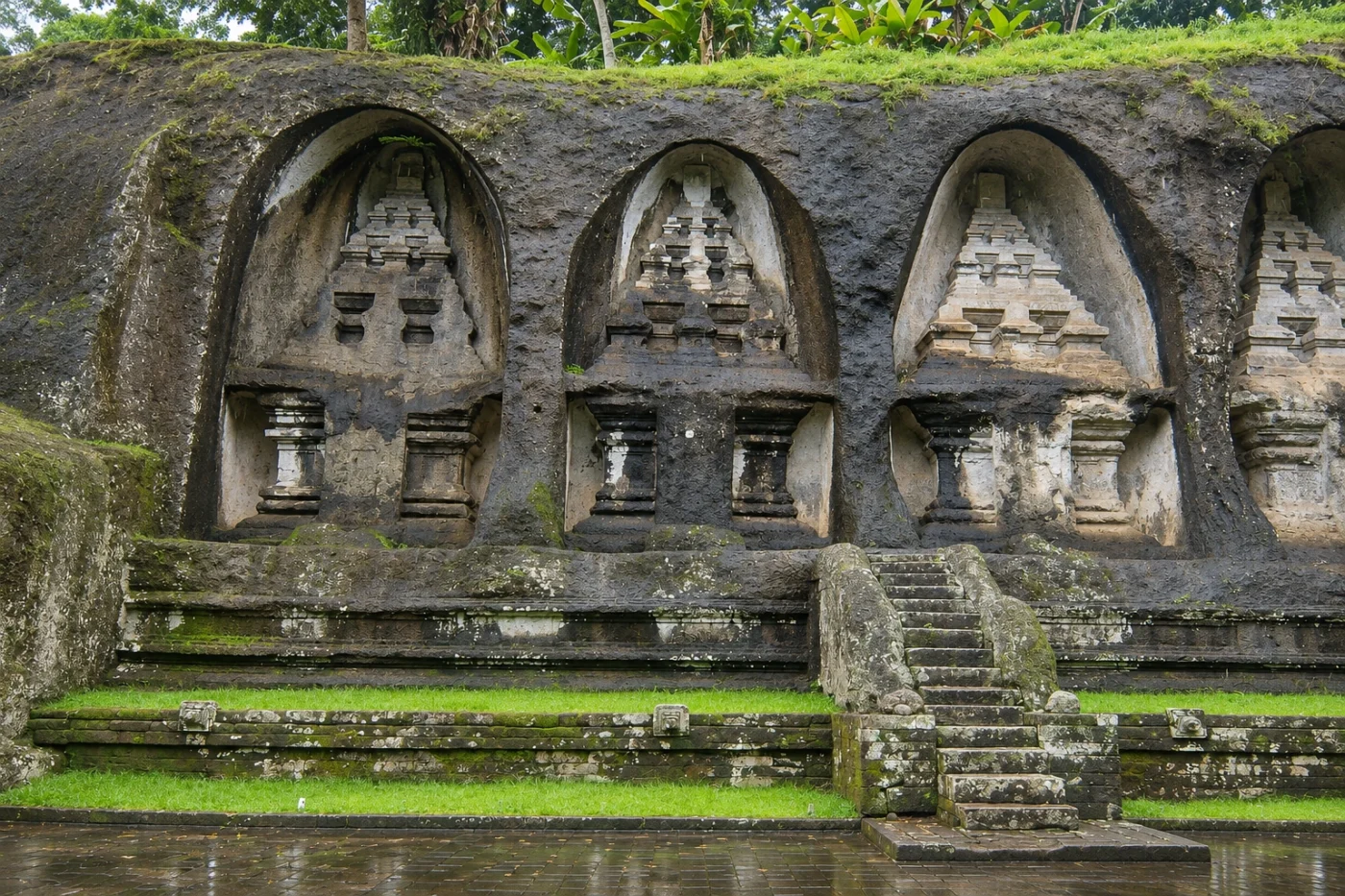
Gunung Kawi Tampaksiring is associated with rock-cut memorial shrines in the Pakerisan valley. It should not be confused with Gunung Kawi Sebatu, another site with a similar name. The approach involves a significant descent and return climb, so the terrain is part of the decision rather than an incidental detail. Confirm the exact map pin and allow time to return uphill in humid conditions. Wear footwear with grip, protect knees and shoulders according to current site rules, and choose a lower-effort alternative if many steps would make the visit uncomfortable.
10. Pura Kehen
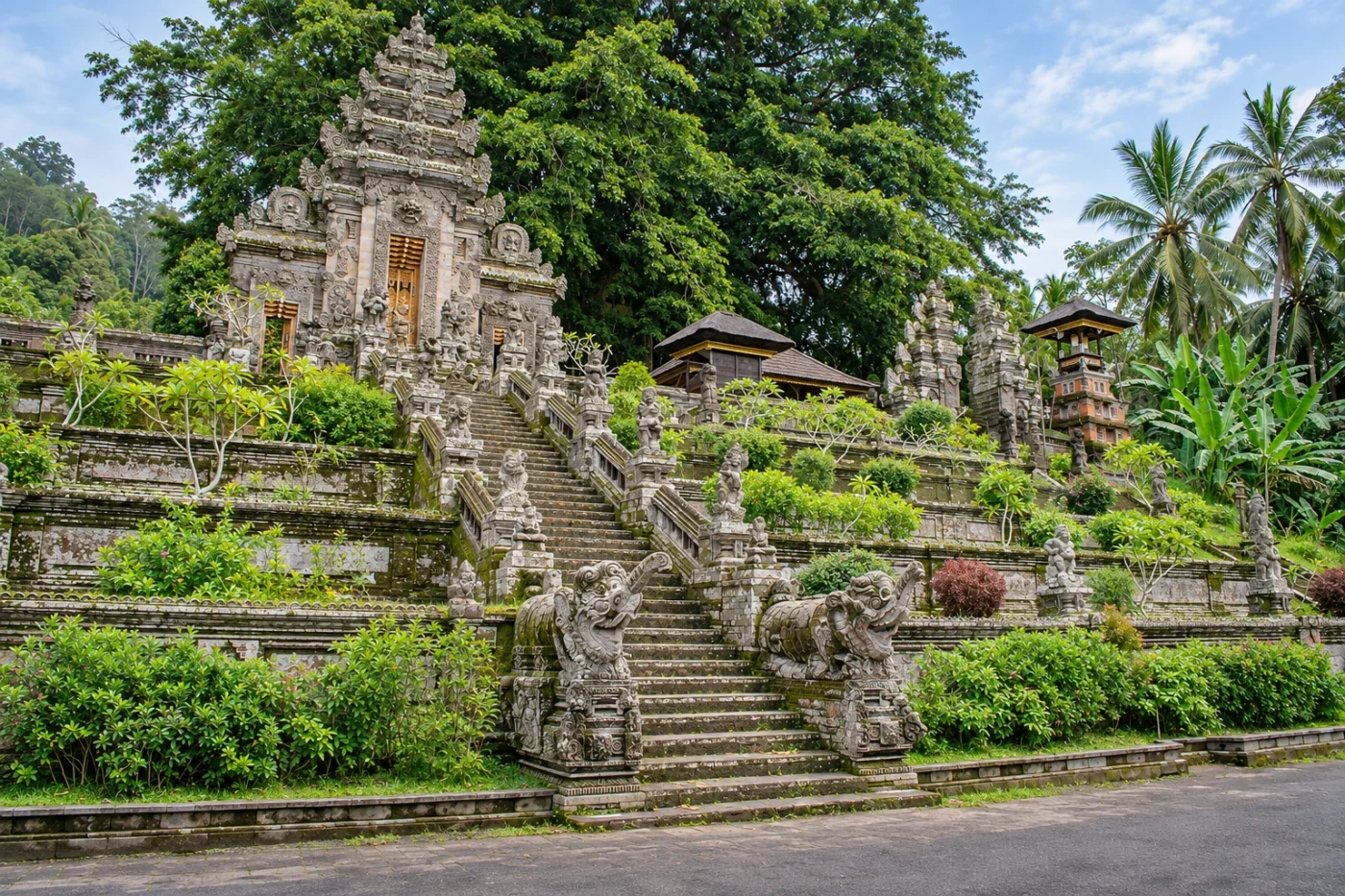
Pura Kehen in Bangli offers a temple visit that can fit an inland cultural route, with stepped architecture, gateways and a setting away from the southern beach districts. It is useful for travellers who want to build time around Bangli rather than add another long transfer to a western-Bali day. Local worship and ceremonies determine appropriate access. Ask about the permitted visitor route and any temporary restrictions, and approach the entrance respectfully rather than assuming the space is only a photo location. Combine it with nearby Bangli heritage or a village visit, leaving enough time for interpretation and rest.
Season and planning
Ceremony dates and local religious activity matter more than a universal tourist season. Rain can make steps slippery, and mountain cloud can obscure views at eastern and highland temples. Verify access close to the visit.
Choose two or three nearby sites, carry or hire the required appropriate clothing, and clarify official admission and guide arrangements. Do not cross barriers, interrupt ceremonies or photograph people without permission. Religious restrictions may apply to participation and entry; ask the responsible site staff rather than relying on assumptions.
Related Bali guides
Ubud
Explore Ubud with ten local experiences, realistic itineraries, transport advice and seasonal planning for a Bali stay.
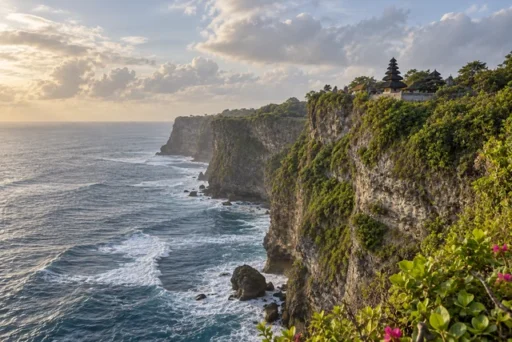
Uluwatu
Explore Uluwatu with ten local experiences, realistic itineraries, transport advice and seasonal planning for a Bali stay.
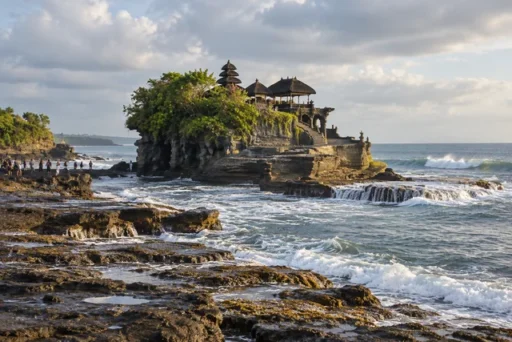
Tabanan and Tanah Lot
Explore Tabanan and Tanah Lot with ten practical experiences, seasonal advice, transport planning and realistic one-to-three-day itineraries.
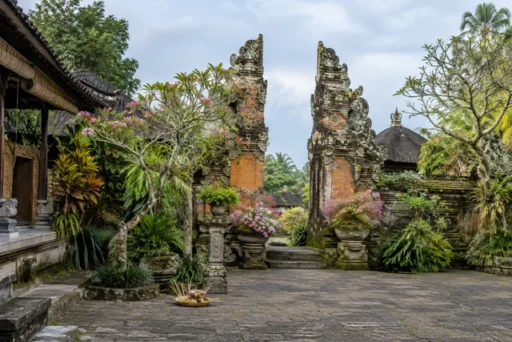
Balinese Cultural Experiences
Balinese culture is lived in homes, temples, fields, workshops and performance spaces.
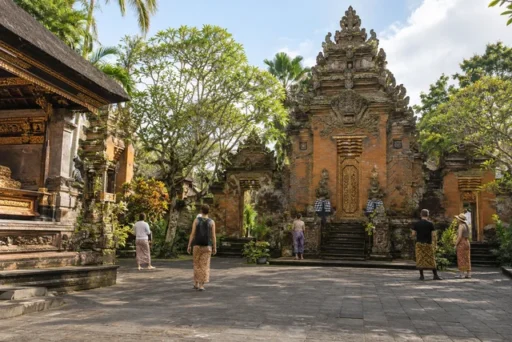
Historic and Royal Sites
Bali’s historic places include royal compounds, water-palace gardens, archaeological remains, living temples and villages with distinctive traditions.
Rice Terraces
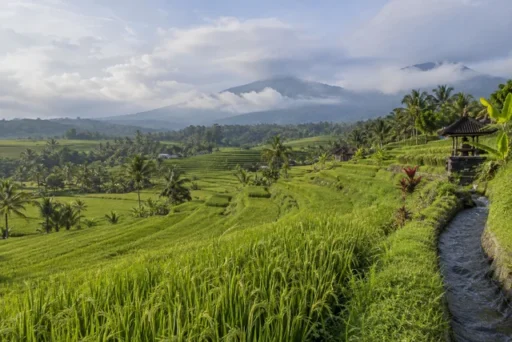
Rice fields in Bali are productive landscapes, shaped by farming, water management and community life.
Questions and answers
Should I try all ten in one day?
No. These are alternatives for different routes and interests. Choose nearby options, allow time for travel and keep a flexible alternative for weather or changed access.
Are entry fees and opening times fixed?
No. Check the linked official venue or destination information for your travel date. Admission arrangements, ceremonies and operating programmes can change.
Do I need to book ahead?
Book when a specific hosted experience, lesson or timed programme is important to the trip. For independent sightseeing, confirm access and transport before setting out.
Does the order reflect visitor votes or search volume?
No. This is an editorial selection intended to compare useful options, not a measured popularity table or a claim that every option suits every visitor.
Sources and further reading
Use the responsible authority or provider for current access, availability and booking details.