10 Balinese Dishes and Flavours to Try Thoughtfully
Written 26 October 2026 · BaliTop10
Balinese food is a good reason to slow down and ask what is on the plate. Rice, fresh spice pastes, coconut, vegetables and different meats appear in combinations that vary between households, regions and occasions. These ten selections introduce distinctive dishes and accompaniments rather than ranking restaurants by reputation. Start with a few meals near your base and ask hosts what they prepare well. A vegetable-looking dish is not automatically vegetarian, and a familiar English name does not settle questions about pork, seafood, nuts or spice. Explain dietary requirements clearly and choose freshly prepared food from a place whose handling and ingredients you can assess.
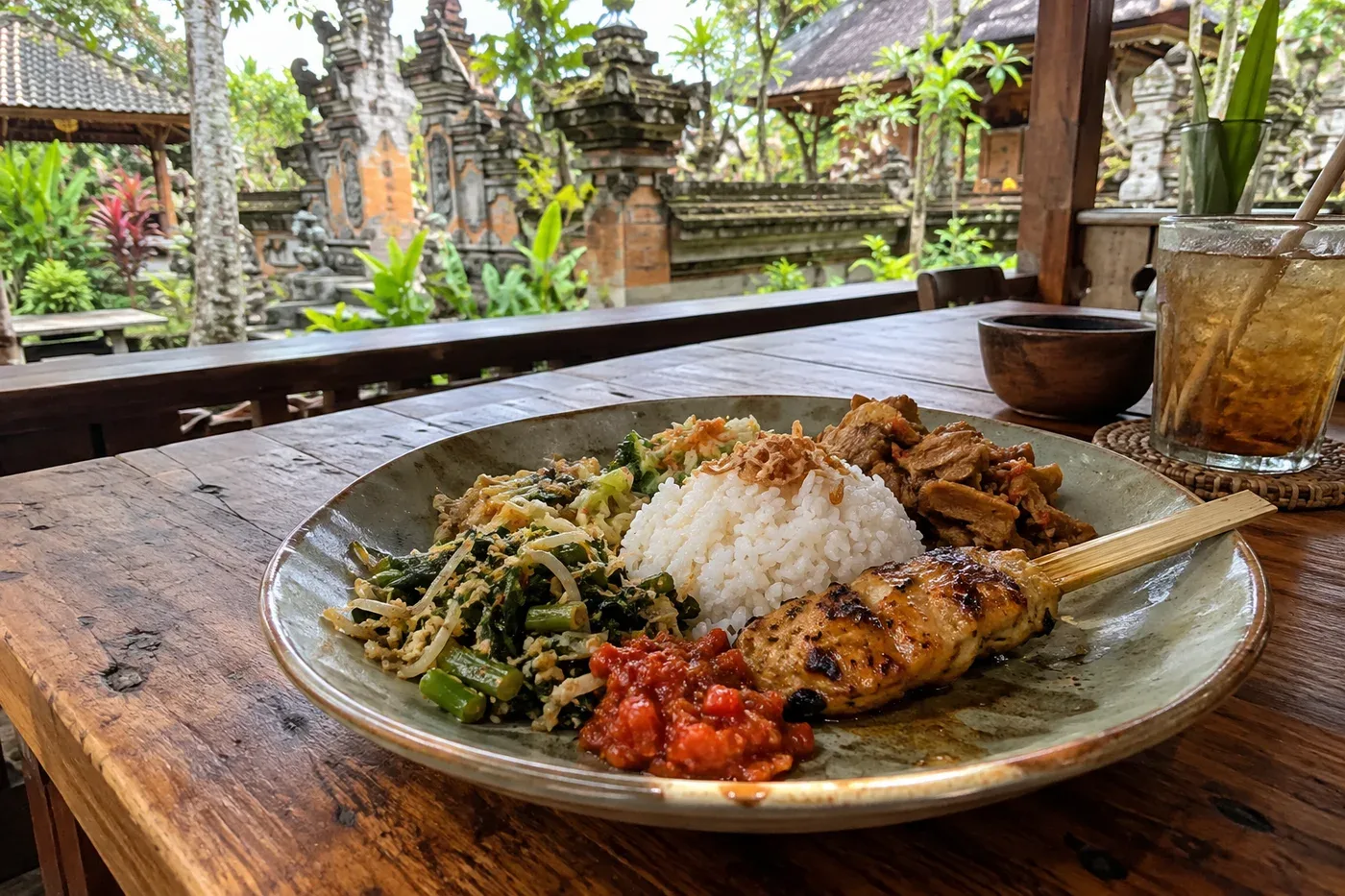
1. Ayam betutu
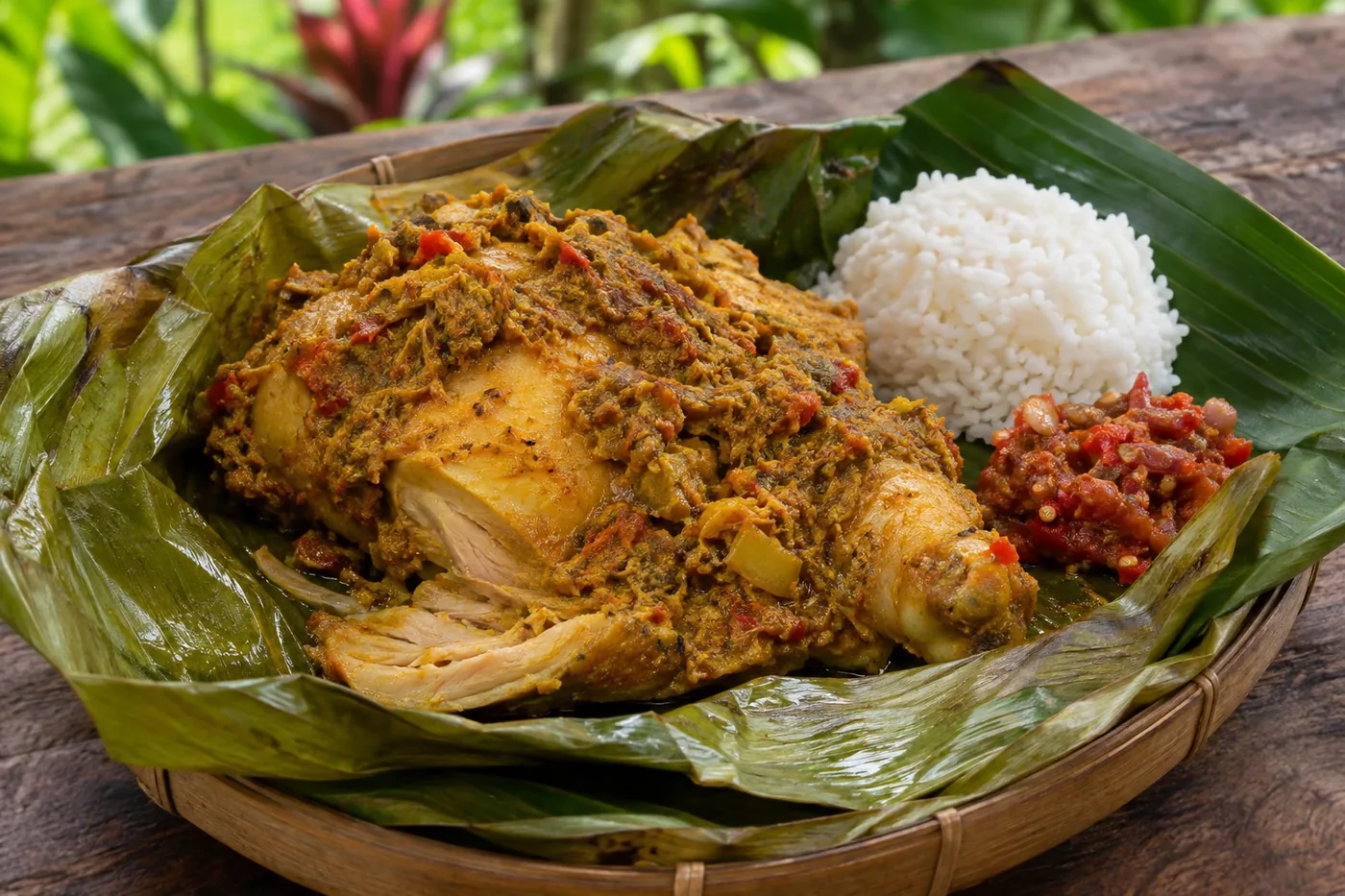
Ayam betutu introduces the aromatic spice-paste tradition through slow-cooked chicken. The balance of heat, texture and accompanying vegetables varies, so one plate should not be treated as the definitive version of every Balinese kitchen. Ask whether a whole bird requires advance ordering and how large the serving is before ordering for a small group. A shared meal with rice gives the seasoning room to stand out. Confirm ingredients if allergies or religious requirements matter, and request sambal separately when you want more control over the heat.
2. Bebek betutu
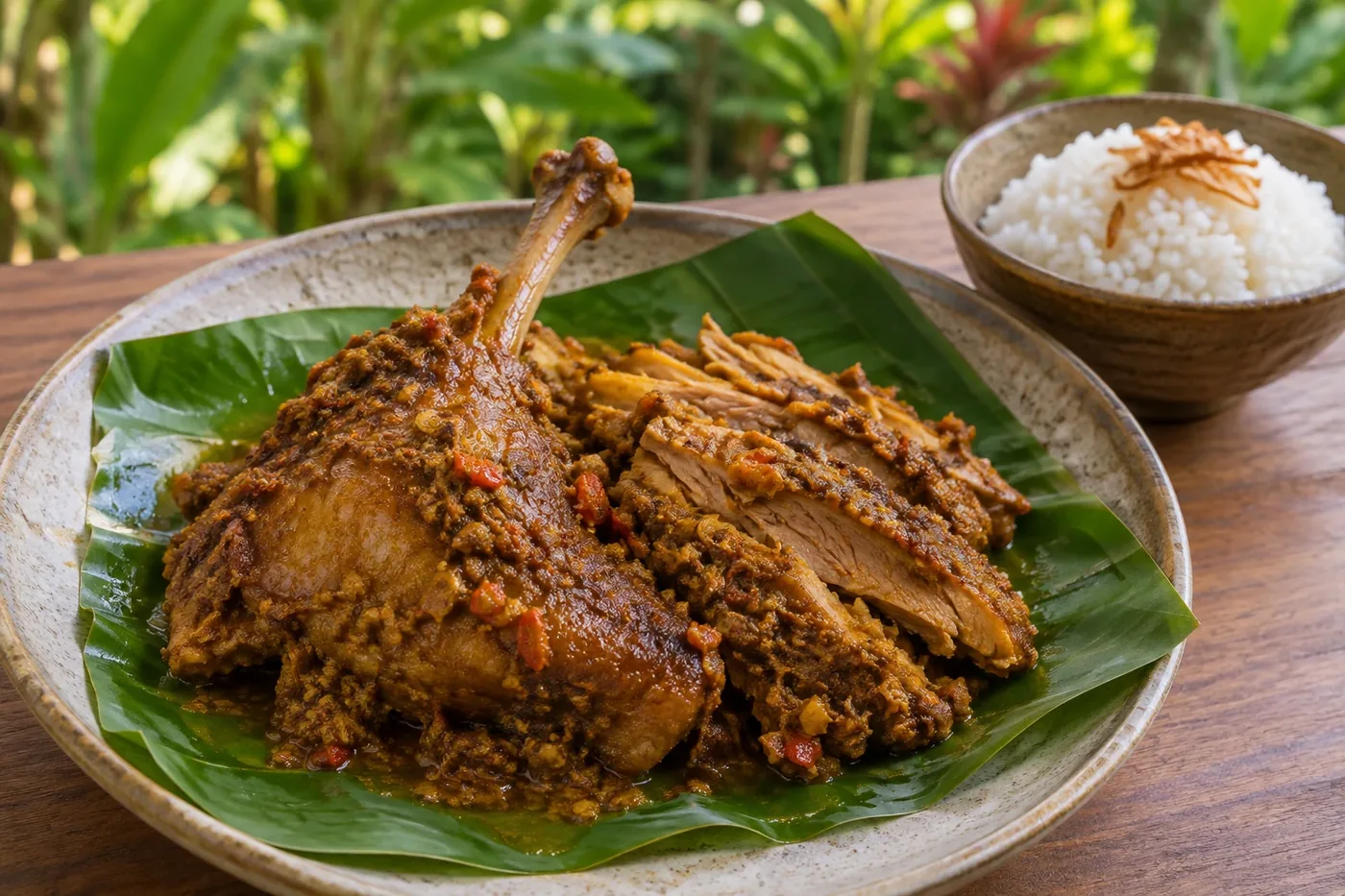
Bebek betutu uses duck within the slow-cooked betutu tradition and offers a useful comparison with chicken. It may be a more deliberate restaurant order than an immediately available snack, so enquire in advance rather than assuming a whole duck can be prepared while you wait. Ask how the dish is served and whether the listed price covers a whole bird or a portion. Share it when appropriate and make room for a relaxed meal. Do not confuse betutu with fried duck simply because both appear on the same menu.
3. Sate lilit
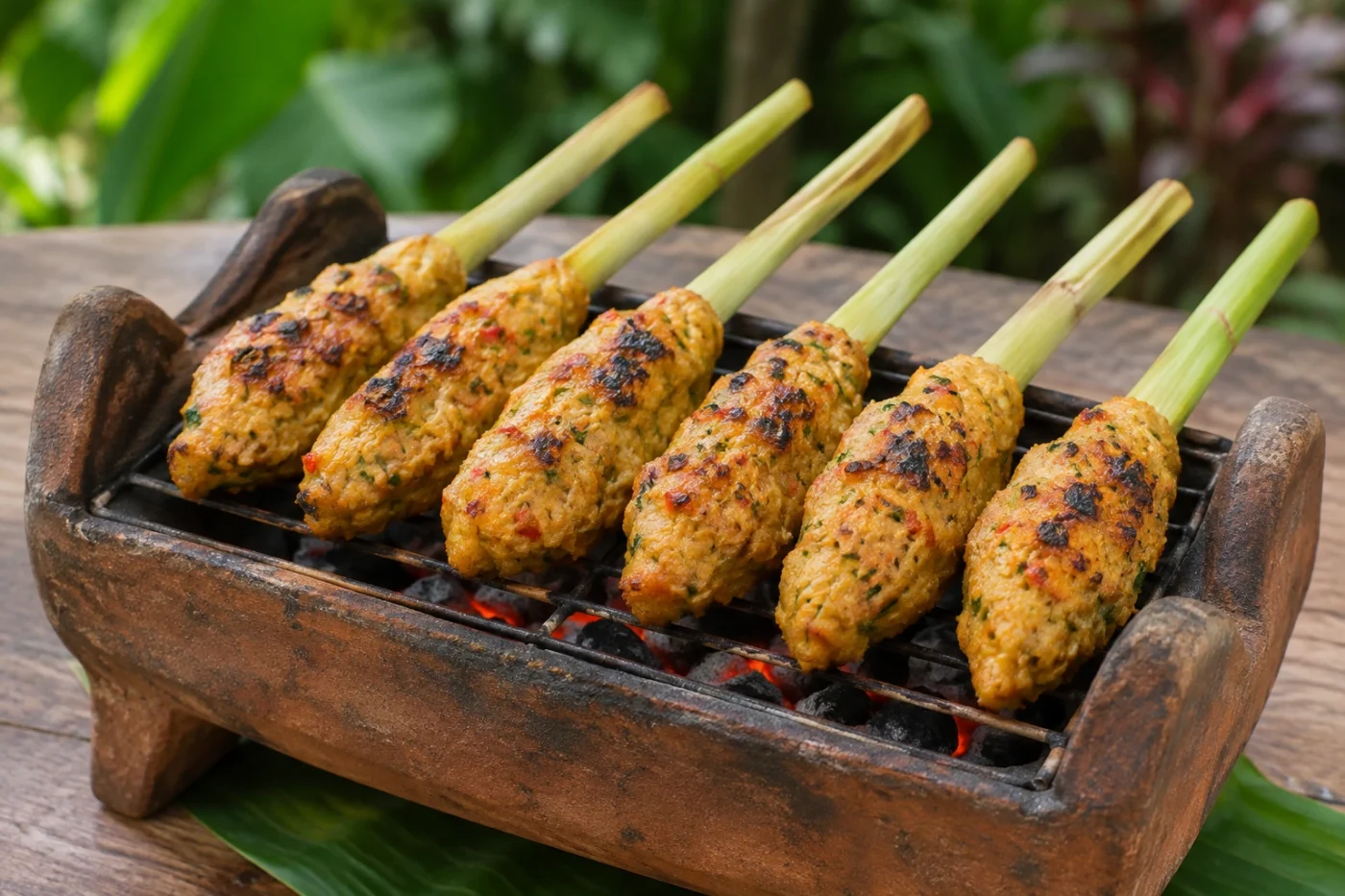
Sate lilit is made from a seasoned minced mixture wrapped around a skewer, creating a different texture from satay made with separate meat pieces. Fish, chicken and pork versions exist, so ask which protein is used instead of relying on the shape. The spice paste and coconut are as important as the grill marks. Try it as part of a meal or a class where the preparation is explained. Confirm allergy-relevant ingredients and do not assume a lemongrass-looking skewer guarantees a particular recipe or mild level of spice.
4. Babi guling
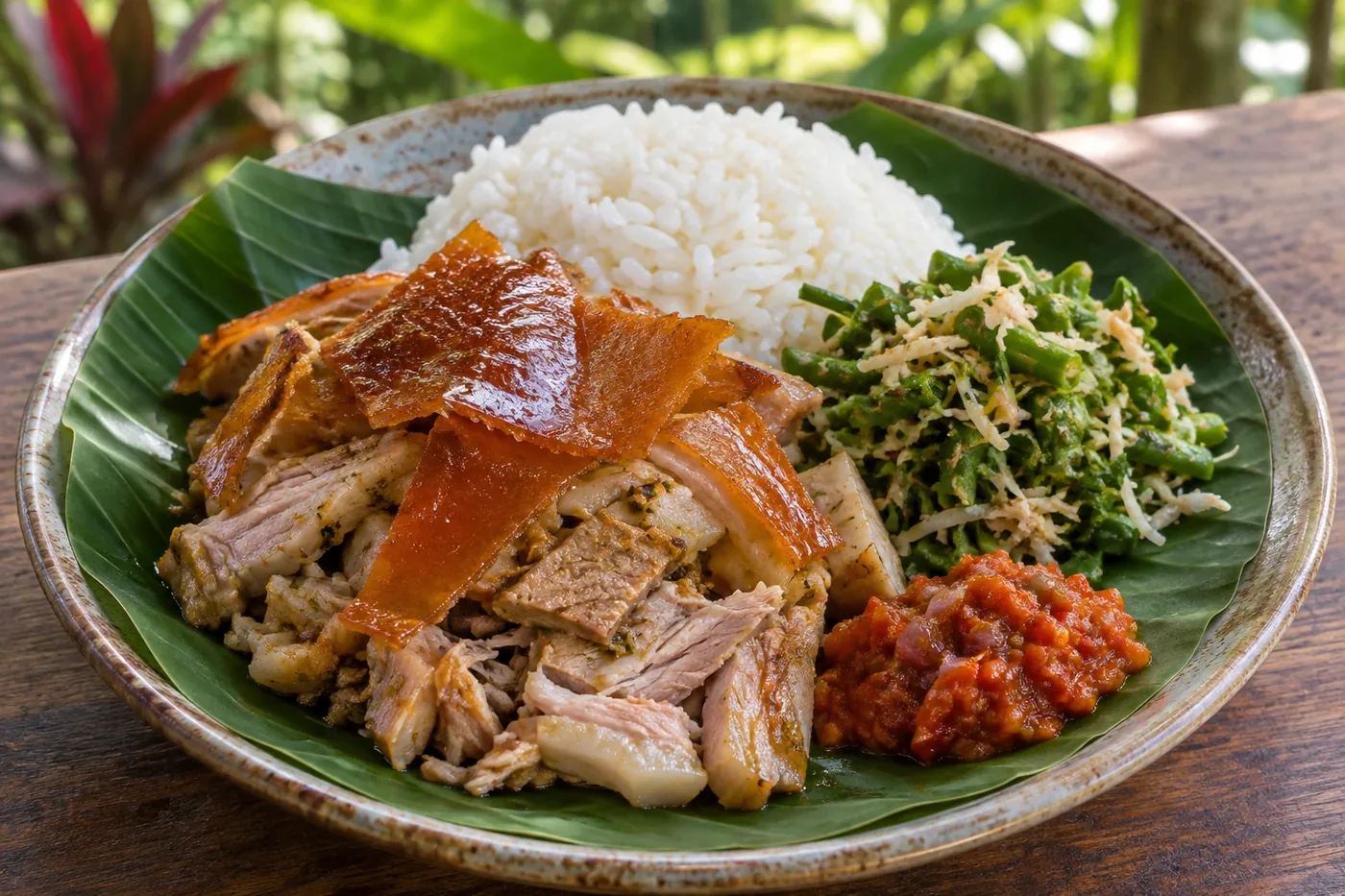
Babi guling is Balinese roast pork, often served with rice and several accompaniments rather than only a slice of meat. The textures on the plate may include crisp skin, seasoned meat and other preparations, depending on the seller. Ask what a portion contains and choose the serving size you actually want. This is plainly a pork dish and unsuitable for visitors avoiding it. A popular name does not remove the need to assess freshness and handling. Arrive for the vendor’s normal meal service rather than assuming all components remain available late in the day.
5. Lawar
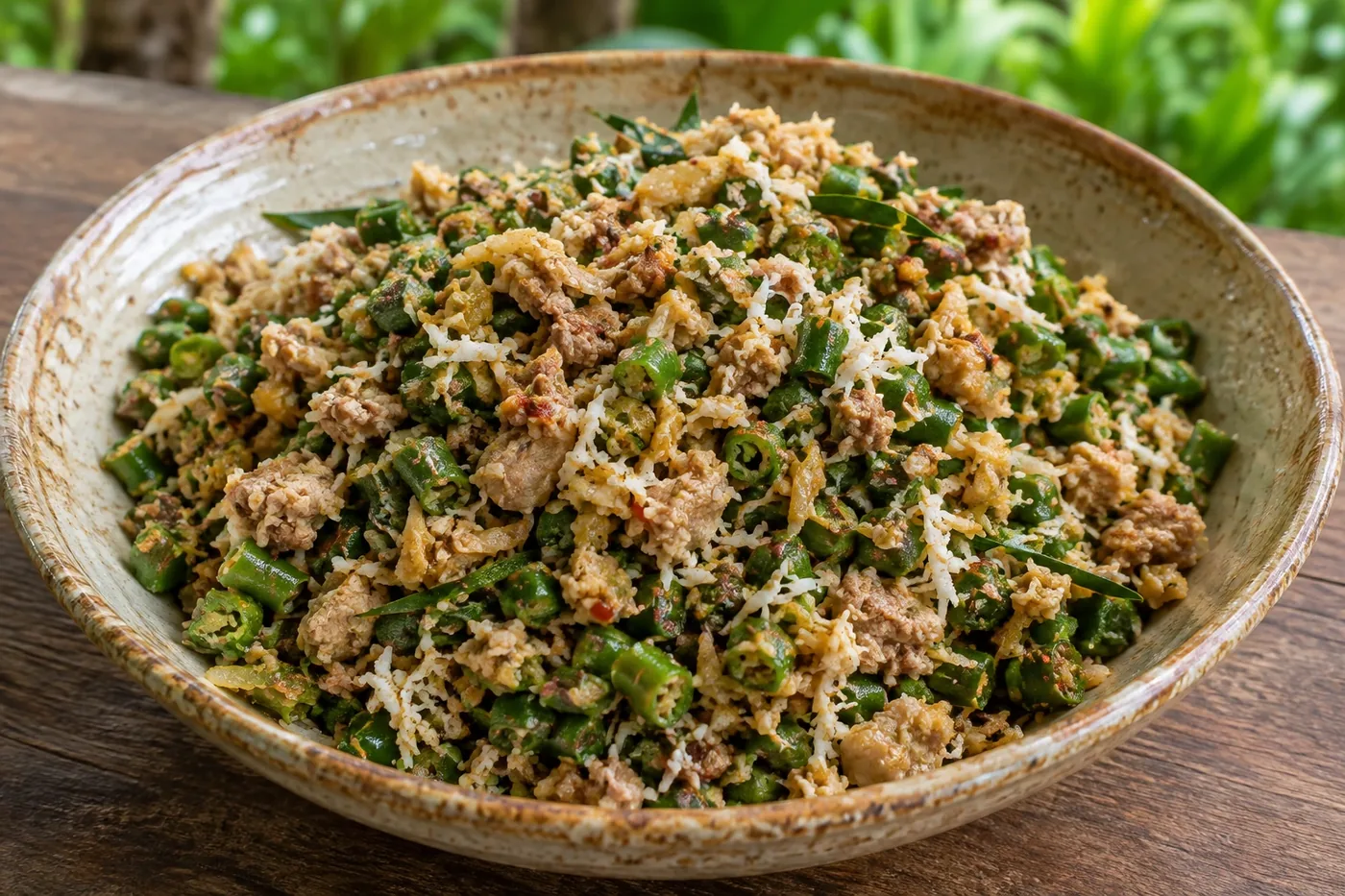
Lawar combines finely prepared ingredients such as vegetables, coconut and seasoning, often with meat. Its salad-like appearance should not be read as evidence that it is vegetarian, and recipes can include ingredients a visitor may not expect. Ask what is in the specific version and choose a preparation that fits your requirements. It is useful to taste a small portion alongside rice and another dish rather than order blindly from a photograph. Fresh preparation matters; a cooking class can offer a clearer explanation of the ingredients and local variation.
6. Nasi campur Bali
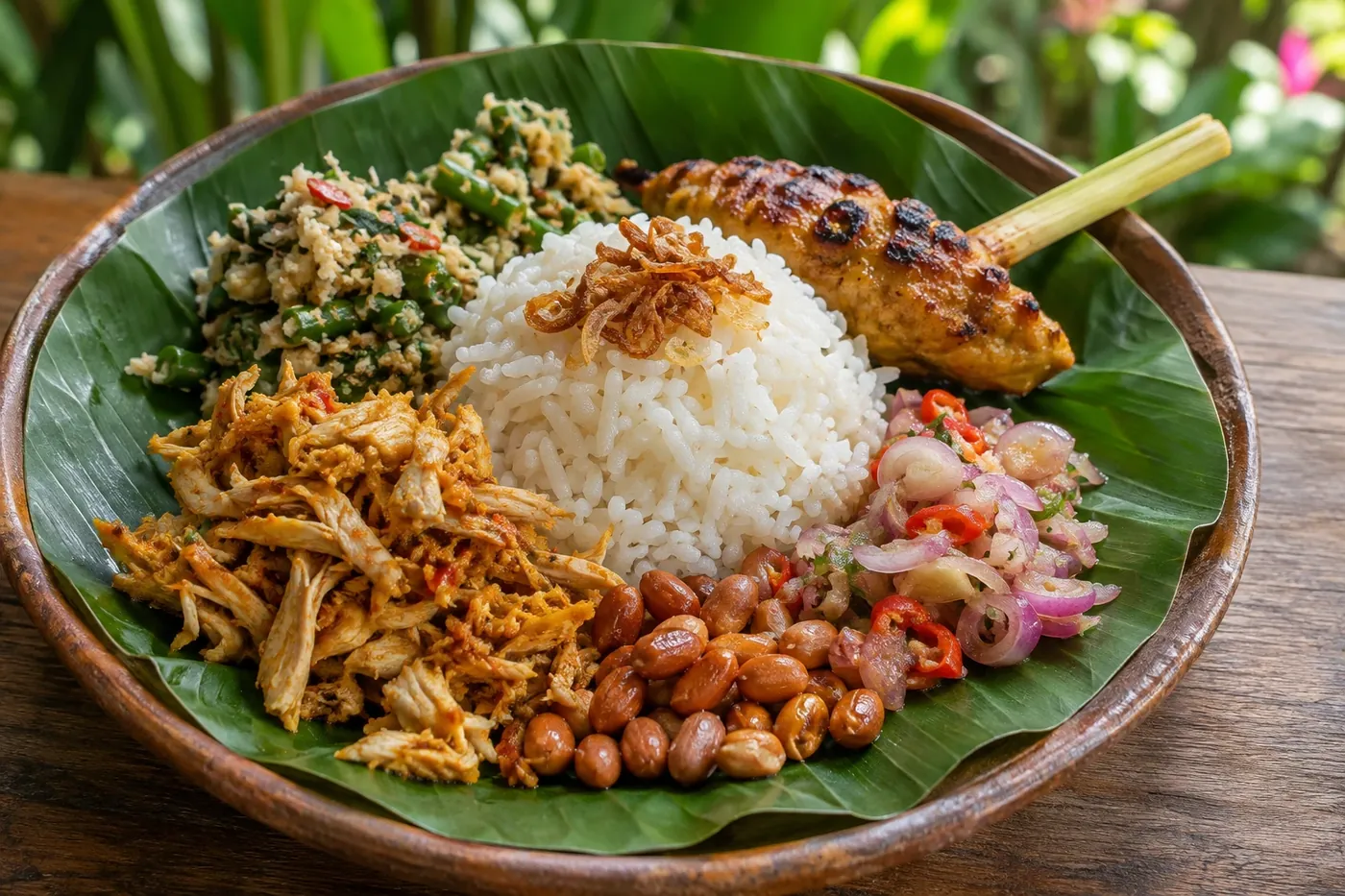
Nasi campur Bali brings rice together with a selection of side dishes, making it an approachable way to compare flavours in one meal. The name describes a format rather than one fixed recipe. Ask which proteins, vegetables, sambals and garnishes are included, especially when a counter displays several choices. A small portion can be enough for a first tasting without ordering ten separate dishes. Explain dietary needs for the whole plate, including sauces and toppings. A vegetarian main ingredient does not guarantee that the accompanying preparation is free of seafood or meat.
7. Sambal matah
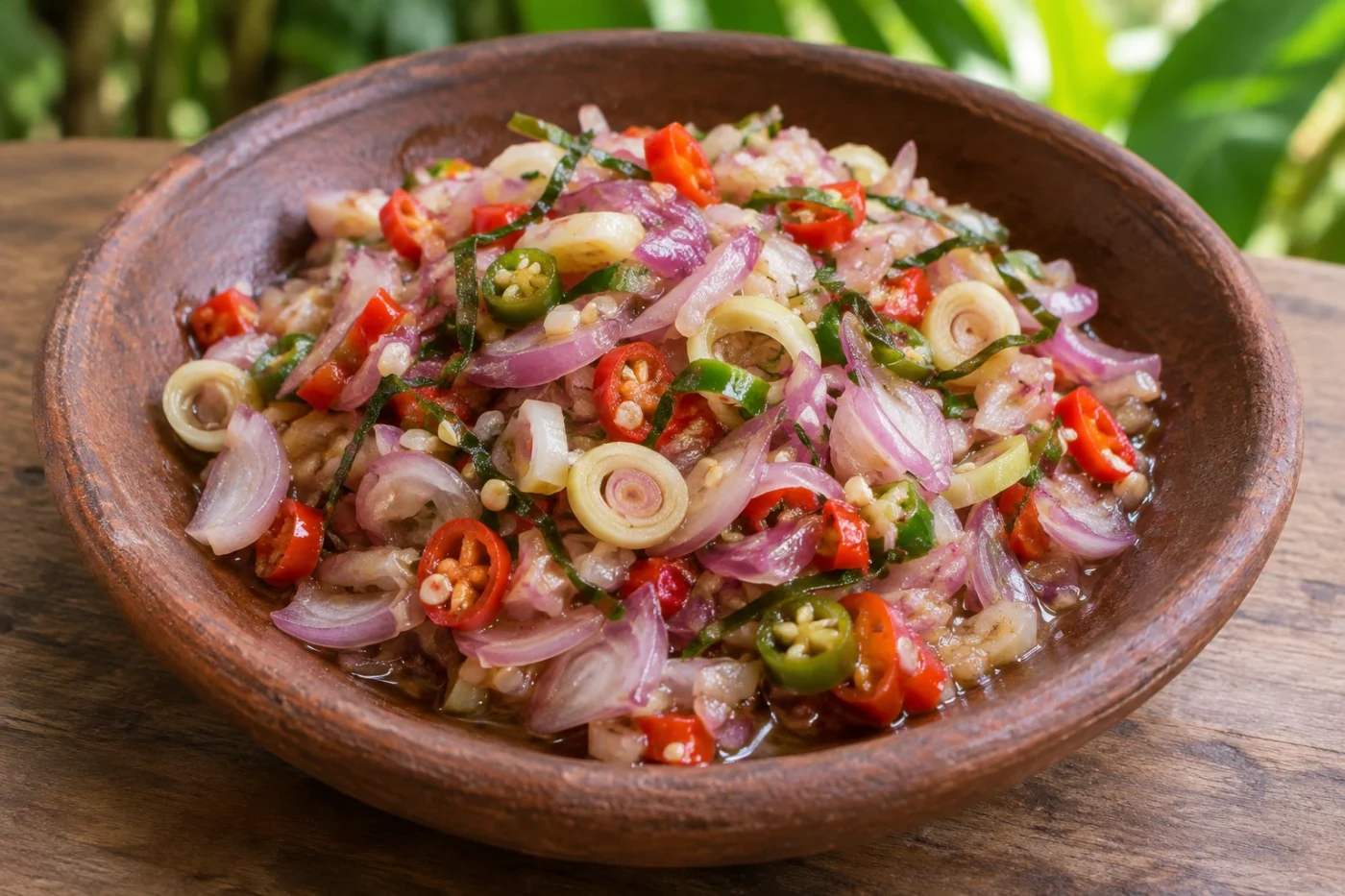
Sambal matah is a fresh accompaniment associated with sliced aromatics, chilli and citrus notes. It can transform a simple grilled fish or rice plate, but its heat and ingredients vary by kitchen. Begin with a small amount and ask for it on the side when ordering for people with different spice preferences. Do not assume a fresh relish is a full standalone dish. Ask about shrimp paste or other allergy-relevant ingredients rather than relying on appearance. Learning how a host balances the ingredients can be as interesting as tasting the finished result.
8. Jukut ares
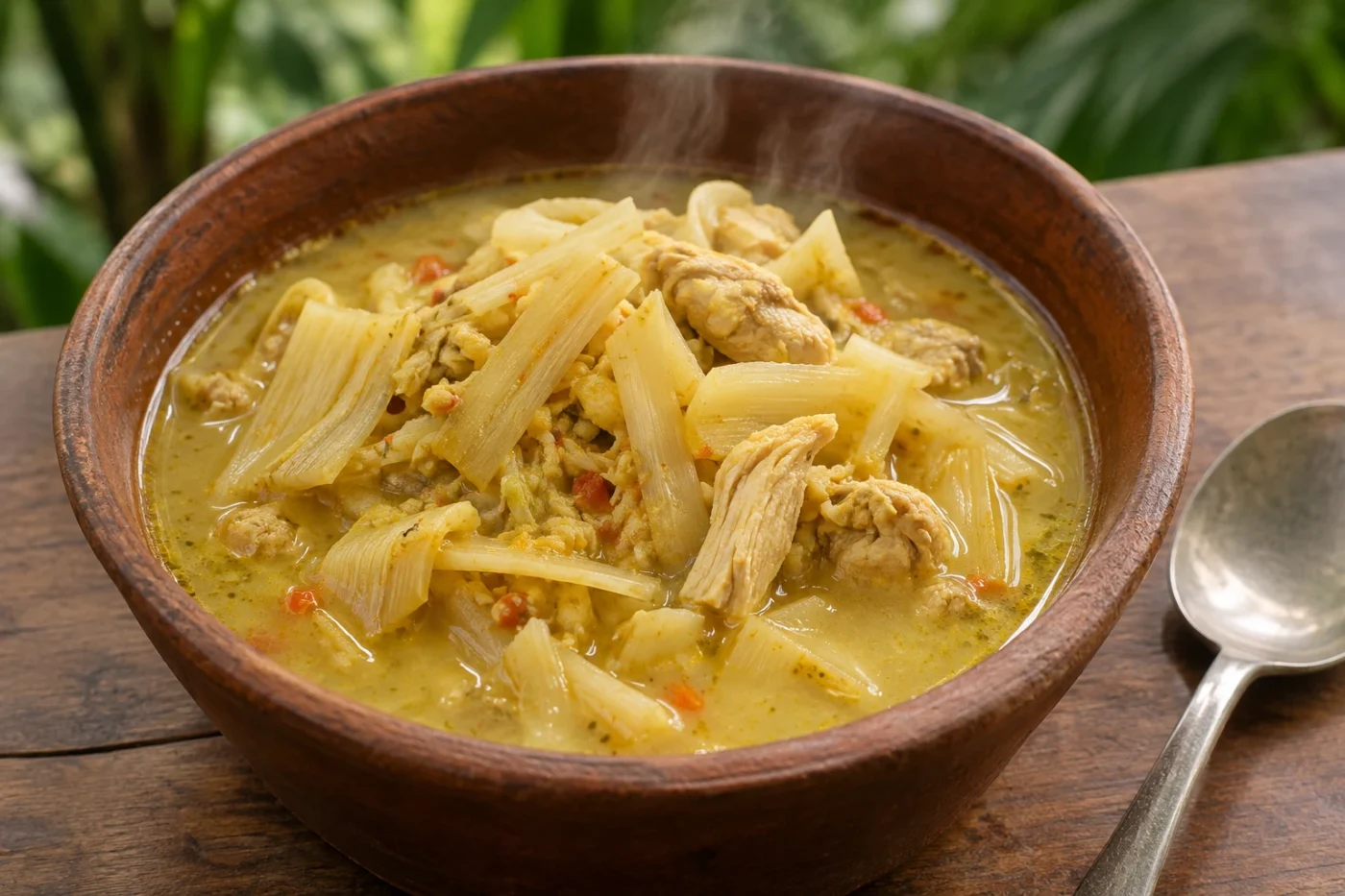
Jukut ares uses young banana stem in a savoury soup, illustrating how local cooking makes use of ingredients unfamiliar to many visitors. The broth may be based on different meats, so ask before treating the dish as a vegetable option. It is best approached as part of an ordinary Balinese meal rather than a novelty to tick off in isolation. Ask the cook what accompanies the version they prepare. Availability can vary, particularly where the dish is linked to a particular menu or occasion, and it should not be assumed to appear at every restaurant.
9. Jaje laklak
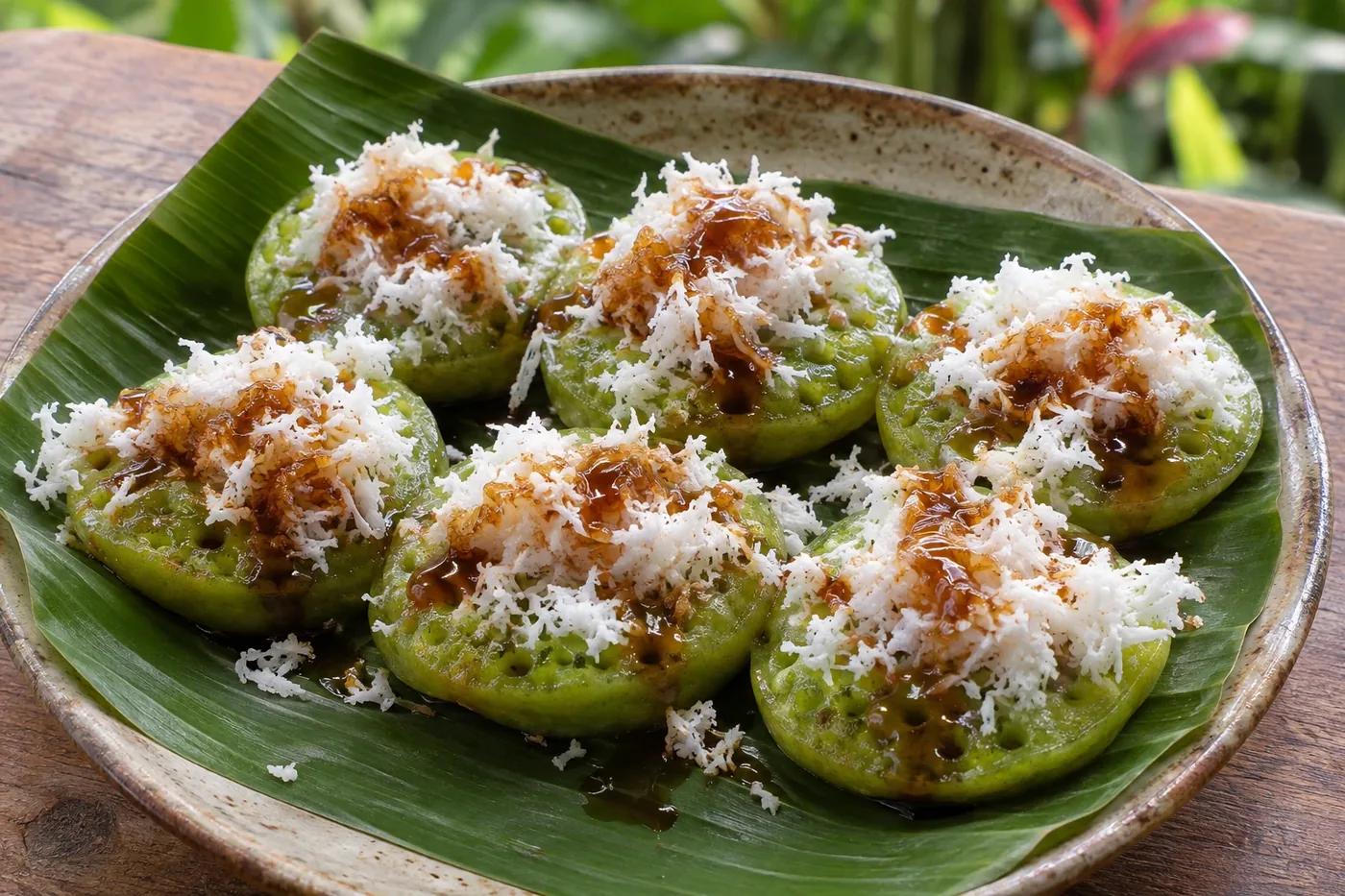
Jaje laklak are small rice-flour cakes commonly served with coconut and palm-sugar sauce. They offer a different introduction to Balinese food from a large savoury meal and can suit a market visit or a modest afternoon pause. Colour and presentation vary, so ask how the seller prepares them rather than expecting one identical photograph everywhere. Choose freshly made portions and check toppings if allergies matter. A few cakes shared with a drink can be enough to appreciate the contrast between the soft base, coconut texture and sweet sauce.
10. Bubur injin
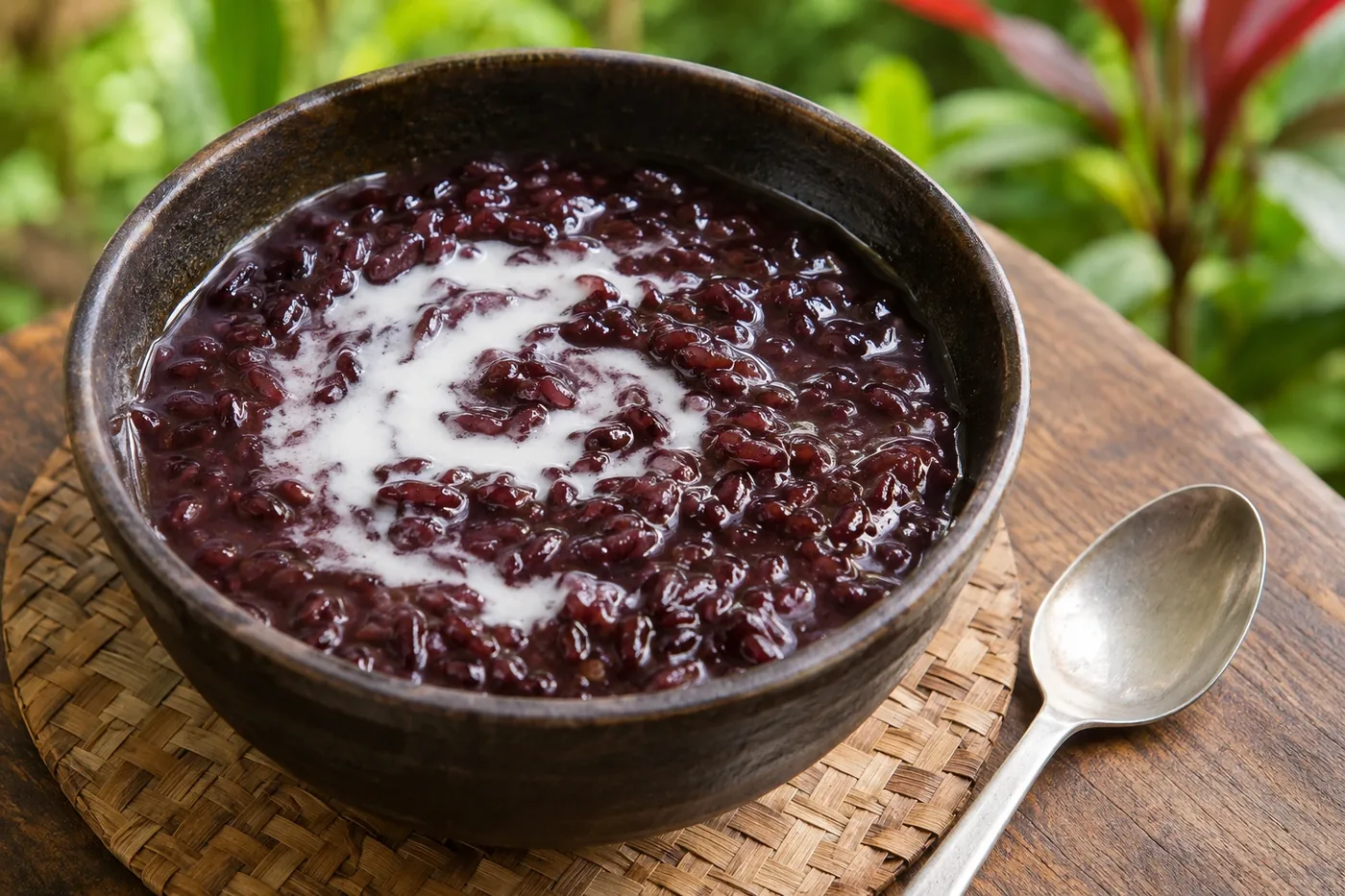
Bubur injin is a black-rice dessert often paired with coconut milk and sweetening. It provides a useful contrast to the island’s grilled and spice-rich savoury dishes. Portions and consistency vary, so ask whether it is served warm or cool and how substantial the bowl is before ordering after a large meal. Coconut milk is part of the appeal but also an ingredient to check for dietary needs. Choose a place with good food handling and enjoy it as a dish in its own right rather than assuming every Balinese dessert is a fried snack.
Season and planning
Conditions vary across Bali, and a calendar season does not guarantee a particular experience. Allow flexible time during wetter periods, particularly for outdoor approaches and road transfers. Check current local weather and the host’s arrangements close to your visit. Religious holidays and ceremonies can change access independently of the forecast.
Build a food day around one neighbourhood rather than a long cross-island restaurant chase. Ask clearly about ingredients, portion size and what is included. Keep sambal separate if needed and do not rely on labels such as vegetable or local to resolve allergies or dietary rules. A hosted class or market visit can add context. Choose responsible food handling and ordinary bottled or safely treated drinking water.
Related Bali guides

Ubud
Explore Ubud with ten local experiences, realistic itineraries, transport advice and seasonal planning for a Bali stay.

Denpasar
Explore Denpasar with ten local experiences, realistic itineraries, transport advice and seasonal planning for a Bali stay.

Sanur
Explore Sanur with ten local experiences, realistic itineraries, transport advice and seasonal planning for a Bali stay.
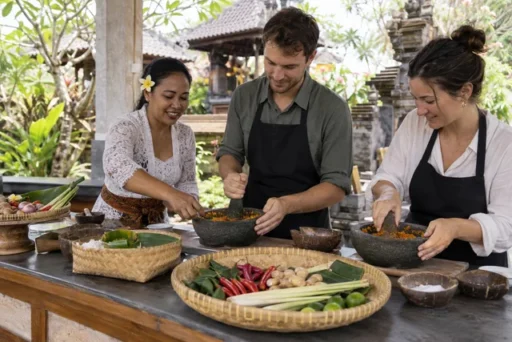
Cooking Classes
A cooking class is most useful when it matches how you want to learn.

Markets and Shopping
Bali shopping ranges from working food markets to craft villages and design-led boutiques.

Balinese Cultural Experiences
Balinese culture is lived in homes, temples, fields, workshops and performance spaces.
Questions and answers
Is Balinese food always spicy?
Heat varies by dish and kitchen. Ask about the preparation and request sambal separately when possible. A dish described as mild may still contain ingredients that feel hot to you.
Are vegetable dishes automatically vegetarian?
No. Broths, seasoning, shrimp paste, meat or other ingredients may be present. Explain your requirements clearly and ask about the complete preparation, including garnishes and sauces.
Can I order a whole betutu dish without notice?
Availability and preparation vary. Ask in advance about whole birds, portion size and ordering time rather than assuming every version is ready for an immediate order.
What is a useful first Balinese meal?
A clearly explained nasi campur plate can introduce several flavours in modest portions. Ask what is included and choose a preparation that fits your dietary needs and appetite.
Sources and further reading
Use the responsible authority or provider for current access, availability and booking details.